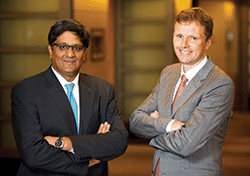
Euromoney’s best bank in Asia for 2013 is Citi, retaining the title it won last year and adding the award for the best investment bank. It is a double achievement that just five years ago would have been unthinkable, when the bank’s very survival was hanging in the balance and its Asian business, particularly in investment banking, lay in tatters.
He points out that Citi’s progress in Asia, particularly in banking the region’s emerging global champions, contains a little bit of history repeating. “We’ve already brought the likes of 3M, Dow Chemical, GM and BMW to Asia. But now we have to bank the likes of Tata, Reliance, Samsung, Hyundai and Lenovo. This is a battle that we can’t lose; this is the great Asian century,” he says. It is a battle that Citi is fighting impressively. Its clearance to take its credit card business to China, the first international bank to launch a sole-branded card in China, is a breakthrough with lasting resonance, delivering a brand awareness it could previously only dream about. Citi’s Asia business generated a quarter of all its global revenues and a third of global profit, with revenue for the awards period at $14.9 billion and net income at $3.7 billion. The balance of its business both geographically and by product distinguishes it from the crowd, with an equal split of retail and institutional business and no one country contributing more than 10% of total revenues for the region. Citi opened a further 10 Asian desks over the course of the year to provide services to Asian multinationals across the world. Now, there is a China desk in Brazil, a Korea desk in Europe, a Japan desk in Europe and a China desk in Africa, helping the company stay joined up as Asian clients train their sights overseas. The investment bank at Citi, under Farhan Faruqui, continues to go from strength to strength. It was ranked in the top three for ECM, M&A and DCM during the awards period. The development of the business has been deliberate, targeting the largest clients and in particular trying to maximize Citi’s wallet share from Asian multinationals. To that extent it is a continuous evolution. Over the coming months, Citi will seek to strengthen this effort by opening six new Asian desks to serve Asian corporate clients across the world. These will include a China desk in Russia, and Korea desks in southeast Asia and Latin America. Faruqui is keen that Asian clients looking to expand abroad use Citi’s global network and its local knowledge, seeing the desk strategy as a key means of deepening interaction with Asian multinational clients. Citi has succeeded in bagging some of the largest clients in the region, banking companies such as Lenovo and Samsung in more than 60 countries. Citi has been adding to its senior team and giving new roles to some of its leading bankers over the course of the year as it seeks to move forward. Chris Laskowski, who has been covering Asian clients since 1999 and who serves as chief operating officer of the corporate and investment bank for the region, recently took charge of the Hong Kong-based investment banking team, with responsibility for the important Hong Kong client base. And last summer Citi poached Will McLane from Morgan Stanley to lead its Asean corporate and investment banking efforts and lead the financial institutions group across Asia Pacific, a high-profile hire that underlines Citi’s growing clout. With the IPO market continuing to show only sporadic signs of life, block trades, M&A and debt have had to take up the slack for investment banks to post returns in Asia. Citi wins the award for investment banking because it is now very good in all these areas. It is true that Goldman Sachs remains out in front in ECM and M&A, and UBS, Morgan Stanley and JPMorgan can all match or surpass Citi in parts of the investment banking business. However, taken as a whole, Citi is realizing its potential across the board and is in or around the top three almost constantly in the three main investment banking businesses, something Bird says he will now expect to continue as a matter of course. In M&A, in particular, Citi proved itself to be a deft adviser, particularly through its role in CNOOC/Nexen, the largest-ever outbound China deal and Heineken/APB, the largest-ever contested takeover offer in southeast Asia. There is no shortage of competition for Citi at the bank level. HSBC is gaining ground and might push Citi even closer next year. But this is Citi’s year and, given the depths from which it came in the not so distant past, it has earned these awards the hard way. Goldman Sachs remains the benchmark when it comes to M&A advice across the Asia Pacific region. The past year serves to underline this point. It was once again top of the league table and advised on five of the top 10 completed deals. Over the awards period this included the largest Asia M&A deal of 2012, Nippon Steel Corp’s $19.7 billion acquisition of Sumitomo Metal Industries; CNOOC’s $15.1 billion acquisition of Nexen, the largest foreign acquisition by a Chinese company; and Fraser and Neave’s $9.8 billion takeover by TCC Assets. Not only did Goldman advise on the highest value of deals, it is also still the go-to bank for the region’s best-known and largest multinational clients. The league tables show that Goldman, with a market share of more than 18%, marginally extended its lead over its closest rival in the M&A business for the region, Morgan Stanley, which has a market share of 15%, despite advising on more deals than Goldman. JPMorgan takes third spot, down from second last year, with the top five completed by Citi and UBS. Bank of America fell out of the top five last year to 11th, while Nomura and Mizuho continue to figure strongly on the back of their almost guaranteed roles on M&A deals involving large Japanese clients.
Goldman Sachs also wins the award for best equity house in the region. Over the awards period it advised on 79 deals with a combined value of $23.3 billion, some $5 billion more than its closest rival, UBS. Morgan Stanley, Citi and JPMorgan complete the top five, according to Dealogic. Goldman secured leading roles on many of the landmark deals across geographies and industry sectors. Issuers opted for Goldman as a result not only of its execution, but also its distribution capabilities as markets across the region remained challenging. Among the most prominent deals on which Goldman took a lead role were the largest-ever sole-book follow-on in Asia ex-Japan in the form of Sinopec’s $3.1 billion H-share private placement. It also worked on Mapletree Greater China Commercial Trust’s $1.4 billion IPO, Singapore’s largest-ever Singapore real estate investment trust IPO. The ECM business in Asia and particularly the IPO market in Hong Kong stuttered for much of the year as choppy trading conditions caused by macroeconomic and geopolitical concerns continued to wreak havoc with several companies’ plans to list. Block deals took on greater importance as a result, and here Goldman also punched its weight, most notably on AIA group’s $6.45 billion accelerated book-build offering, the second-largest block trade in Hong Kong ever. This followed on from the first Hong Kong block trade to price at a premium to the last close: AIA’s $2.02 billion September offering. Best Debt House Although M&A and ECM are in the corporate DNA at Goldman, the DCM business is another matter; it manages just 12th place in the league tables, denting its credentials as the best all-round investment bank in the region. In the debt capital markets, HSBC remains some way clear of the pack in the important businesses across the region, although several others take a big slice of an ever-expanding market. Mizuho, Morgan Stanley and Nomura are in the top-three spots in the Dealogic tables for Asia, primarily because of their Japanese businesses. But HSBC took the top position in G3 bonds for the third consecutive year, the first time this has ever been achieved. It led more than 100 G3 deals and raised more than $65 billion for clients in the process. In high yield, HSBC topped the table for bookrunners on Asian high-yield bonds, an achievement the bank attributes to closer collaboration between commercial banking and global banking and markets in the region. During the awards period, HSBC led 35 high-yield bond offerings, raising a total of $14 billion for clients. Nearly half of these, by volume, were for commercial banking clients. The breadth of the HSBC franchise is further demonstrated by its performance in Asia’s local-currency bond markets, where it took a 7.5% market share. HSBC topped the pile for dim sum bonds, ahead of Standard Chartered and BNP Paribas, executing several CNH transactions bringing debut and repeat issuers from Asia and beyond to the dim sum market. Competitors always say that HSBC succeeds just because it is big. This seems to be an oversimplification of the real situation. Evidence of innovative thinking in the debt franchise is apparent across the board and the others have work to do to close the gap. Deutsche Bank unseats HSBC as Asia’s best flow house this year, although the competition in this area remains fierce as banks with true scale and trading heft come to the fore. Volatile trading in markets across Asia has became a feature over the course of the year, with a lack of conviction among traders and a risk-on, risk-off environment driven by successive shocks from Europe and mounting uncertainty regarding China’s growth. During the more risk-tolerant periods, flows into the region grew as central banks continued their quantitative-easing efforts, leading to higher demand for new assets. For Deutsche Bank, whose sales and trading business across currencies, rates, credit, equities and commodities is the cornerstone of its global markets business, the changeable trading conditions played to its strengths, and it delivered. It took its flow business to a new level by merging its global finance and foreign exchange (GFFX) and rates and credit trading businesses into a new global fixed-income and currencies (FIC) group. This combination effectively captures the strong correlation of bond and FX flows, enabling Deutsche to build further scale into its flow model. The bank says it placed greater focus on seeking out intra-regional corporate flows to combine with those already entering Asia on an inter-regional basis, while relationships with local corporates were cultivated onshore, with services offered to automate and streamline payments and FX transfers. In cash management, the regional award for Asia typically comes down to a three-way race between HSBC, Citi and Standard Chartered. HSBC takes the spoils this year as it notched up a number of firsts for the market. In March this year, it launched a renminbi cross-border payments and collection scheme for a Fortune 500 company in China. This provides a centralized approach to cash management by enabling the client’s Chinese subsidiaries to use renminbis to settle cross-border payments and collections with their parent company’s overseas treasury centre. And in December last year, HSBC and Intel were the first bank-overseas company partnership to establish an automated, cross-border foreign-currency-sweeping structure in China. This enables businesses to manage cash more efficiently by connecting their onshore and offshore cash management structures, marking another step in the opening up of China as an international treasury centre. HSBC’s project finance business is continuing to flourish and this year it retains the title it won last year. During the awards period, the project finance team closed an impressive 16 advisory and six arranging mandates, with project volumes of more than $35 billion across nine countries in the Asia-Pacific region. Among notable projects, HSBC acted as the mandated lead arranger, hedge provider and pre-financial-close swap arranger in support of the A$1.6 billion ($1.49 billion) acquisition package for a consortium made up of the Ontario Teachers Pension Plan and Hastings Fund Management to support its acquisition of the Sydney Desalination Plant from the government of New South Wales. It also demonstrated the geographical diversity of its reach, working on projects in Australia, Brunei, India, Malaysia and Singapore, among others. In Brunei, HSBC displayed its ability to combine project finance and Islamic structuring as the sole structuring bank and hedge provider to Brunei Gas carrier’s fourth vessel financing. HSBC has traditionally been strong in infrastructure financing, but recent mandates suggest that it has successfully broadened its capabilities more effectively in the important oil, gas, metals and mining sectors. The main competition for HSBC in project finance on a regional basis is Standard Chartered, which has continued to make great strides securing financing commitments on 35 transactions in Asia, raising a total debt of $5 billion. HSBC’s solid presence across the region and increasing willingness to structure often complex hedging strategies while continuing to do the simple stuff well means it is this year’s best risk adviser in Asia. Its strong balance sheet is undoubtedly an asset, but the global markets team and extensive distribution capabilities take it far beyond the role of simple back-stop. Its decision to invest in and build up its strategic equity and financing team in Asia, taken in 2009, is starting to bear fruit. The initial purpose was to respond to client concerns about their listed equity stakes. For the first three years, the group mainly focused on large corporates, financial institutions, family offices, sovereign wealth funds and private equity funds. But more recently it has turned its marketing strategy towards small corporates based in Hong Kong on top of the traditional segments. The revenues generated by the strategic equity-financing group have risen five times since 2009. HSBC’s DCM- and financing-linked hedging solutions are also impressive. HSBC points to the example of a particular client, a leading commercial real estate investment trust in Singapore, which issued a ¥10 billion ($102.5 million) seven-year private-placement bond arranged by another international bank. HSBC was mandated as the sole hedging bank, and executed the swap for the full size of the bond issuance. In doing so, it was able to assist the client by entering into a yen/Singapore dollar cross-currency swap to swap their yen bond proceeds to Singapore dollars, effectively hedging both currency and interest rate risks. |