Andreas Dombret, one of six members of the Bundesbank’s executive board, has reinforced the perception that the so-called shadow banking system is at the forefront of European regulators’ concerns in an interview with Euromoney.
Euromoney: Your responsibilities include financial stability. As a result of the crisis, has the system of regulation changed in Germany? Dombret: In the main, no, there is still the same division of responsibility between the Bundesbank and BaFin [Bundesanstalt für Finanzdienstleistungsaufsicht, the Federal Financial Supervisory Authority]. The Bundesbank is charged with the ongoing supervision of banks. It is a decentralized supervision model with nine regional offices, so we assess the banks with people who know them well.
We report the information to BaFin and it is ultimately its responsibility to take any supervisory measures. That separation of responsibilities is important because it protecmacro-prudentialts the Bundesbank’s independence. We are not part of the finance ministry and do not report to parliament. Only a body that is accountable in that way can make a decision such as expelling a board member or closing a bank.
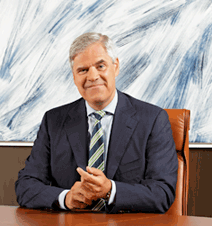 |
| Andreas Dombret, Bundesbank |
There is one new element. The European Systemic Risk Board has asked national governments to introduce a body that will provide macro-prudential oversight. There is a draft law regarding how this will be implemented in Germany. The supervision of individual institutions is important and needs to be done in a rigorous way. But one of the important lessons from the crisis is that the sum of all of the individual risks is less than the systemic risk, the threat to the integrity of the system overall. It is an additional piece of the regulatory framework.
It is anticipated in the draft law that the Bundesbank will play a significant role in analyzing systemic risk. But because we are an independent body, we will provide data and advice to a financial stability board. It will be up to this board to put in place and execute macro-prudential rules, such as raising anti-cyclical capital buffers.
EM: This new field of macro-prudential regulation runs counter to the Alan Greenspan view that you can only clear up the mess from a bubble after it has burst. Will this approach to regulation prevent future crises?
Dombret: There will still be crises. It is the nature of capitalism. But it is still important to bring data together and think about markets and the financial system in a more holistic way. It is better to have a bird’s eye view than a worm’s eye view. There will be crises but perhaps the question is how to limit their severity. This is a new area of research.
At the Bundesbank we want to lead that effort. We have a group that straddles economic, financial and macro-prudential research. Rather than just ticking boxes to say that regulations are being followed, this field has to evolve and new ways of thinking applied. But the most important thing is that macro-prudential supervision is being pursued, because it places systemic risk at the heart of regulation.
EM: The banks that got into trouble in Germany were all, to a greater or lesser degree, heavily reliant on structured investment vehicles (SIVs) and conduits for funding. Do you think this new regulatory architecture would have spotted the funding risk and raised a red flag?
Dombret: Absolutely. The problem with conduits is that they were off balance sheet and across the system as a whole it was difficult to assess the risks. Another lesson from the crisis is that when banking happens off balance sheet it is an indication that insufficient equity or other capital is in place. If a bank engages in a business where there is insufficient capital, that should signal to a regulator that there is a poor and ultimately unsustainable business model.
It is important to monitor all financial risks that are originated outside the regulated part of the system and beyond the remit of supervision. Any financial instrument or business model that exists to circumvent regulation, or escape the supervision of regulators, is precisely the sort of business regulators should focus on because it is likely to prove problematic.
EM: It sounds as though the shadow banking system is a particular concern?
Dombret: I don’t like the term shadow banking for two reasons. First of all, it isn’t truly banking. There is no licence. Second, it is not in the shadows. I call it non-bank banking. That might be complicated for the general public, but I hope the readers of Euromoney will understand what I mean.
EM: Why is it a concern?
Dombret: It is not illegal and regulators are not trying to make it illegal. Nobody believes that all financial activity has to occur, or be intermediated, within the banking system. Many banks do not control or operate their ATM network anymore and there is no problem with that, for example. But an area where a bank would be regulated, and a non-bank is not, should be a concern for regulators.
There is also an obvious interlinking of the banking system and non-bank banking, including hedge funds. We want to understand where those risks are, how concentrated they are and how correlated they are. When we have the data we will make the assessment.
EM: What role did shadow banking have in the crisis?
Dombret: It is about business models. The conduit and SIV funding model was wrong. Originate-to-distribute was wrong. But financial innovation is not bad. Securitization was a healthy development. I am not saying that hedge funds are bad or even that the broader non-bank banking system is necessarily detrimental. But at the moment there is a lack of transparency.
Why not make the financial system transparent, let regulators gather all the data and allow them to understand the whole system? We are not crying foul about shadow banking, far from it. Our view is very balanced, but we want to know more. It is our role as a central bank and macro-prudential regulator to do this.
If you think back, the assumption was that originate-to-distribute carried little risk. A bank gathered assets and then sold them on. But suddenly this business model was faced with an unprecedented liquidity crisis and the impact in the system was profound. Regulators have to be more alert to these unforeseen risks.
Money market funds are involved in credit and maturity intermediation. It is worth thinking about what would happen if there was a run on this sector and how it would affect the system as a whole.
EM: The crisis also hit Germany. Do you think you weathered the storm better?
Dombret: No. It would be foolish to say that German banks or the financial system proved particularly resilient. The crisis hit Germany very badly. IKB failed in 2007, before Bear Stearns, and long before the true severity of the global financial crisis was apparent. We found banks using SIVs and conduits that were completely disproportionate to their activities.
But the reaction has been positive. The creation of SoFFin [Sonderfonds Finanzmarktstabilisierung – Special Financial Market Stabilization Funds] relatively early was helpful. Though this is still controversial, in retrospect the actions taken will be seen as correct.
We made mistakes in Germany and not every part of the banking system has been a source of pride, far from it. We suffered our fair share of the crisis, perhaps more than our fair share. But the diversity of the banking system provided some stability.
Customer deposits as an average share of total assets were 36% at the end of January. In the Eurosystem the average is 32%. People are depositing more money in German banks. The credit-to-deposit ratio is 84% versus a Eurosystem average of 104%. I do not believe all of the problems of the German banking industry have been resolved. But the tail wind from a strong economy has certainly helped and in most cases German banks have used this wisely.
EM: Many commentators say that Germany is over-banked, therefore the system is unprofitable and that leads to bad decisions. You see diversity as a strength – is it a weakness?
Dombret: It is very important to keep in mind that there is considerable heterogeneity and overall this is a strength. Whatever problems there have been, the three-pillar system [private banks, cooperative banks, savings/Landesbanks] has been successful.
The savings banks and cooperatives were a source of stability in the crisis and play an important role in providing finance to the real economy. There is still over-capacity in the German banking market. A reduction in this over-capacity has economic merits, but this is an observation, not a call for consolidation.
EM: Where would you like to see consolidation?
Dombret: That is a question for the owners of banks. What I care about is business models and how they impact the stability of the financial system as a whole. Consolidation has to fulfil a role: creating value for shareholders and improving the stability of the system. That is the test. A merger that creates a bigger institution that still has a poor business model does not pass the test.
EM: Would you block a deal that created a globally systemically important financial institution (GSIFI)?
Dombret: It is not the job of the Bundesbank to block or approve a merger. We would look at the risks and make an assessment but the final decision is not ours to make.
EM: It may be attractive for banks from a funding perspective to attain GSIFI status. How do you regulate that?
Dombret: It is an important macro-prudential issue. In simple terms, the answer is to put a price on this funding advantage. The bigger issue is how to tackle the too-big-to-fail problem. Making the system more resilient overall is step one, which is why higher capital ratios are necessary. The 29 GSIFIs have an additional capital surcharge and this is not the same. I can’t say what the individual surcharges are because this is not yet public information.
Tackling the too-big-to-fail issue is even more complex. There have to be resolution mechanisms and living wills. There is no point just identifying GSIFIs and cutting their funding costs. There have to be additional responsibilities as well, above and beyond the capital surcharge. That includes putting detailed resolution mechanisms in place. There is more to do. We also need to think about liquidity issues and that is beginning; the agenda is wide-ranging and always evolving.
EM: Is there anything on your agenda that is perhaps less of a focus of current headlines and debates?
Dombret: Accounting standards. That sounds boring but it is the one area of global regulation where progress has been stalled. If we have a standard set of capital requirements, surcharges for GSIFIs and properly functioning resolution mechanisms in place, it would represent a significant achievement. But sometimes I step back and wonder if regulators are comparing apples and oranges because of divergent accounting standards. It is an issue that needs to be addressed.
Andreas Dombret, one of six members of the Bundesbank’s executive board, has taken a path few have travelled. After a career spanning Deutsche Bank, JPMorgan, Rothschild and latterly Bank of America, he joined the six-member executive board of the Bundesbank in 2010. Dombret is the first person from the private sector to reach such a high position in Germany’s central bank since Karl Klasen resigned from the top job at Deutsche Bank to assume the presidency of the Buba in 1970. Download PDF of the European Commission’s green paper on shadow banking