 |
|
|
Banker of the Year: Peter Sands, CEO, Standard Chartered |
Think of a chief executive of a leading bank who has remained in his position throughout the global financial crisis, and who hasn’t faced a single call for his replacement.
Think of a bank that has delivered a profit in every single reporting period during that turbulent time, and that has more than doubled both income and profits over the past six years.
Think of a chief executive whose strategy has rarely if ever been questioned, and who has faced little scrutiny of his compensation because of the bank’s performance – despite taking home a package of $8.1 million in 2011.
Think also of a banking leader who is prepared to argue forcefully and publicly on behalf of the industry, while acknowledging that mistakes have been made and there must be changes to the regulatory and risk models governing global banking.
You’re thinking of Peter Sands.
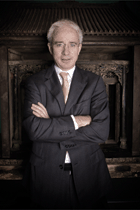 |
| Peter Sands, chief executive of Standard Chartered and winner of Banker of the Year |
Sands became chief executive of Standard Chartered in November 2006. He took over from Mervyn Davies, who assumed the role of chairman for the next three years. It was a rare example of a smooth succession that brought continuity in leadership and in a strategy that to this day remains to focus on Asia, Africa and the Middle East, with the aspiration to be the best international bank in the world. This has led to a period of long-term and sustained growth, not a bounce-back; in the past five years, through the financial crisis, income has grown from $8.6 billion to $17.6 billion. And unlike many banks that grew pre-crisis, for Standard Chartered that income growth has led to a corresponding 113% rise in profits, from $3.2 billion in 2006 to $6.8 billion in 2011.
Standard Chartered still has demonstrable momentum. Last year produced a record in the wholesale bank, which is run by Mike Rees. The division broke through the $10 billion income threshold for the first time, and generated profits of more than $5 billion. Both reporting lines were up by 9%, despite the turmoil in financial markets spreading to the regions in which Standard Chartered operates.
In consumer banking, run by Steve Bertamini, income in 2011 grew by 12% to $6.8 billion and profit was up 26%, to $1.6 billion.
And for all that Standard Chartered has benefited in not straying from its core focus on Asia, the Middle East and Africa, Sands now oversees a diversified business: in 2011, some 24 markets delivered over $100 million of income.
The bank has used its financial performance to maintain a capital position that places it among the strongest global banks, with a core tier 1 ratio of 11.8% at the end of 2011.
Sir John Peace, who took over as chairman of Standard Chartered from Davies in 2009, says: “Peter’s greatest quality is to understand the problem and find the solution. He provides very clear strategic thinking, leadership and direction for the bank.”
Sands has also become an increasingly outspoken but thoughtful contributor to the debate about the future of the global banking industry. As co-chairman of the B20 taskforce of leading global banks, he recently warned that Basle III rules designed for the developed world would particularly increase the costs of trade finance and project finance, which are crucial to the growth of the emerging markets. New rules on liquidity and counterparty risk would also cut the supply and raise the cost of credit in those economies, he said.
Peace adds: “Peter believes passionately in the role that Standard Chartered, and indeed the banking industry as a whole, plays in society and the wider economy. And, like all of us, he wants to see greater financial stability for our shareholders, customers and communities. Regulation is a vital element of reform, but this must be balanced with consistency and coordination across the industry.”
Sands has also criticized the role, rather than the concept, of the UK’s new Financial Policy Committee, saying in a letter to the Financial Times that “equity investors will, I think, take one look at the idea of their returns being dictated by the FPC and run a mile. This matters. Put bluntly, if investors can’t be convinced that investing in banks will deliver appropriate returns, capital will be sucked out of the industry, causing credit availability to fall and the cost of credit to rise.”
Such statements have led many to speculate that Standard Chartered, which has more than 90% of its business in Asia, the Middle East and Africa, will seek to leave the regulatory oversight of the UK, in which it remains headquartered.
It’s one of the few clouds on Sands’ horizon. Another is whether or not those regions whose economic growth has benefited Standard Chartered can get through the latest global crisis without suffering a marked downturn.



