On July 4 that once-great American import into the UK, Bob Diamond, the former chief executive of Barclays, appeared before the UK’s House of Commons Treasury Select Committee for three hours. For me, Diamond’s appearance raised more questions than it answered about events at the bank. However, one thing is now clear: a parliamentary committee is the wrong forum to get to the bottom of what occurred, who was hurt and what to do about the banks. A ‘Libor Leveson’ is needed – an independent judicial investigation.
Bob Diamond’s testimony has been described as “implausible” and “obfuscating”. That may be, but Diamond came across as more likeable than the MPs who grilled him. “I’ve decided,” one mole grumbled, “that the only difference between bankers and MPs is that the bankers are paid more.”
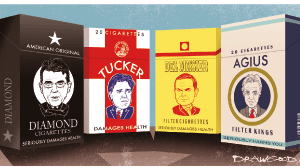
Questions remain however. Why did Diamond resign on Tuesday morning, having insisted on Monday that he was staying? Diamond’s note of his conversation with Paul Tucker in October 2008 was ambiguous: “While he [Tucker] was certain that we did not need advice, it did not always need to be the case that we appeared as high [in our Libor submissions] as we have recently.”
Although Diamond insisted that he did not see this as an instruction from the Bank of England for Barclays to lower its Libor rates, Jerry del Missier, co-president of the investment bank, did order subordinates to lower the bank’s Libor submissions.
Del Missier took home huge amounts in salary, bonuses and long-term incentives. You don’t get paid that sort of money and have the responsibility he had by second-guessing your boss.
Diamond and del Missier have admitted in submissions, although it was not picked up by the bumbling committee, that they had a follow-up discussion about the Tucker conversation, and yet the essence of Tucker’s words seem to have been lost in translation. Why was that? Furthermore, who were the sources in Whitehall who were worried about Barclays’ funding levels during the crisis? And finally, as the committee’s chairman referred to initially – was there something about the culture at Barclays that was toxic?
Eventually we may be able to put the pieces of the jigsaw together. But in the end Diamond had to step down not because of this episode but because of what had gone before: the aggressive tax deals, the off-balance sheet Protium transaction, the payment protection insurance scandal and, of course, the history of super-sized bonuses for Barclays Capital’s senior management. A wave of revulsion swept through the country, and much like a leading aristocrat during the French Revolution, Diamond was loaded on to the tumbrel.
“Being Bob Diamond did not serve him well with the committee,” a source intoned inscrutably. Source was referring to Bob’s urbane personality, which would be pitch perfect in New York but grates in London.
 |
There was an obvious clash of cultures. Committee members addressed him coldly as “Mr Diamond”. The former bank CEO genially hailed them by their first names, treating the parliamentarians as if they were a gathering of employees – his junior employees at that. Mr Diamond repeatedly claimed that he loved Barclays. The English are reticent about love – they might admit to loving an animal, occasionally a family member, but never the institution they work for. Diamond’s fervent condemnation of the wrongdoers in the Barclay’s ranks is believable. I, unlike his interrogators, find it completely plausible that he had no idea what was going on during the 2005 to 2007 period when traders leant on the Libor submitters. Trading floors are large spaces; even when I worked on the Barclays floor 10 years ago, Bob, as head of the FICC area, didn’t walk around it much. He had broader responsibilities and relied on his subordinates. In retrospect, perhaps he relied on the wrong people and relied on them too much.
We know that Barclays cooperated fully with the regulatory authorities on this global, industry-wide investigation. Indeed, as many as 12 other firms may be involved. I don’t understand why Barclays are the first bank to announce a settlement – were they a whistleblower of sorts, or are they first because it is at the beginning of the alphabet? Ironically, we will only be able to fully judge Barclays’ misdemeanours when we know the extent of the other banks’ culpabilities.
However, this episode and the resignation of three of Barclays’ top executives – chairman Marcus Agius, chief executive Bob Diamond and chief operating officer Jerry del Missier – leaves the organization horribly exposed. There will now be a very messy period of transition, and probably transformation.
When he started at Barclays in 1996, Diamond always used to say that he believed there was room for one British bank in the top league of global banks. He achieved that vision by building Barclays Capital from nothing and acquiring the US operations of Lehman Brothers in September 2008.
But I wonder if his departure will mean that the dominance of the investment bank within the group dwindles, so that Barclays ends up resembling a domestically focused RBS rather than a muscular, global player like HSBC. The movement to separate commercial and investment banking is gaining ground, and some people are questioning if Britain can afford the swash-buckling, high octane, risk-taking institution that Barclays – during the Bob Diamond era – came to represent.
After the hearing, a colleague said to me: “Abigail, when you worked for Diamond, how would he have reacted to a pointless, three-hour meeting that achieved nothing?” I assured them that Bob did not do ambling, inconclusive meetings. But what my colleague missed was that this show-trial was important for Diamond on many levels: it was about his character and the institution that he built into a powerhouse but that he leaves in disarray.
In an environment where money and compensation are the aim of the game, an end-justifies-the-means culture might prevail. Diamond talked passionately about ethics, the importance of clients and the role of banks as good corporate citizens.
| Abigail Hofman |
But tragically for Diamond, he missed one key thing. Banks are hierarchies; when the troops looked up at their top bosses, what they saw was senior management earning huge – often unjustifiable – amounts of money. Can you blame the average Barclays Capital employee if he thought: “I want what he’s having?” Diamond always talked about leading from the top – his energy and enthusiasm for the bank was palpable. He would never have condoned wrongdoing or criminality; but perhaps once again the message got lost in translation.




