
LIKE ABU DHABI, Mubadala is taking stock after an initial growth spurt: seeing where it might go from here, weighing up its successes and failures.
In contrast to the more financial returns-focused sovereign wealth funds, Mubadala is much more in line with the fashion post-financial crisis and post-Arab Spring. Indeed, it doesn’t even like to think of itself as a sovereign wealth fund. Its ownership is 100% governmental. But its focus is on domestic development.
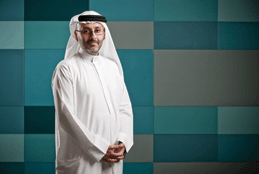
“Essentially what we do is deploy capital, not only for financial gain but also to help advance the diversification efforts of Abu Dhabi’s economy,” says COO Waleed Al Muhairi in an interview with Euromoney.
This so-called dual bottom line is one that many sovereign wealth funds aspire to when they make strategic investments. But at Mubadala there has been a much more consistent, sustained search for immediate domestic developmental relevance in its foreign equity investments. It is an approach that investment bankers could do well to bear in mind when pitching Gulf funds, and as the financial crisis continues to make western firms needy of capital injections.
Since its inception almost 10 years ago, Mubadala has gone from a handful of people with just one big project (a gas pipeline from Qatar to Abu Dhabi) to having around 600 people at the head-office level, developing businesses in eight sector-specific business units: from IT to heavy industry, and from aerospace to real estate. Last year, the firm’s assets under management passed AED100 billion ($27 billion) for the first time.
In terms of its international equity stakes, today Mubadala is a top-20 shareholder in US conglomerate General Electric, with close to $1 billion in exposure to that stock. It is also the biggest shareholder (with 19.9%) in California-based Advanced Micro Devices, the world’s second-biggest producer of microprocessors for personal computers (after Intel Corporation). Over the past four years, Mubadala has furthermore made almost $2 billion in equity investments into US private equity group Carlyle.
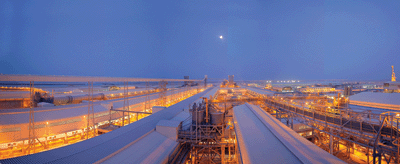
The Dolphin Energy pipeline, Mubadala’s first big project, has been operational since 2007 and is now one of the firm’s main cash cows. As gas is in shorter supply in Abu Dhabi than oil, so Dolphin provides an additional source of feedstock for the emirate’s electricity plants: as well as for Mubadala’s latest big cash-yielding project – Emal, an aluminium smelter near the border with Dubai.
 |
|
The Emal aluminium shelter is Mubadala’s latest big cash-yielding project |
“Dolphin was in many ways a defining project for us, both strategically and institutionally. It formed and vindicated the checklist that we’ve always had from an investment thesis perspective,” says Al Muhairi. Emal, which is jointly owned by Dubai Aluminium, reached full production capacity at the beginning of this year. This summer, Emal approved a $4.5 billion investment plan to double capacity, potentially making it the largest aluminium smelter in the world. In the past year Emal, like Dolphin, has investigated but pulled plans to access the project-bond market.
“[Emal is] not only financially significant. It’s also a great way to convert energy into something that’s more downstream than just oil and gas,” says Al Muhairi.
A former McKinsey consultant and a Harvard graduate, Al Muhairi was one of the chief architects of Abu Dhabi Economic Vision 2030: a developmental roadmap devised in 2007 and 2008 (at the height of the Gulf’s property boom). Al Muhairi and CFO Carlos Obeid (as well as chief legal counsel Samer Halawa) are perhaps the most consistently devoted to Mubadala of the four-member investment committee.
Aside from being chief executive of Mubadala, Khaldoon Al Mubarak has a senior role in the executive arm of Abu Dhabi’s government. He is also chairman of Manchester City Football Club in the UK.
New areas of growth
Projects such as Emal and Dolphin are already contributing to Abu Dhabi’s diversification and development. But the past three years have not always been easy for Abu Dhabi, or for Al Muhairi and his team at Mubadala, and the firm is now more focused on consolidation.
Despite increased revenue from its energy, infrastructure and aerospace units, in 2010 Mubadala reported a loss of $86 million. This was mainly because of fair-value write-downs on its stakes in AMD and Abu Dhabi-listed Aldar, the developer of some of the emirate’s most ambitious real estate projects.
Although in Abu Dhabi property has held up better than in Dubai (the property boom in Abu Dhabi started later) analysts reckon prices in Abu Dhabi have fallen by around a third since 2008. Aldar posted a $3.5 billion loss in 2010 on the back of asset impairments, provisions, and fair-value losses booked on investment properties.
Aside from the sale of property to the government directly, Aldar’s $5.2 billion bailout earlier this year included the issuance of AED2.8 billion in convertible bonds to Mubadala, potentially bringing Mubadala’s stake in the developer from 20% to close to a majority. According to Abu Dhabi investment firm CAPM, Aldar is still the most leveraged developer in the UAE, with about $8 billion of debt. Aldar’s former chairman, Ahmed al-Sayegh, was removed from Mubadala’s board of directors this summer.
 |
|
|
“We have an investment process within Mubadala that we think is quite mature. It probably isn’t any different from what you would see at a Carlyle, or at any other tier-one investment company” |
“Real estate remains an important element of development for Abu Dhabi, and Aldar is an important holding for Mubadala,” says Al Muhairi, although he admits Aldar’s developments were based on an over-estimate of demand and the firm took on too much debt.
Vision
Al Muhairi doubts Mubadala will now replicate the 25%-plus annual growth levels it experienced around the time Economic Vision 2030 was released. By the end of last year, the government’s cumulative contributions to Mubadala totalled about $15 billion. But compared with a $7 billion grant in 2008, government injections in 2009 and 2010 were much smaller, at $2.4 billion and $3.5 billion, respectively.
“Every couple of years we take a step back and look at the possibility of expanding some of the areas which are of interest to us and to our shareholder,” says Al Muhairi. In particular, he says his team is investigating whether to create a new unit for media investments. The firm is also evaluating whether to expand its healthcare unit into pharmaceuticals.
He says: “Pharmaceuticals could work, if we decide that we want to move that way, because it’s extremely knowledge intensive. It’s an extremely innovation-driven industry. […] One of the things that we would strongly consider is whether we could develop a comparative advantage here in Abu Dhabi, upon which to build a foundation. So if we believe that [in pharmaceuticals] we can do that, and make money, then the chances are that we will expand pharmaceuticals into one of our verticals.
“From a media perspective, if you look at Abu Dhabi, you see that there are institutions that already exist in the content space. So as media is becoming more interesting from an Abu Dhabi-agenda perspective, we look at it, and we ask: ‘Is there an area that we can deploy capital into – either creating new businesses or supporting some of the businesses that Abu Dhabi already has – in a manner that is consonant with our vision?’”
But if growth continues – perhaps now into media and pharmaceuticals – the COO still thinks the institution is becoming more mature. “We’re setting up new businesses every year. But to have a 25% growth rate of a AED100 billion portfolio is different from having a 25% growth rate on a much smaller portfolio,” he says.
Matthew Hurn, head of group treasury, agrees: “As more projects become operational, increased cashflow and greater stability of earnings will help offset exposure to short-term volatility in commodity and equity markets.
“We might see a flattening-off in terms of our growth in assets, and while you will still see capital deployed in new projects, many of our assets are about to start delivering, so there will be a much larger increase in revenues and profit.”
Experienced investing
Perhaps the difficulties at Aldar and in the emirate’s real estate market are just part of the learning experience Abu Dhabi and Mubadala have had to go through in this early stage of their development. Certainly, a commensurate expansion in treasury and other areas of risk management has had to keep up with the rapid growth in assets. Aside from its exposure to stock markets, movements in the global oil price affect the firm’s revenues (for example, through the stakes it has in oil fields in Indonesia and Kazakhstan).
“One of the things we’ve spent a lot of time doing for the past three or four years […] has been the process of institutionalization, where we try to manage this growth by making sure we have the right processes, the right people and the right capabilities within Mubadala to be effective stewards of the government’s money. That’s a responsibility we take quite seriously,” says Al Muhairi.
A crucial aspect of this has been to improve the firm’s evaluation process for potential purchases, for example, via its investment committee. “We have an investment process within Mubadala that we think is quite mature. It probably isn’t any different from what you would see at a Carlyle, or at any other tier-one investment company,” says Al Muhairi.
Part of the rationale for investment in Carlyle, in fact, was that it would provide insight into running a private equity-type institution: as well as bring better ability to share access and knowledge into sectors, such as aerospace, where Carlyle has a lot of experience and where Mubadala also has growing investment.
One element of Mubadala’s institutionalization is that its financial investments outside the UAE are now managed by Mubadala Capital: a unit of about 20 people, which trades in and out of different instruments on a day-to-day basis, purely for financial gain. “In many ways it functions like a long-short hedge fund, internal to us,” says the COO. Mubadala therefore has the flexibility to liquidate, at any time, positions held within Mubadala Capital: which includes the firm’s private investments in the Carlyle Group, as well as its public-market equity investments in GE and AMD.
“We’ve had exits from the very first project, Dolphin,” says Carlos Obeid, pointing to the sale of a minority stake in the pipeline to French energy firm Total and Occidental Petroleum in the US.
In April, Mubadala sold a 49% stake in Paris-Sorbonne University Abu Dhabi (of which Mubadala is the developer, operator, and previously 100% owner). The buyer was Mubadala Infrastructure Partners: a private equity-style fund focused on the region, with co-sponsors Credit Suisse, GE and Mubadala, and some 15 to 20 LPs.
Last year, Mubadala sold back to Fiat the 5% stake it bought in 2005 in Fiat’s fellow Italian car maker, Ferrari. Abu Dhabi’s Ferrari theme park (a joint venture between Aldar and Ferrari) also opened in 2010.
However, monitoring short-term financial value is less of a priority for firms, especially those in Abu Dhabi, in which Mubadala might have a higher proportion of the equity: in other words, firms with a closer role in Abu Dhabi’s economic development and diversification – those in which Mubadala might have a more hands-on approach to management.
“If it’s a strategic asset, we’re more likely to maintain some ownership over time, but we’ll still divulge [a portion of our holding],” says Al Muhairi.
Exchange and development
Understandably, Abu Dhabi likes the idea of getting more from its relationship with international capital, and this is something Mubadala in particular constantly takes into account in its investment process. Abu Dhabi wants to be more than just a go-to for foreign firms in need of a new shareholder in times of crisis, and it needs more than just financial returns from the investments it does make in these firms.
Above all, Abu Dhabi wants to be more than just an exporter of oil and a dumping-ground for foreign consumer goods. Local frustration and indignation at such a situation could be politically dangerous (anti-government clerics in Iran in the late 1970s had similar grievances). After the Arab Spring, this is particularly relevant.
Today – despite the prevalence of expatriates in the UAE – unemployment among UAE nationals is around 13%, and the level is highest among the large young population. The UAE urgently wants to provide more fulfilling employment for its population, and Mubadala is a key part of that.
Mubadala, in fact, grew out of one of the Gulf’s biggest industrial offsets programmes: in other words, one of the schemes where foreign companies, especially in defence, which sell manufactured products to the Abu Dhabi government, are required to contribute to local industry in other ways. Although the UAE now has a separate offsets programme, Mubadala still owns stakes in firms that were originally set up as part of the offsets programme, and which are now listed on the local stock exchange.
Abu Dhabi-based Tabreed, the region’s biggest district cooling company, evolved like this. French tank manufacturer Giat helped Tabreed’s establishment in the 1990s. However, similarly to Aldar (a big customer of Tabreed) Mubadala had to inject capital into Tabreed this year via convertible bonds, potentially bringing its stake from 17% to close to 70% according to CAPM.
Mubadala’s CEO, COO and CFO all used to work for the UAE offsets programme. Since its establishment in 2002, Mubadala has applied the defence-offsets principle to Abu Dhabi’s imports of other kinds of goods, as well as to the support Mubadala itself gives as an equity investor in foreign firms.
The very name Mubadala is Arabic for exchange, and this idea even applies to banking relationships. All too often banks view the Middle East as a place to grab their share of petrodollars, sometimes via more complicated instruments such as equity derivatives (Mubadala has hired external consultants to make sure it has the right exposure to equity derivatives.)
“We’ve spent time and money making sure we have a strong system of tracking our relationships with the banks – money committed, fees paid, as well as people and time they’ve given us. There has to be give and take,” says Derek Rozycki, executive director of the structured finance and capital markets division, and a former Barclays Capital banker. “If we have an issue that needs to be addressed, we want the bank’s best team. If we need financing, we want them to be ready to put it on the table.”
Mubadala’s total debt was $10.7 billion at 2010 year-end. Including corporate debt, refinancing, and 100% of the debt raised by Mubadala joint ventures and affiliates, Mubadala has issued about $40 billion in debt since inception. It has a $2.5 billion revolving corporate debt facility with 12 international banks.
The firm established a commercial paper programme last year. It has also had a corporate bond programme since 2008, most recently selling $1.5 billion in five- and 10-year notes in April.
“Building mutually beneficial relationships is an integral part of what Mubadala does, and this plays into how we manage business with banks. We don’t have a problem mobilizing capital. Banks value us a client,” says Rozycki.
Mubadala can apply to the Abu Dhabi government’s executive council for more grants, if it needs them, at the end of every year. The CEO is a member of the council. But Mubadala likes leveraged returns, as well as the additional overview on investments that creditors and bondholders give.
Mubadala tries to keep leverage low enough to allow its firms to grow. Contract-based projects will be more leveraged if, for example, they are in jurisdictions where similar projects are relatively common (for example, Mubadala’s power project in Oman rather than its one in Algeria). In the case of taking minority stakes in firms such as Carlyle or GE, the investment is more likely to be debt-financed if it is a liquid, publicly traded stock.
Local relevance
The principle of exchange is crucial in Mubadala’s relationships with the foreign firms in which it has invested equity. In the case of GE, a new partnership emerged around 2008, a time when GE was struggling financially because of the economic environment, particularly in the US.
“The first thing we did was to try to define the scope of the cooperation. [GE’s chief executive Jeff Immelt] said: ‘It would be beneficial to me if we could have a stable shareholder in GE.’ We replied that we’d have to look at that. It had to make financial sense on a standalone basis. We did the due diligence, looked at that, and cleared that hurdle from our perspective,” says Al Muhairi.
But again, a good financial case for the equity investment was not enough. Mubadala wanted GE to invest more in Abu Dhabi and in the industrialization and diversification of Abu Dhabi’s economy. As such, GE has committed itself to creating a research presence in Masdar City, the carbon-neutral renewable energy hub Abu Dhabi is building (and which Mubadala owns). GE is further providing training and technical support to a Mubadala subsidiary, Abu Dhabi Aircraft Technologies, to help build a local maintenance facility for GE engines in Abu Dhabi.
The two firms have also provided $4 billion each to Mubadala GE Capital: a new joint venture doing growth and acquisition financing for small and medium-sized enterprises, equipment leasing, as well as bankruptcy liquidation products and other activities.
The venture has already deployed $3 billion in its first year and a half – mostly in the US and Europe. Assets within the Middle East and North Africa (including participation in a toll-road securitization in Dubai) amount to only about 15%. But the firm is bringing the regional asset base up to between a quarter and a third of the total – partly out of a recognition that the region lacks capabilities in originating and managing this type of financing.
“You don’t have [commercial-finance] platforms like this in the Middle East,” says Mubadala’s CFO, Carlos Obeid, the chairman of the venture. Obeid says the firm turned profitable only a year after its formation.
Al Muhairi says: “Abu Dhabi and GE have had a great partnership, because Abu Dhabi has been a pretty big customer of GE for a long time – across its myriad business lines. We don’t exist in a vacuum in Abu Dhabi. We see what is around us, and try to create businesses in relation to this.”
Other projects grew out of similar relationships. Take the local healthcare centre Mubadala is developing alongside Ohio’s Cleveland Clinic. UAE nationals spend some $2 billion on healthcare abroad and the Cleveland Clinic was a popular destination.
 |
|
|
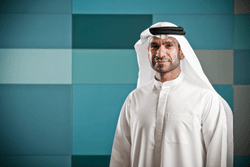
“As long as patients continue to go abroad for healthcare, we haven’t done our job” |
“As long as patients continue to go abroad for healthcare, we haven’t done our job,” says Suhail Al Ansari, the head of Mubadala’s healthcare unit.
AMD was somewhat different in that Abu Dhabi had not been a big customer of AMD previously. Nevertheless, it’s another good example of how Mubadala’s investment process works.
“It usually starts from the same point: folks come here and they’re interested in having a financial shareholder. But we usually broaden the dialogue and see if we can’t shape it to something that fits within our mandate,” says the COO.
Before Mubadala’s investment in AMD four years ago, AMD was struggling to generate internal cash to set up manufacturing facilities for the chips it designs. As a result, after the purchase of the shares in AMD, Mubadala separated AMD’s manufacturing assets and merged them with Singaporean rival Chartered Semiconductors. The latter was purchased in 2009 by a subsidiary of Mubadala created the year before, Advanced Technology Investment Company.
The merged entity is Globalfoundries – now the third-largest manufacturer of semiconductors in the world. Globalfoundries is already building one of the world’s most advanced semiconductor factories in upstate New York. Al Muhairi, who is also ATIC’s chairman, says the culmination of the process will be the eventual opening of a fabrication facility in Abu Dhabi.
“There’s nothing more innovative than semiconductors. Having folks that can train in that sector, and having that facility in Abu Dhabi, which is profitable, and a centre for innovation, is obviously something that we believe will help diversify Abu Dhabi’s economy,” says the COO.
Local employment
Mubadala has certainly had projects – such as Emal – that look likely to yield at least short-term financial returns. It has also made investments whose financial returns might be further away: such as Aldar.
Have Mubadala’s operational projects already succeeded, at least to an extent, in getting otherwise potentially frustrated UAE nationals into fulfilling and rewarding jobs? Muhairi says Mubadala aims to bring the proportion of Emirati staff in its own head office from 38% today to 48% “within the next couple of years”. When Mubadala gave Euromoney a tour of its aluminium project – which is already one of the largest industrial sites in the UAE – there appeared to be a definite majority of South Asian and non-Gulf Arabs among the engineers and other professional workforce. The only Emiratis present at the site that day appeared to be the receptionists, although almost 50% of Abu Dhabi’s population consists of Emirati nationals. Developing, via Mubadala, local technical and professional capabilities outside the oil sector is inevitably a long-term project.
One Mubadala project that has certainly brought social returns is the Imperial College London Diabetes Centre, built on the site of a former petrol station near Abu Dhabi’s city centre. The UAE has one of the world’s highest incidences of diabetes. Partly overseen by staff from Imperial, the centre’s physicians are still some way from being 50% Emirati. However, the aim is partly for Imperial staff to train up locals.
Paris-Sorbonne University Abu Dhabi is another example. The university has state-of-the-art facilities including a library full of brand-new French-language books. The state education department pays Mubadala an availability charge for the number of students the facilities can take. A flick through a couple of the books in the library does not show much sign of their use yet. But the university was only officially opened in February.
Today, after the Arab Spring, it seems especially vital to seek local, job and education-orientated returns to state petrodollar investments. Mubadala has already created, as the COO says, “benefits to the people, and its shareholder”. Al Muhairi says: “Mubadala has been an experiment that proved the case.”
As the learning and maturing process continues at Mubadala and across the region, these kinds of dual-mandate investments will be increasingly beneficial. The entire region is now more aware of the need to create job opportunities for nationals.
More investments across the region will therefore increasingly be made for long-term social and economic results, as well as for financial returns. As such, the region might be increasingly good at eschewing projects that only yield short-term glamour. Across the Gulf, branding and real estate assets are hopefully becoming more of a means to an end, rather than ends in themselves.


