Vertical farming: Farms among the skyscrapers

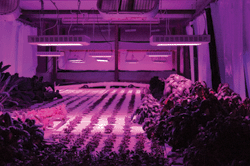
In South Chicago, tucked behind a low-end supermarket in what used to be the old stockyards, a project is under way that might offer a long-term solution to some of the food needs of US cities. A sustainable non-profit firm, with the help of the Illinois Institute of Technology (IIT), has taken over an abandoned meatpacking warehouse and is converting it into a farm. In the basement, pools of tilapia fish, bred for Chicago’s restaurants, are providing waste through a biological reactor. Once the bacteria from the water is converted into nitrates, the same water pumps into a 1,000 square foot pool that provides nutrients and water on which a rotating floating crop of lettuce and herbs grows. It mimics a natural ecosystem. On the roof and the surrounding 2.4 acres of empty land, plots will be created for the growth of organic vegetables, and greenhouses will be erected. Mushrooms and micro-greens are being grown in the basement. A brewery is being installed on the ground floor – the waste from which, via an anaerobic digester, will fuel and supply energy to the entire building. A bakery will be installed on the upper floor with kitchens for local residents to use for producing standard-meeting food items.

A sustainable non-profit firm, with the help of the Illinois Institute of Technology (IIT), has taken over an abandoned meatpacking warehouse and is converting it into a farm

In South Chicago, tucked behind a low-end supermarket in what used to be the old stockyards, a project is under way that might offer a long-term solution to some of the food needs of US cities. A sustainable non-profit firm, with the help of the Illinois Institute of Technology (IIT), has taken over an abandoned meatpacking warehouse and is converting it into a farm.

Access intelligence that drives action

To unlock this research, enter your email to log in or enquire about access