|
|

 |
JOSEF ACKERMANN PAUSES, a slight smile spreading across his face. “People ask me why I make such firm commitments to achieve specific goals,” he says. “My answer is it gives transparency to the market, it rallies the troops behind a target and, if you achieve it, you earn a great deal of respect.”
What Ackermann does not say is that making commitments gives his critics something to aim at. But what his critics don’t get, and what he does, is that when he sets himself a goal, he usually achieves it. Ackermann has made a career out of proving people wrong.
In the past year he has pulled off perhaps his greatest masterstroke: rebalancing Deutsche Bank away from an over-reliance on its all-firing international investment bank, back towards to its German, retail roots. Acquisitions undertaken over the past year have transformed Deutsche at the group level, while solving several of its most intractable problems at a business-line level.
Most of these problems have proved to be more perception than reality: too much risk on the balance sheet; an over-reliance on trading revenue; an inability to make acquisitions work. By buying Postbank, the Dutch operations of ABN Amro’s commercial bank and the private banking business of Sal Oppenheim, Ackermann has brought the centre of Deutsche’s gravity back closer to home.
Earnings target
His latest plan is that by the end of this year the new Deutsche Bank will be generating €10 billion of pre-tax earnings. This has drawn the usual round of scepticism from the press, analysts and professional Deutsche bashers.
Credit Suisse analyst Daniel Davies encapsulated the market wariness of Ackermann’s bold claim when he wrote in late 2010: “While we believe that past-period investments may pay off well enough to avoid a collapse in earnings, we do not agree with the assumptions necessary to leave the company generating significantly more profit in 2011 than it made at the height of the boom in 2006/07, with a significantly reduced contribution from proprietary trading and structured finance.”
But by the first quarter of this year, the fruits of Ackermann’s rebalancing became clear for all to see. The bank generated €3.5 billion of pre-tax profit, with guidance for the second quarter looking equally strong. Deutsche has not seen a collapse in earnings: it has seen an explosion.
Initial results show that these earnings are coming from all of the bank’s main business lines. But perhaps what is most apparent is how the earnings mix is being rebalanced. Or to use an Ackermann phrase, the top line of the balance sheet has become more diverse. It is a key strategic goal for Ackermann that the fabled €10 billion not come just from investment banking or even sales and trading: it has to come from all parts of the group. And this was always part of the plan.
“In 2002 we said maybe 60% of pre-tax profit should come from investment banking and 40% from more traditional businesses,” Ackermann says. “But then investment banking performed very well year after year, with the exception of 2008, and the more traditional banking business, despite growing as well, couldn’t catch up with the investment banking growth organically. Finally with the crisis we got the chance to get to a more balanced business model. Our strategic goal is that over the mid-term we reach a 50/50 balance.”
He adds: “By 2014, let’s say, we might have €3.5 billion from retail, €1.5 billion from transaction banking and €1 billion from private wealth management and asset management. That is around €6 billion. Even if investment banking becomes more challenging in the future, and can only maintain profits at around €6 billion it would mean close to €12 billion in pre-tax profit with a balanced composition.”
Money, meet mouth
Ackermann has form in staking claims that seem improbable at the time but end up coming true. First it was his claim to be able to build a bulge-equivalent investment banking franchise. Then it was being able to throw off €1 billion a year in pre-tax retail earnings. Then it was the target of 25% return on equity. Now it is the €10 billion group profits.
“The first commitment I made, on becoming CEO, was to €1 billion in retail banking. I made it in my very first press conference. And we achieved that seven years in a row, with a 25% ROE. Now, as a group, we have committed ourselves to making €10 billion in annual pre-tax profit from our CIB and PCAM businesses.”
Given the stunning performance in Q1, the market is starting to understand why Ackermann is so bullish. He says: “The €10 billion target is focusing the way the bank is managed at all levels. At first the analysts’ consensus estimate was around €7 billion. After our first quarter it has gone up to €9.6 billion or €9.7 billion.” It’s fair to say that Ackermann is enjoying watching the analysts play catch-up.
Acquisitions prove their worth
The first quarter’s announcement was the first intimation the market had of the transformation under way at Deutsche. Underpinning much of the good news was the contributions that were made by the three big acquisitions: Postbank, Sal Oppenheim and the ABN Amro Dutch commercial banking business.
|
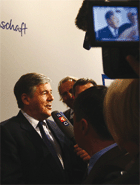
Josef Ackerman announces the takeover of Postbank, a deal that steered the bank back towards its German retail roots |
|
Despite the troubles faced by many retail and commercial banks around the world, Ackermann knew that if the business is done well it can be highly lucrative.
He had to win over the sceptics. He says that when the bank undertook its €10 billion rights issue in autumn 2010 he was constantly asked why he was investing in Germany and why he was investing in retail, as retail is not a profitable business in Germany. Once again he was forced to explain himself.
“The retail market in Germany is very attractive. We had a pre-tax return on equity in our PBC business of over 30% for many years. If you do it right you can make very good money: you have strong asset gathering, low credit risks, no bubble in real estate and a relatively fast-growing economy.”
The third question he was asked was why buy Postbank? It had a different culture, different clients and maybe was not as well run as Deutsche. But for Ackermann, it was an opportunity too good to miss, even if there were to be some hard yards in making it work.
“Postbank is a good bank and a bad bank,” Ackermann says. “The good bank is its core business. Of their €60 billion of risk-weighted assets only half is in the core bank today and the other half in the portfolio bank with a very low return. That’s why the reported overall numbers were always very disappointing. We will wind down the bad bank, and redeploy the capital into the good bank. It will take some years but then we will be making very good money.”
Overhauling retail banking
The retail banking transformation that Deutsche is building could have the same effect on the group as the investment banking build-up had under Ackermann, Edson Mitchell and Anshu Jain. It is being led by Rainer Neske, the head of private and business clients for the group. Neske says: “Together with Postbank, we reach a new dimension in the market as we are actually doubling the size of our business and customer base. We will leverage the full growth and cost-saving potential of this powerful new position. Our dominant position among private banks in our home market is the constant basis of our long-term success.”
This integration is not without its problems. The unions and German press are up in arms about the upcoming job cuts at Postbank. But the deal utterly changes the financial fortunes of the wider group from a funding and returns point of view. “Over the next two to three years we will de-risk Postbank and that will free up a lot of capital and improve our return on equity,” says Neske.
Ackermann believes that the deal can generate €1 billion of synergies, of which €800 million will come from the cost side and €200 million will come from revenues. The pain of making €800 million in cost savings will be felt by the workforce and might damage the wider brand, especially in Germany. But Ackermann is highly cognizant of the difficulties involved in making such an acquisition work. He has kept the Postbank brand and is only integrating the back offices. He feels that both the staff and clients of Postbank have welcomed the Deutsche Bank tie-up.
|
||||||||||||||||||||||||||||||||||||||||||||||||||||||
In the wider world, Deutsche is looking for more retail banking businesses in Europe. Neske believes Deutsche will be a top-five European retail bank by assets and deposits, achieved largely through international expansion. This expansion will come from select acquisitions as well as expanding the high-net-worth and asset management branch network that Deutsche has in existing countries, such as Italy or Poland, the latter of which is high on Deutsche’s list of growth businesses.
As all good chief executives do, Ackermann tries to persuade that he is not looking at any other big acquisitions in Europe. But the fact remains that even if he had wanted to build up the retail side of the business before the crisis, he would not have been able: those businesses were just too expensive. It has taken the crisis to unleash Deutsche’s retail potential. It also means he can look back on missed opportunities with a certain sense of relief.
“We once owned a stake in a Greek bank which we then sold and I regretted it for many years as the share price of Greek banks went through the roof. But today we are quite relieved we did so,” Ackermann says. “We were always very disciplined over the years. We looked at a number of acquisition targets in Germany and elsewhere but in the end we always said no if the structure or the price was not defendable to financial markets and ourselves.”
The turmoil in the European debt markets is likely to throw up some interesting opportunities, especially if banks have to crystallize some heavy losses on government bond holdings. This is where Deutsche can step in and Ackermann has a strategy: “I have always said: don’t buy distressed assets, buy good assets from distressed sellers.”
Coming home to Germany
Despite the European adventures, there is no escaping the fact that the Postbank and Sal Oppenheim deals have refocused Deutsche Bank back into Germany. That this has happened at a time when Germany is the strongest economy in Europe is down to judgment more than luck.
“Tapping into the German market from a funding point of view is very attractive given that growth and savings rates are very high,” Ackermann says. “Germany is the main beneficiary of the euro system. Imagine if we still had the Deutschmark. It would be so strong and our industries and their exports much weaker. The perception globally is that we are very much a proxy for Germany. That has lots of advantages. Germany is a role model again today. It is the place to invest.”
There is a sense that there were defensive reasons behind the deals as well.
“If you want to be among the best globally you must be a clear leader in your home market. Today over 30% of our revenues are generated in Germany,” he says. “If some of the assets that we bought in Germany had been snatched by major foreign competitors we would have a tough time in our own backyard. Imagine if Postbank had gone to a big French or Spanish bank? Or if the same thing happened to Sal Oppenheim? That’s why, when something of that importance became available, we had to get it.”
Ackermann points to a previous acquisition in 2006, which he concedes was done as much for domestic political reasons as it was for economic reasons.
 |
|
|
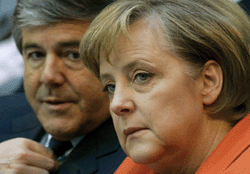
“We are very much a proxy for Germany. That has a lot of advantages. Germany is a role model again today” |
“For Berliner Bank we paid a good price, but an American bank was very close to getting it. We as Deutsche Bank need to own the bank in the capital of Germany with that name. Some people claimed that the price was so high that it can only be explained as a defensive move. But that’s not true. It would be hard to justify any acquisition if it were only defensive. In each case, the deal was a value creator.”
Nevertheless, these deals have created positive results in two key areas: funding and distribution. Deutsche always benefited from a larger and more stable funding base than other pure investment banks because of its extant retail business. That funding base has got larger and more stable.
“The value of a strong deposit base had been underestimated before the crisis,” Ackermann says. “Now everyone in the industry is trying to get one. It makes you much less dependent on wholesale funding and more resilient to shocks in the industry. There will be a tremendous fight for stable deposits in the industry. The fact that we are clearly more advanced than many others in this is a big asset.”
Increasing the size and visibility of the retail platform also helps the investment bank, while having the investment bank also helps differentiate the retail business. These synergies tend to be overblown by banks looking to explain divergent strategies – and escape the prospect of ring fencing so beloved of regulators. But Neske is adamant that the two arms of the bank do work together and do make the whole bigger than the sum of the parts. “The demand of our customers for pension plans and financial advice is clearly on the rise. In this context, the close cooperation between investment banking and retail banking is of strategic importance,” he says. “Our deep knowledge of what is happening in markets worldwide and our wide product expertise clearly differentiate us from savings banks and help us create exceptional value for our customers.”
Reshaping the investment bank
In a reflection of the rebalancing of the group, so Deutsche Bank’s corporate and investment banking business has been reshaped. There is now much more emphasis on the fee-generating businesses of corporate finance and ECM. The markets business is still, by some distance, the leading sales and trading business of any European bank. But it has been tamed somewhat, allowing Ackermann and his board to sleep a little easier at night.
Deutsche has built market share in corporate finance while maintaining its leadership position in its markets business.
The latter has been achieved despite a dramatic rebalancing of the business. Revenues in sales and trading for the first quarter of 2011 were €4.6 billion, down around 10% from the peak before the crisis. But the resources used to generate this return are much smaller: the CIB’s balance sheet is down 42%, its risk-weighted assets down 29%, its value at risk reduced by 50% and, most important, there has been a complete exit from dedicated prop trading units.
That, alongside hires in the corporate finance division – for example, 17 managing directors and directors have been taken on in the financial institutions business over the past three years, which has helped propel Deutsche from a global ranking of ninth in 2008 to third place by the first quarter of 2011 – and the integration of corporate finance and transaction banking into the markets business, have helped Deutsche continue to outperform its peer group.
The CIB’s pre-tax profit for Q1 2011 was €2.6 billion. That compares with €6 billion for the whole of 2010. CIB chief Anshu Jain is confident that the investment bank will continue to deliver strong returns despite the impact of Basle III. If it does, then Ackermann and Neske might struggle to achieve their long-term aim of delivering a 50/50 balance between CIB and PCAM within the group.
Jain says a little mischievously: “The targets for the corporate and investment bank are high, as are the targets for PCAM. If my colleagues in PCAM can deliver the growth that makes the balance of the two parts of the bank 50/50, while we in CIB continue to hit all of our targets, then we would all be extremely happy.”
|
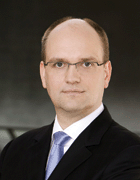
“The close cooperation between investment banking and retail banking is of strategic importance” |
|
Ackermann nevertheless acknowledges that in the past there was a little too much willingness to take risk onto the balance sheet. “It was easier to grow our markets business than the corporate finance business with the capital levels, the rating, the credit management and the global set-up we had. Corporate finance is a business of mutual trust and track record. To break into the top league there takes a long time. The CIB was always a little unbalanced between the corporate finance and the sales and trading side. For some time, we felt that using our balance sheet could help us break into the corporate finance businesses. It helped, of course, but we paid a price for that. Often we had the credit losses but didn’t have the business. We have stopped that. We have to convince clients with the quality of advice and execution.”
Some question whether the old swashbuckling DNA of the bank’s markets business has really gone for good. The bank still has something of a reputation for regulatory carelessness, as seen by its troubles in the Korean derivatives market and continuing issues with the US authorities looking into its mortgage practices.
Of course it is impossible to eliminate the risk of wrongdoing. But Jain is at least keen to ensure they are kept to the absolute minimum. “Like our peers we too have a set of legacy issues: as a top-three US fixed-income house, we had to be involved in all of the products that our clients wanted, and after the crisis some of these are now the subject of investigation and litigation. We will defend ourselves vigorously where we feel wrongly attacked. At the same time we have further strengthened our checks and balances and governance processes.”
Risk on the balance sheet
Ackermann is frank about why there was too much risk on the balance sheet. It was due to the environment in which the bank operated.
“Regulators didn’t ask to allocate capital to the trading book in a substantial way and leverage was never an issue in the European context. So by growing your trading book you could create a lot of revenues from a relatively small capital base, which of course increased your return on equity.”
Indeed, now that the crisis has changed everything, Ackermann does not see a return to the old days. He is in fact willing to miss out on potential returns through less risky business.
“I was fully convinced almost from its very beginning that the crisis was not a short-lived phenomenon and told my people to sell as much as they could, even if that meant others would make huge profits on what we sold if the market turned around quickly. I sleep well with opportunity costs; I don’t sleep well with losses.”
Again, he is keen to point out that the market didn’t really understand Deutsche and especially thought it was in worse shape than it was. “Our risk profile was always better than what the market suspected. We always had strict independent risk management.”
His analysis of why Deutsche came through the crisis in relatively good shape benefits from the wisdom of hindsight. But it also has the bonus of being true. In comparison to so many other banks, Deutsche was on the right side of risk and for this Ackermann deserves much credit.
“We came through the crisis relatively well for three main reasons. First, we did not build up a parallel portfolio either on or off the balance sheet by buying MBS with funds raised in money markets; we did it for a while but corrected it long before the crisis. Secondly we had a conservative liquidity management position that protected us from gapping. Thirdly we did not build up too excessive positions in order to securitize and sell them, and prop trading was only maybe 10% to 15% of overall sales and trading.”
As Ackermann’s career comes to a close at Deutsche, he can look back on a remarkable series of accomplishments. He has built one of the best investment banks in the world. He is seen as a leading figure in international financial circles through his chairmanship of the Institute of International Finance and he is keen to stay at the forefront of the financial industry, even if he is not running a bank.
The institution he has led has come full circle. It is many times the size it was when he took over and it is more diversified. But it is now back to being first and foremost a bank with its centre of gravity in Germany. Given everything that has happened over the nine years of his tenure as chief executive, it is a good place to be. And perhaps what is most satisfying to Ackermann is that they said it couldn’t be done.
see also:
Integration key to reshaping Deutsche’s investment banking
Deutsche Bank CEO succession issue won’t go away



