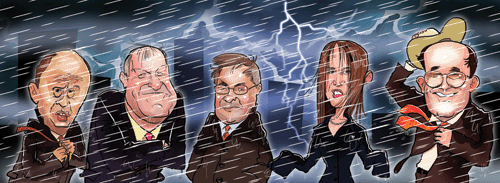
CFOs ride out the storm
 |
|
Swimming not drowning?: (l-r) John Cryan, UBS; Chris Lucas, Barclays; John Gerspach, Citigroup; Ruth Porat, Morgan Stanley; Chuck Noski, Bank of America |
THE CHIEF FINANCIAL officer is having a hard life. “I had a couple of weeks of good sleep after the Dodd-Frank Act was passed and then I realized I had to focus on Basle III. I asked my CEO this morning: when does this get easy? And he told me: ‘When you die.’”
The words of the CFO, who works at one of the world’s biggest banks, sum up the burden that he and his counterparts face today, and indeed have faced ever since the sub-prime crisis began.
While their bosses in the chief executive suites have had to publicly face down politicians, regulators, shareholders and the media, it has fallen to each bank’s CFO to ensure the firm’s capital and liquidity meet the standards required by...
Access this research
Enter your work email address to sign in or check whether your organisation already has access to Euromoney.