Awards for Excellence 2018
|
|
|
Also shortlisted |
Morgan Stanley |
BNP Paribas |
Bank of America Merrill Lynch |

What corporates most need from their banks changes from day to day: from advice and financing for large, event-driven deals to supply chain finance or payments processing. At any point in time one may be more important than the other. But over the last 12 months the most pressing concern of almost every corporate worldwide must have been how best to adapt to the breathtaking pace of technological change and disruption facing every industry.
“In the new world economic order in which we operate, we face growing protectionism, technological disruption as well as the challenge of sustainability,” says Philippe Henry, global head of corporates, financials and multinationals banking. “Our clients have been obliged to rethink their strategies, operating and business models and we have been good at understanding that. As a trusted advisor, you need to brainstorm with clients, to generate ideas and to work with them to help them navigate this new world economic order.”
“We’ve moved beyond just pitching product solutions. Instead we are working with our clients to foster more ideas and to put the right structures in place to deliver on them. This is an age of ground-breaking changes; we are navigating between continuity and rupture.”
The standout example of this is the world’s first live trade finance transaction using blockchain: the bulk shipment of soybeans from Argentina to Malaysia for US food and agricultural group Cargill. “We took a highly complex transaction and made it more secure and efficient,” says Rani Misra, regional treasurer, Apac at Cargill. “We see the exciting potential of extending this technology to other areas of our financial ecosystem.”
HSBC handled the trade in partnership with ING.
“The trade business is one of the most traditional businesses out there. It is complex and paper-based,” says Niall Cameron, global head of corporate and institutional digital at HSBC. “Blockchain is a very good potential solution. Very large corporates face the same challenges as large banks, and they want to move from proof of concept to real industrialization. This was a real transaction. We set up the digital transformation group in April 2016 and things are moving very fast. We are in full execution mode. You can see the scale of intent.”
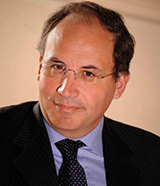 |
| Philippe Henry |
HSBC spent $5.3 billion overhauling its own IT architecture in 2017. It has also been involved in, among other things, the world’s first gasoline shipment blockchain pilot for SinoChem, invested in Kyriba, a cloud-based treasury management solution and partnered with fintech Tradeshift to develop a social network for supply chain finance.
“HSBC and Tradeshift is a great example of a partnership between a banking giant and a fintech entrepreneur to develop practical solutions to support everyday business,” observes Philip Hammond, UK Chancellor of the Exchequer.
Along with innovation there has also been plenty of traditional corporate work. Together with Lazard, the bank led a successful defence for AkzoNobel from three successful unsolicited approaches from PPG, designing and executing a dual-track process involving an M&A auction and fully ready demerger alternative. HSBC had begun providing financial advice on the client’s pension deficit but ended up as defence adviser in the largest chemicals leveraged buyout in a decade. HSBC was also global coordinator on Cineworld’s $5.8 billion acquisition of US cinemas chain Regal Cinemas and advised Luxembourg-based JAB on its $2 billion purchase of sandwich chain Pret A Manger in May.
“Cineworld was an audacious deal,” says Dan Howlett, regional head of client coverage for Europe. “People were sounding the death knell for cinemas, but we put together a global network for them.
“This deal demonstrates how joined up we are. We are reimagining banking. Global relationship managers work alongside product partners and have access to over 150 payment clearing systems worldwide.”
The breadth of HSBC’s offering is reflected in the number of clients it works with; the bank covers more than 1.5 million clients in countries that span more than 90% of global GDP. And the bank gets involved at every stage of a transaction.
“HSBC supported us on the treasury carve-out from L’Oreal group treasury in less than six months, which was a complex transaction,” says Paolo Sala, international director group treasury at The Body Shop, which was sold by the French firm to Brazilian cosmetics group Natura during the awards period.
HSBC has also enhanced its offering with the establishment of its thought leadership division, which is a global team dedicated to looking at the first-, second- and third-order effects for clients of issues such as disruption or US tax reform and examines the crossover between risk management and corporate structure.
HSBC is also a leading bank for green and sustainable issuance.
“Every client has a corporate banker. A significant proportion of income in Global Banking comes from corporate, trade and transaction banking and then investment banking comes in and complements that. We might lead by talking strategy/M&A but there is always that bedrock to the relationship: we are not driven by transactions,” says Hugo Heath, global head of corporates within global banking.