|
|
|
View the Euromoney 25 |

Credit Suisse shareholders have had a pretty appalling experience over the last five years or so.
They have seen a bank laid low. They have been asked to dip into their pockets for not just one, but two rights issues. They have complained about executive pay. Some have called for a break-up of the business. And they have had to understand a strategy that often seems baffling and inconsistent to the outside world.
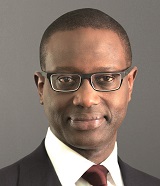
So when embattled chief executive Tidjane Thiam and his executive team hosted an investor day at the end of November, it was a crucial moment for the bank. Could Thiam show his three-year restructuring plan was on track?
The jury is still out on that, but Thiam pulled a rabbit out of the hat – a commitment to return half of profits to those beleaguered shareholders once the restructuring was complete and, for the first time, a firm commitment to returns on equity: 10% to 11% in 2019, and 11% to 12% the year after.
Thiam is bullish about what this means.
“I am very shareholder focused,” he tells Euromoney. “You have to grow profitably to generate capital organically. Going to shareholders to raise SFr10 billion [$10.1 billion] over two years only happens as a result of failure. It’s not how you are supposed to run a business. We should be returning capital to shareholders. It is a virtuous circle. This is my firm belief.”
|
|
|
Tidjane Thiam |
Is it enough to turn not just shareholders, but also the loyal and often confused staff around the world at Credit Suisse, into true believers? Time will tell. But if self-belief is a gauge, then Thiam is on track to turn the bank around.
It is time, however, to give Thiam more credit than he has typically received to date for the changes he has effected at Credit Suisse already. It might well prove to be the case that he has played a better, more calculated game than outsiders appreciate.
Take the case of the aborted plans to list the Swiss universal bank. When Thiam first floated the idea, Credit Suisse group had just done its first capital raising but still had the threat of a multi-billion fine from the US Department of Justice (DoJ) hanging over it. That fine in itself could, if at the higher end the range, have brought Credit Suisse down.
The announcement to spin off the Swiss business bought Thiam time – it was, at least, a guaranteed source of capital, even if it meant selling off part of the crown jewels. Concerns about CS’s continued existence subsided. The DoJ settlement came in lower than expected, albeit at a whopping $5.3 billion. Thiam changed the tone of the conversation, casting doubt on whether there had ever been a firm intention to float the Swiss business. A second rights issue at group level followed.
In the meantime, the preparation for listing had made the Swiss business more efficient and it grew profits. It looks like a smart play, and perhaps one not made on the hoof. And now, at last, with a common equity tier-1 ratio of around 13%, capital is no longer an issue for the group.
Meanwhile, there are brighter spots in the Credit Suisse business portfolio. International wealth management has always been a good business, and it is performing strongly. Asia, where Credit Suisse has firmly coupled its investment banking and wealth management businesses, needs to be a bright spot for the bank – and shows signs of becoming one.
Cost cuts have been a priority for Thiam, and on this level he has definitely delivered. At the investor day, CS confirmed it has beaten a cost-base target of SFr18.5 billion for 2017 and lowered its target to below SFr17 billion for 2018. It will be a challenge for Thiam to maintain revenues as he sharpens the cost-cutting knife.
The bad bank, or strategic resolution unit, is becoming less of a drag on the group. In 2019, it is scheduled to accrue a loss of $500 million, down from the $800 million previously expected. It unwound 190,000 derivatives trades last year – a sign that the era of old-style trading business, which brought the bank low and of which Thiam is openly disparaging, is gradually being brought to an end.
Three big questions remain for Thiam. First, can its investment bank and capital markets business, delivering paltry net income of around $50 million in each of the last two quarters, grow?
Thiam thinks so, by aligning its products and services to the needs of ultra-high net-worth clients.
“Investment banking and capital markets remains a core part of Credit Suisse and we can see a path to better profitability,” he says.
Second, can he take Credit Suisse with him? Thiam has simplified reporting lines into him, if not the overall structure of what is now a quasi-federal system with an autocratic ruler. The scars of the past still need healing.
And third, where will that growth in returns come from?
Credit Suisse has some good businesses, but it is operating in some highly competitive areas. Trebling returns on equity in the next 24 months is a tough target. And if Thiam looks like he can’t deliver it, then the questions about his future will start to grow again.