Best bank: Al Rajhi Bank
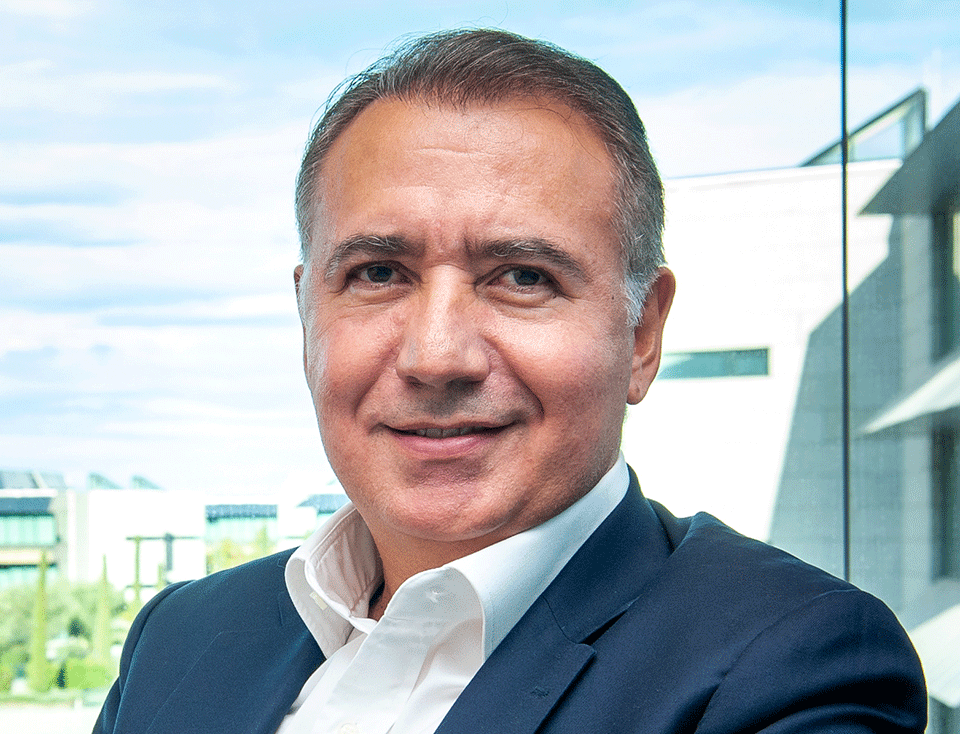
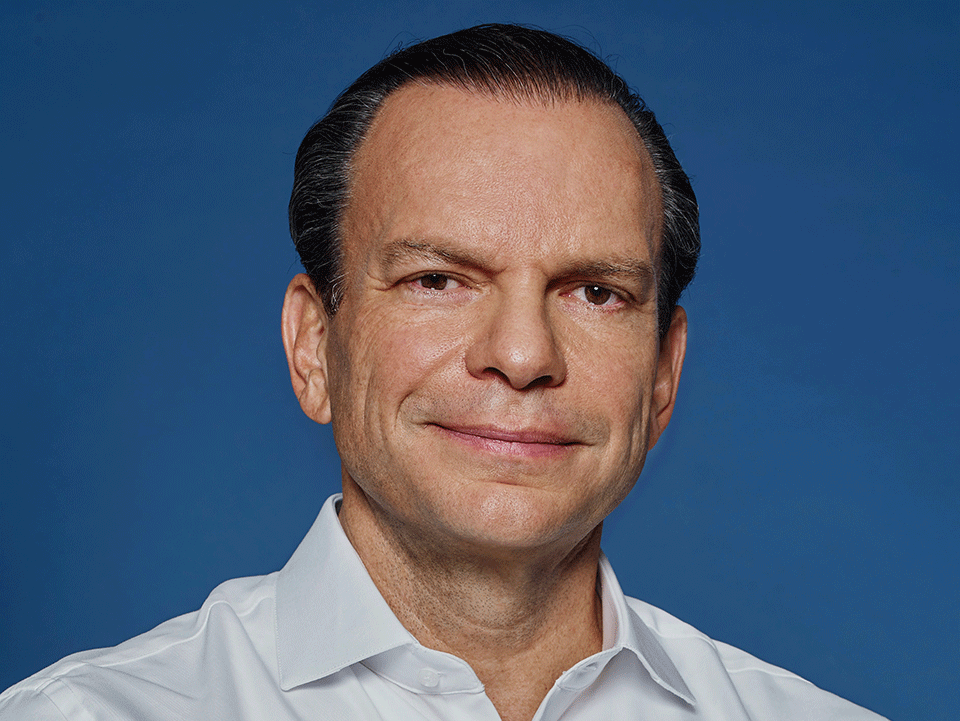
Al Rajhi Bank’s Bank of the Future strategy marked its final year in 2023, the end of a series of growth targets set when chief executive Waleed Al-Mogbel took the helm.
The three-year plan saw the bank build up a private-banking business, increase active customers by 64%, triple small and medium-sized enterprise financing from SR10 billion ($2.7 billion) to SR31 billion, more than double corporate banking and almost double retail financing from SR251 billion to SR427 billion.
The bank takes home Euromoney’s award for best bank in Saudi Arabia this year in recognition of this progress and its involvement in several landmark financings in the Kingdom.
In March, the bank issued its debut sustainable sukuk, a $1 billion, five-year deal that was its first issuance in US dollars on the international capital markets.
A second issuance under the programme in 2024 has helped to drive forward sustainable finance in the country.
The bank was also a key player in a landmark deal for the state-run Saudi Real Estate Refinance Company in its sale of a $1.3 billion mortgage portfolio – the largest deal of its kind in Saudi Arabia so far, and likely to be at the forefront of several similar deals for Saudi’s banks as they work to finance Vision 2030 projects.
The Riyadh-based bank grew total assets from SR761 billion to SR808 billion in 2023, a doubling of total assets since 2019.
It has maintained a healthy non-performing loan ratio, which stood at 0.7% at the end of 2023.
The momentum has been rewarded with a 15% increase in share price over the review period, the highest among its peers.
Best investment bank: HSBC
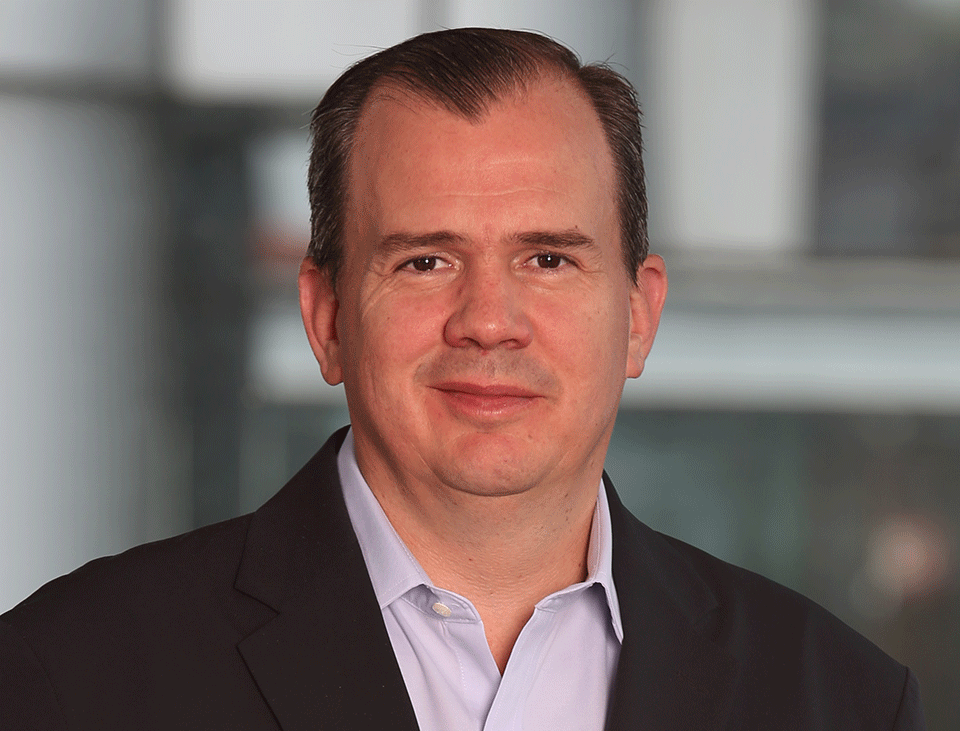
HSBC Saudi Arabia has had a consistently strong year in equity and debt capital markets, and M&A in the country under the leadership of chief executive Faris AlGhannam, who took over in October 2022.
It worked on the largest IPO of the year in Saudi Arabia – the $1.2 billion landmark listing of oil and gas company ADES Holding on the Tadawul in September. HSBC was joint bookrunner and underwriter.
The bank also played an impressively comprehensive role in SAL’s $678 million IPO in October, acting as the sole financial adviser, bookrunner, global coordinator, lead manager and underwriter. The IPO priced at the top of the range and was covered within a few hours of books opening, with institutional books ending 72 times oversubscribed and retail subscription 16 times over.
HSBC also had a strong year in DCM. Transactions include a $2.1 billion senior unsecured bridge facility for AviLease’s acquisition financing. HSBC acted as mandated lead arranger, underwriter, bookrunner and facility agent for the aircraft leasing company. The deal was one of the largest acquisition financing facilities for a Saudi Arabian company ever.
HSBC also acted as sukuk structuring adviser, joint global coordinator and joint active bookrunner on the Public Investment Fund’s jumbo $3.5 billion sukuk issuance in October. The deal was PIF’s first dollar-denominated international sukuk.
In M&A, the bank acted as sole financial adviser to Dur Hospitality Company on its sale to Taiba Investments Company in April. It also acted as sole financial adviser to Qassim Cement in its acquisition of Hail Cement in December.
Best digital bank: SAB
SAB (Saudi Awwal Bank) has expanded users and engagement on its digital platforms this year. The bank streamlined its device registration process by verifying biometric data with the ministry of interior’s national information centre, launched its open-banking portal and rolled out an instant credit-card service that delivers cards to new bank customers within eight minutes.
Digital customer acquisitions increased by 42% over the review period.
Best bank for SMEs: Riyad Bank
Riyad Bank extended 22% of credit facilities to micro and small and medium-sized enterprises in Saudi Arabia last year and saw a 51% expansion in its MSME loan portfolio.
It is the most active bank in the government’s Kafalah MSME finance guarantee programme, accounting for 42% of all financing provided. It has lent around SR7 billion ($1.9 billion) to 1,800 MSMEs in the country.
Best bank for ESG: SAB
SAB (Saudi Awwal Bank) worked on SR12.6 billion ($3.4 billion) in sustainable finance transactions last year, 35% of its 2025 target.
It co-led the syndication for the Neom green hydrogen project, which secured $6.1 billion in non-recourse financing and brought together 23 local, regional and international banks and financial institutions in the deal.
The bank has developed a comprehensive climate risk framework and launched its sustainable debt framework with a second-party opinion from S&P Global. This framework guided the publication of SAB’s first sustainability report.
SAB has also introduced green and sustainable supply-chain finance products.
Best bank for diversity & inclusion: Riyad Bank
Riyad Bank has demonstrated a commitment to creating opportunities for recent graduates and individuals with disabilities.
It has participated in the Real Opportunities for Supported Work forum and was the only bank to participate in the Purple Sunday initiative, tailoring promotions specifically to people with disabilities. Collaborating with the Royal Institute of Traditional Arts, it has also organized workshops in traditional arts for disabled individuals.
The bank has launched Iqdam, a programme specifically designed to develop the skills of Saudis with disabilities who are considering full-time employment at the bank. That has resulted in the successful employment of 55 individuals.
In 2023, the bank also provided training to 248 graduates, with 69 of them transitioning into permanent roles within the organization.