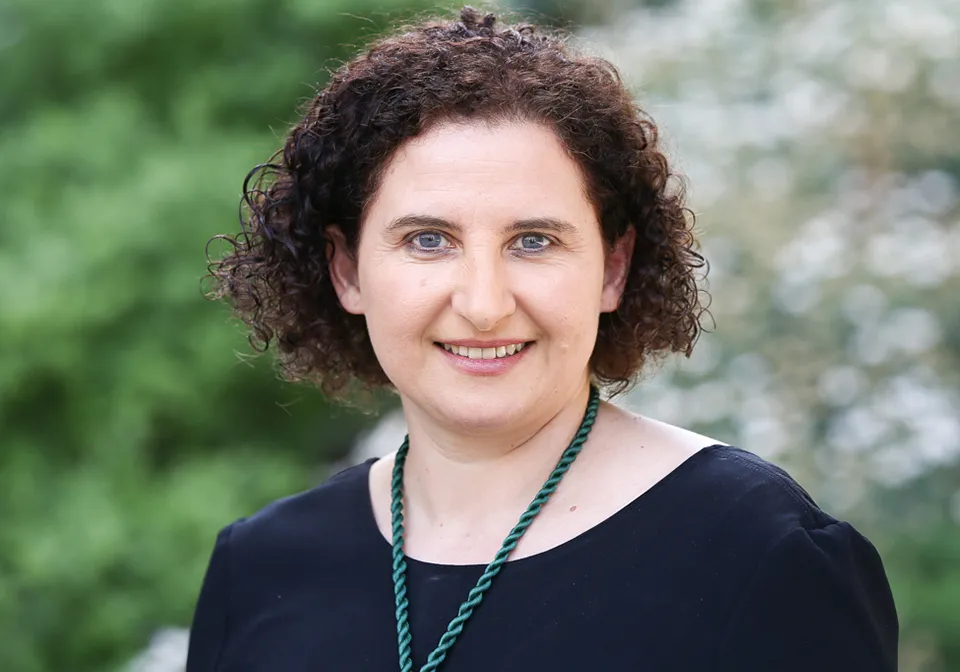

When Hacina Py became Societe Generale’s chief sustainability officer in October 2021, one of the first changes she made was to bring her team into the chief executive’s office “so that we could really push for the integration of our transition strategy,” she says.
Next came ambitious decarbonization targets, both internal and external, and the supporting infrastructure necessary to make those more ambitious goals a practical reality.
Ultimately, decarbonization targets are the litmus test of an organization’s dedication to transitioning to a low-carbon economy, and Py accelerated the French bank’s commitment. By 2030, SocGen will cut its euro-denominated financing of upstream oil and gas by 80% versus 2019, with an intermediate step of 50% by 2025. In greenhouse-gas terms, that equates to a 36% reduction by 2030.
In CO2 terms, that equates to a 70% reduction by 2030 – almost double the 36% that the International Energy Agency’s net-zero plan says will be required.
Shortlisted
- BNP Paribas
- HSBC
The bank has also introduced tougher industry-specific targets. As a founding member of the Net Zero Banking Alliance, SocGen has introduced carbon-intensity targets that are aligned to the 1.5-degree reduction scenario.
“We are usually a little better than the baseline intensity targets, but they’ve not been created aspirationally,” says Py. “For example, we spoke with our cement manufacturing clients and they told us that the carbon-intensity techniques just aren’t available yet, so in that case we’ve had to reflect that, and so the intensity targets are a little higher than the overall target.”
Py attributes this acceleration to sound business reasons, as well as being necessary to put SocGen at the forefront of transition in the banking industry.

“We increased the reduction targets because we have scare resources – as does everyone – in terms of time and employee capacity,” she says. “We thought: Let’s not fight for [the business] of the past – let’s push for the future.”
Py says she appreciates the new targets “were tough on teams”, so the announcement was accompanied with an energetic internal engagement campaign for affected employees.
“We had to tell some of the upstream oil-and-gas teams that we were very keen to keep them onboard,” she says. “We have a stock of very technical deals that count on them.
“Also, the push for renewable energy requires much of the same project-finance and energy-industry experience, so we focused on telling them they were critical to our new journey. At the beginning many thought it was a strange idea but, with some reskilling, we were able to refocus and go after hydrogen, renewable energies – lots of new deals.”
These deals have been critical to the internal alignment.
Py’s team oversaw a huge training programme that covered all types of bankers in SocGen’s various businesses and countries. But it has been winning new business that has been critical in showing the internal audience the value of reskilling and refocusing on new deals.
Many of those deals have been challenging. Py points to the hydrogen sector – with the bank winning two mandates (Thyssenkrupp’s IPO and Stellantis’ acquisition of 33% of Symbio) as an example of where the bank has been running to keep up with the market.
We thought: Let’s not fight for [the business] of the past – let’s push for the future
Hacina Py
“Hydrogen started a bit prematurely for us as a bank because it was really focused on equity financing rather than debt,” she says. “But since we won these mandates, clients like Total and Air Liquide, which are getting active in this area, decided to ask us to structure it. So now we are in pole position.”
Py also stresses that these new industries challenge all banks to work in new ways. In the past, banks financed individual players in established industries through standalone deals. Today, new industries need to be developed in clusters.
Py uses the example of maritime, where many shipping companies are looking to develop liquefied natural gas-fuelled vessels to lower their greenhouse gas emissions. That is not a transition decision that can be made independently. It requires ports to offer those fuelling facilities, which includes port infrastructure financing.
Something similar is happening across global industries, with aviation requiring integration between new fuel suppliers, aircraft manufacturers and airport operators.
“Some clients were astonished when we began to say that we don’t just want to talk to the treasurer – we want to have your guys from the operations and innovation teams. They were like: ‘Woah!’,” she says.
Importantly, the bank isn’t just having success with its very large corporate base. In France and the Czech Republic, it has made inroads with its Solar Pack initiative, which combines starting transition conversations with small and medium-sized enterprises and smaller corporates and providing practical business opportunities for its bankers to reskill.
Solar Pack is a one-stop-proposal that SocGen uses to encourage businesses to generate their own solar energy. The bank will either finance the implementation of these solar panels, with the energy powering the client and/or the local grid, or the company can allow installation of panels on their property, which will become their assets once the financing has been paid off.
“It’s the same approach – it’s creating an ecosystem for our clients to enable them to assess and understand transition decisions,” says Py.


