
Piraeus Bank’s return to full private ownership this March was a landmark event in Greece’s long recovery after the eurozone sovereign debt crisis. Its size, and the extent of its previous troubles, had demanded large injections of funds from Greece’s bailout vehicle, the Hellenic Financial Stabilization Fund (HFSF), during the crisis years.
But a €1.35 billion fully marketed offering this March, in which the HFSF sold its entire 27% stake in Piraeus, was several times oversubscribed and at a premium to the undisturbed price. It showed how far Piraeus has come in the last decade.
Successive acquisitions before and immediately after the sovereign debt crisis saw Piraeus became not just Greece’s biggest bank but also the one with the biggest non-performing loan problem, particularly concentrated in loans to small and medium-sized enterprises. In 2015, Piraeus then faced the biggest and hardest task of a series of capital raisings across the sector to cover capital shortfalls calculated by European Central Bank stress tests.
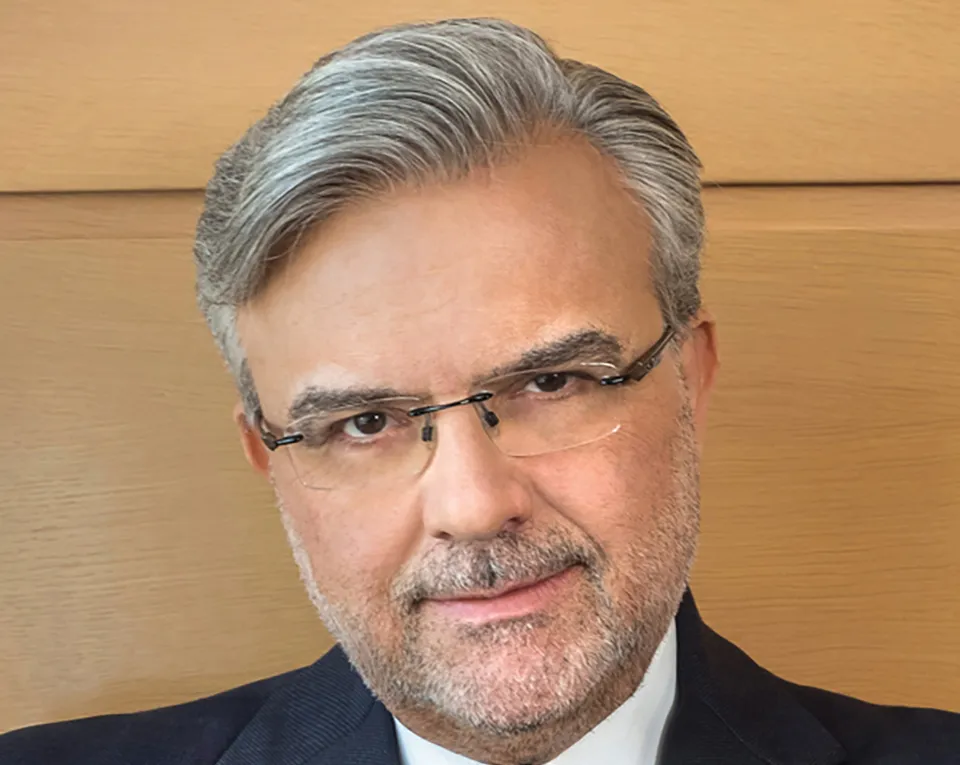
A €2.7 billion contribution from the state, mainly in the form of contingent convertible bonds, got it over the line, but the chief executive, Anthimos Thomopoulos, unexpectedly stepped down shortly afterwards, in early 2016. By the time Christos Megalou arrived as chief executive just over a year later, some of the work in restructuring the bank work had already begun, but he says the scariest moment was later when, in 2018, the bank’s market capitalization had sunk to just €360 million.
Shortlisted
- UniCredit
- VeloBank
Fast forward to 2024, and Piraeus’ market cap was €5 billion at the time of the state’s sell-down. That would cover by more than €200 million the losses that the largest shareholder – Paulson & Co, the family office of former hedge fund manager John Paulson – previously sustained from participating in the bank’s 2014, 2015 and 2021 recapitalizations.
Moreover, good 2023 results paved the way for a first dividend since 2008. Piraeus plans to ramp up the payout ratio to 25% over 2024 earnings and then to 50% in 2025 and 2026 earnings.
The figures speak for themselves. When Megalou arrived in early 2017, the bank’s non-performing exposure ratio was 52%. By the end of 2023 it was 3.5%. It had more than 18,000 employees at the end of 2016, today it has around 8,000. It has also closed more than two thirds of its branch network in this period. It has sold banks in Albania, Bulgaria, Romania and Serbia.
“We had the biggest balance sheet, with the biggest amount of NPLs, the biggest number of unneeded branches and the biggest number of employees,” Megalou recalls. “There was a significant cost restructuring at the same time as cleaning up the book, which left the bank in a very healthy shape.”

Megalou calls the €1.4 billion recapitalization in 2021 a re-IPO as the dilution affect was so great. But it was a pivotal moment because it saw the re-entry of mainstream international institutional investors into the stock and an initial reduction of the state’s stake to 27%. It paved the way for Piraeus to issue the country’s first additional tier-1 bond, shortly afterwards. This extra capital allowed Piraeus to ramp up NPL portfolio sales under its Sunrise plan.
The HFSF’s sell-down this March might not have been so successful without the credibility the bank has slowly rebuilt since 2017 and especially since 2021.
“Whatever we have promised in the market, we delivered,” Megalou says.
And lately it has been exceeding its promises.
Megalou notes that the 2023 results were the best in its history, with a 16.6% normalized return on average tangible book value. The cost-to-income ratio was a mere 31% in 2023, compared with 62% in 2016.
Over the next three years, the bank expects the cost-to-income ratio to be consistently below 40% and to achieve a return on its normalized measure of between 12% and 14%, according to targets set out in February. It adjusts the figure for coupons on the 2021 AT1 bond.
There was a significant cost restructuring at the same time as cleaning up the book, which left the bank in a very healthy shape
Christos Megalou
Megalou says there is a growth story in the firm too. That is partly down to eurozone-beating economic growth in Greece, where Piraeus remains the biggest local bank by loans and deposits – its six million-strong client base accounting for 65% of Greece’s bankable population.
The bank expects reported net profit to rise from €800 million in 2023 to €1 billion in 2025 and 2026; and that is not just down to performing loan growth, which it expects to be between 5% and 6% a year. The firm also believes wealth and asset management will be key for its future, as Greece and Greek banks are now more trustworthy harbours for capital.
Piraeus has had a compound annual growth rate of 27% in assets under management since 2018. That is in part thanks to earlier efforts targeting wealth and asset management, including a 2022 acquisition of an Athens-based alternative asset manager, Iolcus. But it is also thanks to the firm’s wider transformation.
“There is significant appreciation in the bank’s share price on one hand but also confidence that the restructuring of the banking system is working,” says Megalou. “This creates a lot of confidence to the Greek deposit base.”