Awards for Excellence 2016

|
|
Also shortlisted: |
|
Bank of America Merrill Lynch |
|
Goldman Sachs |
|
Lazard |
In a great year for advisers working on large, complex and often cross-border M&A deals, all the world’s big universal banks can produce long lists of advisory credits on transformative multi-billion dollar transactions.
Morgan Stanley has its own long list, having advised, among others: Lafarge on its $46 billion merger with Holcim and the combined company’s subsequent €6.5 billion disposal of assets to CRH to meet regulatory requirements; ACE on its $26 billion acquisition of Chubb, the largest-ever US insurance deal; China Unicom on its sale together with two other operators of $33.7 billion of telecom tower assets to China Tower; and Freescale on its $16.7 billion sale to NXP semiconductor to create the top automotive semiconductor supplier.
But Morgan Stanley wins our award as best advisory bank this year after distinguishing itself in two crucial disciplines: successful defence against hostile takeover bids and advice to clients on how best to respond to shareholder activists.
“It can be challenging to keep a company independent in the face of a hostile approach given the current environment,” says Susie Huang, head of M&A for the Americas. “Once a target is in play, the main task of advisers is to maximize value for shareholders; that could include achieving the best terms for a change of control, but could also mean staying independent. We act for both buyers and sellers, but our record on hostile defense leads the market.”
Morgan Stanley’s defence of Perrigo against a $35.6 billion offer from Mylan last year represented the largest-ever successful defence against a US hostile tender offer and highlighted the firm’s strategic advisory capability in the hyperactive pharmaceutical sector. The defence also illustrated the firm’s international capabilities in a deal that required intimate knowledge of the Irish takeover code and its franchise with institutional investors, as well, of course, as its M&A smarts.
Morgan Stanley acted as sole adviser to Perrigo even though Perrigo was not a long-established client of the firm. Morgan Stanley had advised on the other side when Michigan-based Perrigo bought the Irish-based Elan in a 2013 inversion deal that saw Perrigo re-domicile to Dublin. Perrigo was sufficiently impressed that it began to use Morgan Stanley as its own adviser.
The hostile offer from Mylan last year came at a time of peak activity in pharmaceutical M&A. Mylan itself was in the sights of Teva and may have been looking to a deal with Perrigo as a form of poison-pill defence. Having Teva take out its pursuer would, of course, have been the best defence for Perrigo. But that hope was blown when Teva instead acquired Allegan Generics for $45 billion and walked away from Mylan.
“Ireland is quite a bit different to the US, and targets are even more vulnerable due to the absence of poison pills and traditional takeover defences,” says Colm Donlon, head of EMEA M&A at Morgan Stanley. “And Mylan was very aggressive. After receiving their first offer letter we convened a board meeting in Ireland to consider it as soon as we could; however, the very next day, even before we could respond, Mylan went public.”
He says: “We had to build a defence case based on Perrigo’s very strong financial performance over a number of years and a valuation argument that shareholders would do better to trust Perrigo’s management. We visited shareholders consistently over the months following the offer, arranged over 500 shareholder meetings and calls, and encouragingly found a very loyal and supportive shareholder base.”
The defence prevailed.

|
|
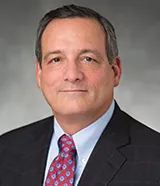
Robert Kindler, |
Morgan Stanley has carved out a name for itself in activism defence, for example advising AIG when Carl Icahn and John Paulson were pushing for a break-up earlier this year. “On balance, activism has been a positive by causing companies to focus on core competencies and discouraging creation of new conglomerates,” says Robert Kindler, global head of M&A, “but there are specific cases where their proposals are off base. Separating property and casualty from life insurance would take away the diversification benefit AIG gets from the ratings agencies. And breaking up the company would have sacrificed substantial value in deferred tax assets. The activists should now see this from their board seats.”
Morgan Stanley also acted as exclusive adviser to Family Dollar on its $9.2 billion sale to Dollar Tree, which gained shareholder approval after several activists entered the stock and after a contested process involving a competing proposal from Dollar General.
“Family Dollar is a good company in a difficult sector,” says Kindler. “Nelson Peltz had come into its stock three years ago and got a board seat for Trian, his activist fund. We were confidentially negotiating with Dollar Tree when Carl Icahn came into the stock and pushed for acceptance of a hostile bid from Dollar General which promised a higher price but came with so many anti-trust issues that it looked to us very unlikely to succeed. This was a case where Trian, the established activist with a board seat, saw the same issues we saw and supported going with Dollar Tree, which said it would complete the deal come hell or high water, no matter how many stores regulators required it to sell, and delivered a terrific price.”