Speaking at Citi’s annual shareholder meeting in April 2023, chief executive Jane Fraser made clear her vision for the firm she runs. She saw it as a valued personal bank in the US and the preeminent partner for institutions with cross-border needs. Just as importantly, she also saw it as a global leader in wealth management.
Citi: special report

Citi has been a leader in wealth for decades, but there was always a crack in the edifice that many, including within Citi itself, could see.
It had a great private bank serving the upper echelons of the wealth segment, mostly families with more than $50 million in assets under management.
Further down the wealth ladder sat two other services. Citigold served clients with at least $200,000 in eligible linked deposit, retirement and investment accounts. When that number hit $1 million, customers were elevated to the Citigold Private Client (CPC) team.
But there was a problem. Because the different teams didn’t always speak to one another, Citi wasn’t mining its full potential.
That realization was behind the creation in January 2021 of Citi Global Wealth (CGW), an all-purpose platform to serve clients across the wealth spectrum, from mass-affluents to the ultra-high net-worths.
Jim O’Donnell, a former global head of investor sales and relationship management, was tapped to run the unit.
Fraser was not quite yet at the helm of Citi when the new platform was announced – she was formally installed as chief executive two months later. But as chief executive-in-waiting and as a former global head of its private bank, she will have been behind the idea from the start.
Then came a second and far larger reorganization. In September 2023, she elevated the bank’s five core business lines – services, markets, banking, wealth and US personal banking – to report directly to her, dismantling the old institutional clients group and personal banking and wealth management divisions that had sat in between.
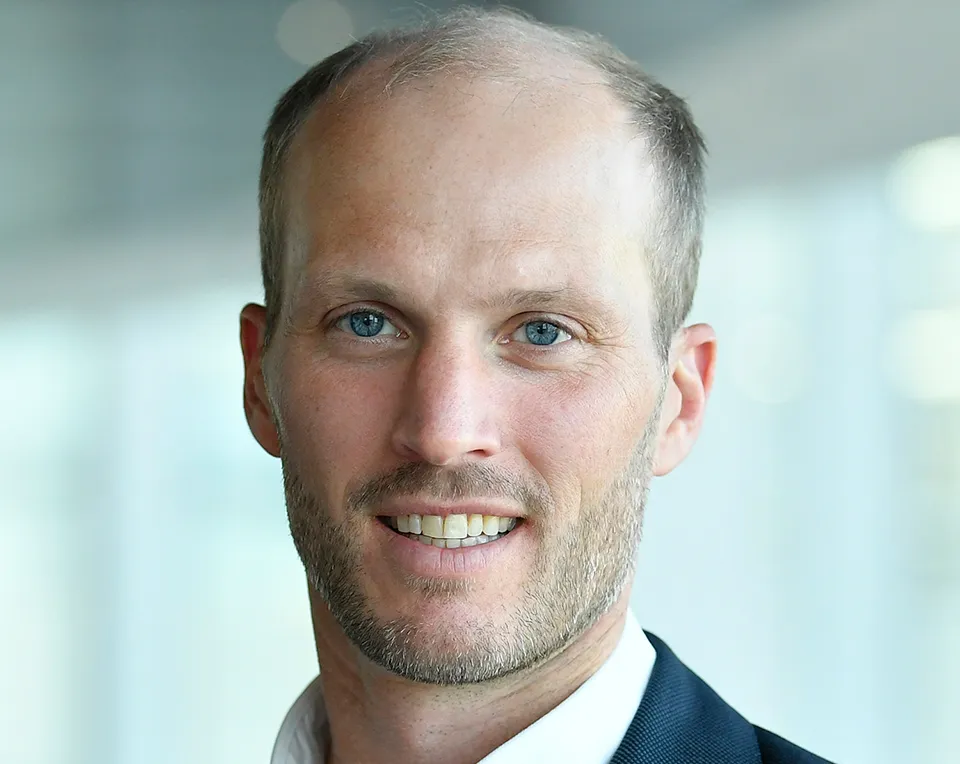
In doing so, Citi also eliminated its short-lived CGW model and supplanted it with a business simply called ‘wealth’. O’Donnell, who had overseen the transition to a unified global model, made way for Andy Sieg, a 30-year wealth veteran with energy and ideas to burn.
Sieg is a two-company man. He joined Merrill Lynch in 1992, before moving to Citi in 2005 to head up the bank’s emerging affluent client segment. Another long stint at his first employer followed, where he was named head of Merrill Lynch Wealth Management in 2017, running an $18 billion wealth business with $2.8 trillion in client balances.
Now he is back at Citi again, this time as its all-purpose head of wealth and a member of the executive management team. What convinced Sieg to try his luck at wrestling every part of Citi’s vast global wealth engine into shape and getting it to run at full capacity?
Example Asia
Citi’s brand and network are top of his list, followed by the industry’s vast potential. Bain & Co projects the value of liquid assets held globally by wealthy individuals to expand by $100 trillion by 2030, with two billion people ascending to middle-income status. And the consultancy tips annual global wealth management revenues to double to $510 billion the end of the decade.
“It’s a pretty miraculous time in history,” says Sieg.
A sizeable share of this growth will be generated by families living in Asia, a region rapidly creating its own positive feedback loops, as more wealth generated in the region is recycled into local assets, startups, property and funds.
Sieg describes Asia as a “microcosm of what we want to do around the world.”
He points to the example of Singapore, Asia’s leading wealth-management hub and the heart of southeast Asia’s economy. Citi is a powerhouse in the market, offering a full range of commercial banking, investment banking, trade finance and capital markets services.
My first job in wealth management was in 1992… Every few months since then, a story has been published saying technology will put client advisers out of work – and it’s always been wildly off the mark
Andy Sieg, Citi
All are big revenue generators, but wealth might have the potential to be the biggest of the lot. Citi has something its main global rivals, notably UBS and Morgan Stanley, do not: an international retail banking platform plugged into a wealth business that meets the needs of almost everyone on the wealth ladder, from Citigold clients all the way up to those UHNWs.
This global network allows Citi to build relationships with clients in a way most big wealth managers, with their thinner physical presence around the world, cannot.
“Very few banks can sit across a table from a client and talk face-to-face about their interests, about their children living in the US, their business interests in Europe,” says Sieg. “A quarter of our new wealth clients in Singapore are coming out of the retail bank, and the largest share of that is from our credit cards business. That kind of wealth escalator is happening today at real scale.
“There’s no other wealth business inside a retail bank that is seeing this kind of growth.”
He argues that Citi is competing in a way that rivals envy, because they lack the same broad reach from retail up to the higher echelons of the market.
But Sieg still has a lot of work to do. UBS is a larger wealth manager, overseeing some $5.5 trillion in assets after its merger with Credit Suisse. Morgan Stanley, having acquired a series of assets in recent years, including investment manager Eaton Vance and brokerage E*Trade, manages $6 trillion.
Net new assets
Citi’s challenge is to find a way to consistently add clients, onboard new money and boost revenues across the wealth space – and do it every quarter. This is never easy.
Wealth is a notoriously cyclical business. Customers can be jumpy and fickle, pulling money from one provider and putting it to work with another in search of higher returns. Citi posted a 2% year-on-year rise in global wealth management revenues in the third quarter of 2023, to $1.9 billion, following a 5% fall the previous quarter.
There are other positive signs. In the bank’s third-quarter earnings call in October, chief financial officer Mark Mason said new client acquisitions were up 30% year to date in the private bank and 60% in Wealth at Work (WaW).

The latter may be the jewel in the crown for Citi’s wealth team. WaW is a far smaller business than Citigold, but its potential is huge. It started life more than 50 years ago, meeting the financial demands of time-starved lawyers. Today, it serves the wealth needs of 50,000 partners and associates at 1,000 law firms in 14 US cities, as well as London and Luxembourg.
Its global head, Naz Vahid, has turbocharged the division since joining in 2009. It has tripled in size and now caters to a host of other white-collar professionals, including consultants, accountants and wealth managers at non-bank financial companies.
WaW generated $730 million in revenues in 2022, up 6% year on year. By contrast, revenues at Citi’s private bank fell 6%.
“Wealth at Work is the fastest growing part of our business today,” says Sieg. “It has tremendous upside.”
Does Citi have a target for net new assets, the lifeblood of the industry?
Yes, says Sieg, but he’s not ready to share it yet.
“I’ve only been here a minute and a half,” he says. “But we are very focused on net new assets – it’s true north in terms of building a strong wealth business.”
The number he has in mind will be interesting. Morgan Stanley hoovered up $311 billion in net new assets in 2022 and aims to grab $1 trillion every three years, with a longer-term goal of managing $10 trillion in client assets. Citi surely has similar numbers in mind, with the aim of leveraging its global presence and contacts book among the UHNWs and family offices to meet its target.
Part of that process will doubtless involve investing in technology. Sieg is excited about the potential for generative artificial intelligence in tapping into new ways to help relationship managers serve clients. But he thinks it unlikely that self-aware algorithms will ever replace the human touch in wealth.
“My first job in wealth management was in 1992,” he says. “Every few months since then, a story has been published saying technology will put client advisers out of work – and it’s always been wildly off the mark.
“Technology has actually strengthened ties between the wealth manager and the client.”