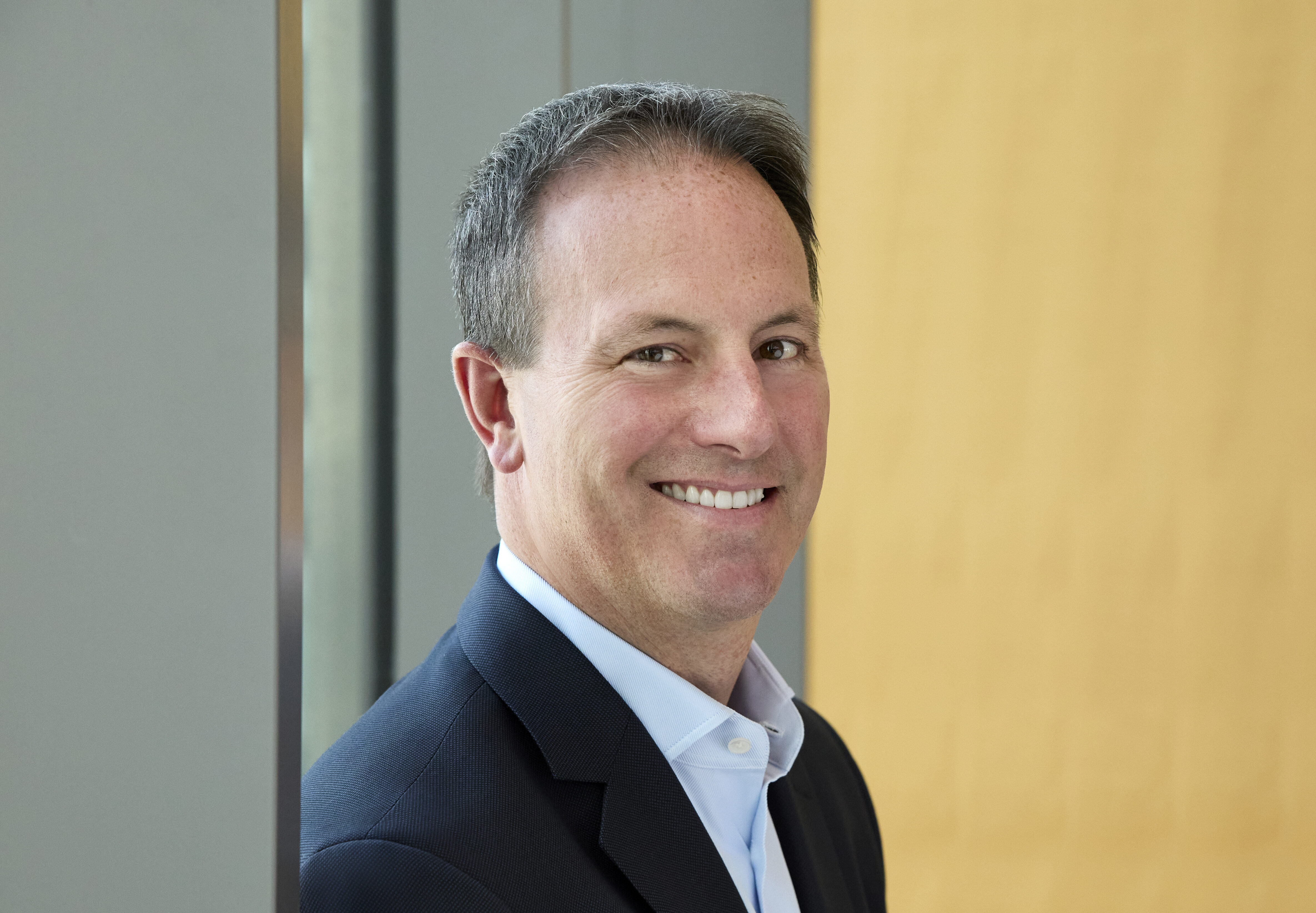
Awards for Excellence 2002
John Costas, CEO, UBS Warburg
John Costas is the winner of this year’s PricewaterhouseCoopers’ lifetime achievement award. It reflects his leading role in driving UBS Warburg, where he is now CEO, from being a second-tier global player in investment banking to this year’s best investment bank. His early career in the bond division at CSFB in New York progressed incredibly smoothly. He rose from trainee to co-head of global fixed income. Starting in sales, he progressed to running global distribution and then took a big step up to also running risk management and capital markets at the start of the 1990s. It had all gone without a hitch. Maybe it was too smooth.
Then, at the age of 39, he took a big risk, quitting an established franchise to see if he could build a business at UBS. “I take great personal satisfaction from taking what was a niche player in certain markets to a fixed-income platform that can be mentioned in the same breath as the businesses of other leading bulge bracket houses,” he says. Not that it was easy. In the first 18 months pure fear of failure drove him on. “I was startled by how much work there was to be done and how much I had taken for granted at CSFB. If you’d asked me after six months, over the second bottle of beer I’d probably have told you that I’d made a mistake,” he recalls.
Bear market trader
But he survived and thrived. He describes himself as something of a bear market trader – he does not match the highest performers in a boom but stands up well in a down market. Good years for him were 1994, 1997 and 1998. That resilience helped during the merger of UBS and SBC Warburg. “It was predominantly a Swiss domestic merger and not really about investment banking but it was the first big step to achieving global scale,” he recalls. “And it provided us with a lot of experience. I hadn’t been through a big merger but was able to hook up with a team including Marcus Granziol and David Solo who had been through the SBC and Warburg and O’Connor mergers and were quite ahead of the curve on how to make them work.”
The merger provided a context to redesign the fixed-income business. Costas cut staff from 2,000 to 1,000 and doubled the P&L, exiting certain businesses in the process. It was a tough time but by the first quarter of 1999 he had begun to see signs that the fixed-income business had generated true critical mass. He was then given additional responsibility for building up corporate finance and investment banking in the US. It was to be a test of whether the management skills he had honed in fixed income could apply in areas where he had less technical knowledge. “I see a lot of common elements in successful management – the ability to identify the variables that can make or break a business, to prioritize them, take decisions on them, and to do that day-in, day-out. It takes a lot of mental effort.”
As long ago as the third quarter of 1996 Costas had suggested to his former UBS bosses that they should acquire PaineWebber, based on his belief in a convergence of behaviour between institutional and high-net-worth investors and in the need for scale. Morgan Stanley’s merger with Dean Witter made him positively religious in this belief. In 1999 and 2000 he raised the same idea inside UBS Warburg and with UBS chairman Marcel Ospel. When that deal came off in November 2000 he headed the integration committee alongside PaineWebber CEO Joseph Grano.
The lessons of the UBS/SBC merger stood him in good stead. “Jack Welch has said that he wishes he’d always been bolder and acted quicker in mergers. There’s a tremendous negative inertia and unless you take key decisions quickly that inertia severely impacts the returns. In 90 days we executed the PaineWebber merger: we retained every piece we aspired to retain and enjoyed some positive surprises.” He adds that, in mergers, “great execution can overcome poor strategy, but great strategy can never overcome poor execution.”
It’s been a key piece in the puzzle for UBS Warburg. “I joked with the PaineWebber people that, in the months before the merger, when we paid a lot of attention to measuring this, we were enjoying faster brand name recognition growth than them with the US investing public. They had gone from 92% to 93% while we had gone from 2% to 4%.” Following the acquisition, the UBS Warburg name was recognized by 40% of US investors.
Exploring ways to benefit from links between the investment bank and the private bank occupies a lot of Costas’s thinking. “Cross-selling is always hard to master, but I think that with certain brands you can rotate customers across an organization. Success is when the private bank trusts us to introduce its most valued clients to the investment bank and vice versa.”
Meanwhile he has developed a new outlook since riding the established franchise of CSFB. “Most senior people at this firm thrive on change management. Though the overall strategic direction is not up for debate, every business and every piece is. There are no sacred cows here. Marcus Granziol was the architect of this form of open debate and we still foster it. The management committee [of nine] meets every two weeks and has some very lively discussions. We regularly pull this firm apart and put it back together again in a stronger way.” Businesses are regularly reviewed for possible exit or investment.
An example is foreign exchange. Two years ago it was a trading and derivatives centred business with little distribution and a transaction processing cost problem. Today it has 70% electronic distribution at a fraction of the previous processing cost and UBS Warburg just chased Citigroup to within a whisker on the Euromoney annual foreign exchange poll.
Peter Lee