Awards for Excellence 2005
Goldman Sachs Goldman continues to win more business than its rivals in a highly competitive market
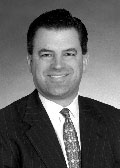 |
| Gordon Dyal |
Goldman Sachs has been beset with controversy regarding its mergers and acquisitions franchise in recent months (see North America awards section), but that hasn’t affected the kudos of the Goldman brand when it comes to advisory services or the rock-solid strength of its client relationships.
These are the key drivers that have allowed the bank to take the global M&A prize once again. Goldman has a 29.8% market share for global completed deals over this period and a 28.4% market share for announced deals. “We’ve always aimed to have a balanced franchise,” says Gordon Dyal, global head of mergers and acquisitions at the firm. “We’re focused on being the leaders in Europe and the US, across all industries and to be a major player in the increased private-equity flows we’re seeing in the market at the moment.”
Dyal says that Goldman has an old-fashioned relationship-driven business but points out that the bank has also been involved in some highly complex transactions involving financing, hedging and considerable sector expertise. When, in July 2004, Goldman advised a consortium of private-equity firms containing the Blackstone Group, Hellman & Freidman and Kohlberg Kravis Roberts & Co that was to buy US power company Texas Genc for $3.65 billion, it also led the $2.5 billion financing structured to accelerate the close of the transaction. On top of that, it entered into an agreement with Texas Genco when the deal was announced that enabled the company to sell some of its base load capacity to Goldman Sachs until 2008, thereby hedging the risk between the signing and the closing of the buyout. The first part of this acquisition closed in December 2004.
In the past 12 months, global M&A activity has accelerated across all sectors and all geographies, involving record amounts of private-equity sponsored transactions, but Dyal says that the number of large transactions has not changed. “Every year, you see five to 10 truly large scale transactions. You need to be in a clearly defined slump in the market not to have this many.”
Plenty of advisory banks have been involved in these jumbo deals. Merrill Lynch was sole adviser to Procter & Gamble, for example, on its $57 billion purchase of Gillette, by far the biggest announced transaction of the period. But Dyal says participation in these deals is still of utmost importance to Goldman’s franchise. “It’s critical to be in a significant portion of these large deals for our business.”
Goldman might have been the dominant player over this period in the crucial North American market and to a large extent in western Europe, but this award was no foregone conclusion. JPMorgan is runner-up this year for the global award. The number of deals it has done, if not the volume, far exceeds Goldman’s record whether completed transactions or announced deals over the period are considered. In terms of announced deal volume, JPMorgan has also shown a marked improvement over the same period in 2003 to 2004, moving through the global league tables for announced deals from fifth to second place, pushing Morgan Stanley into third position. It’s the top M&A house in Latin America this year and the runner-up in Asia.
However, next year’s awards are already shaping up to be a strenuous contest. Morgan Stanley, always a fierce competitor, is also looking very threatening, coming out top for north American and for global announced deals this year to date with the biggest global market share the firm has ever had. Dyal concedes that Morgan Stanley has had a good run this calendar year to date but says the amount of competition Goldman Sachs is facing from other firms is not exceptional. “We see different firms around us at different times but the level of competition is always pretty fierce,” he says.