| 2009 Awards for Excellence | ||
Deutsche Bank: Hundreds of Deutsche’s smartest structurers are now working for clients rather than the bank’s own product groups
|
Also shortlisted in this category: |
In November 2008, as Deutsche Bank reeled from losses in its credit and equity proprietary trading books that would eventually drag the whole bank into a loss for the year, Anshu Jain, head of Deutsche’s global markets division, took a big decision. Up until the fourth quarter of 2008 Deutsche seemed to have had a good credit crunch. Now the sudden rise in correlation wrought shocking losses where the bank had assumed it had locked in profitable and well-hedged trading positions. Now it was obvious that much less capital would be available in future for proprietary traders and that many must leave Deutsche Bank.
|
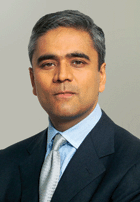
Anshu Jain, Deutsche: big decision |
 |
Jain had something more radical in mind. By the end of 2008, the bank employed hundreds of structurers to devise new combinations of derivatives-based instruments.
Many of these people would survive the cull. But they would be removed from the product areas to form a new group, called global markets structuring. Its task would be to talk to clients with worries about incidental exposures to many types of financial and market risks and devise ways to manage them. They would no longer spend their time devising the latest complex derivatives product with which their sales force would woo clients. And – this is the radical part – none of the structurers would be left behind in the product groups.
It amounts to a reordering of Deutsche’s core global markets business into a client-centric model. Just last month, the bank hired in Ram Nakay from Credit Suisse to head it.
For Deutsche veterans, it was a step into a new world, where client requirements were simple but urgent. John Pipilis used to run credit structuring at Deutsche. Now he heads the debt side of the new group, Europe and EEMEA. “A lot of what the structuring group used to do was around complex product development and single asset class solutions. Today we have added much broader multi asset class risk advisory, combining this with communication around first order moves, namely, explaining to clients the bank’s own basic views on markets – where do we think equities are heading for the rest of the year, where do we think the euro is likely to trade against the dollar, do we like the ABS markets at these levels, yes or no, and how are we managing our own exposures to all these markets?”
This time last year, after the falls that many ABS securities had suffered from mid-2007, many banks and investors were tempted to call the bottom and move back into top-rated instruments that had already lost 20% of face value. Deutsche stuck to its bearish view throughout 2008 and helped clients avoid more losses as values in ABS securities markets continued to tumble.
And where customers have their own views, Deutsche can help with simple tactics. So, for example, one investing client that saw the equity market crash coming 18 months ago had bought put options and had seen these move far into the money. As risk aversion diminished, the client worried that further falls were possible but that they might not be severe. Should it extend the hedge, or unwind it? Deutsche advised rather that it reset the strike using a put spread, allowing it to pocket some income while retaining an element of protection. Rocket science it is not. Rather, it is exactly what clients require.
Pipilis says that by talking to clients about their risk issues in a holistic way, rather than just about their exposures to a specific product or asset class, the dialogue moves up one notch.
“Recently, I met the head of a shipping company who had sold much of his fleet a year and a half ago – so his timing was excellent – and is now sitting on a lot of cash. His biggest worry is hyper inflation. In the past such a conversation would have centred purely around inflation derivatives. Now, as well as talking about inflation swaps, we are also talking about potential investments in credit, real estate, gold and other commodities. We have all this expertise in house and are now able to deliver it to clients much more effectively.”
The bank is also introducing its own risk managers to clients. Its treasury team has, for example, done a good job of managing the bank’s liquidity through the financial crisis and has begun discussing its approach and sharing ideas with customers of the bank.
Some of what the bank has been doing is to help clients tidy up existing portfolios of derivatives exposure. So the bank has been advising companies facing large mark-to-market losses on their portfolios of FX hedges on how to cap the potential mark-to-market loss while still maintaining protection appropriate to likely future rate exposure in line with projected underlying business volumes.
Deutsche has always been one of the smartest firms in derivatives structuring and one of the biggest in flow trading. It has adjusted its business approach to the new world order where complexity for complexity’s sake or to disguise leverage is no longer tolerated. Pipilis says: “One of the consequences of the extreme volatility we have been through is that clients are more conscious than ever of risk and more determined not to be caught out again. There isn’t an airline out there that isn’t thinking how to hedge its fuel bills and not a steel company that isn’t examining its FX risks. Clients don’t take much convincing any more. And increasingly they are coming to us.”




