 |
||
|
Jon Macaskill is one of the leading capital markets and derivatives journalists, with over 20 years’ experience covering financial markets from London and New York. Most recently he worked at one of the biggest global investment banks |
 |
|
The focus of the investigation on the use of expert networks and potentially illegal disclosure of the performance of small technology and healthcare firms provided some relief to bankers and investors with a focus on sales and trading in core markets.
As long as officials are concentrating on abuses at the fringes of the financial markets, there is a reduced chance of cases that could serve to disrupt the workings of sectors that are big revenue sources.
But insider-trading cases often unexpected turns, as individuals under investigation try to cut deals with prosecutors by providing information about abuses elsewhere.
And the renewed attention to potential market abuse cases comes at an unwelcome time for banks and funds, just as there were grounds for cautious optimism that the regulatory threat to sales and trading revenues was diminishing.
The Republican victory in the US mid-term elections took some of the momentum from the push to reform market practices.
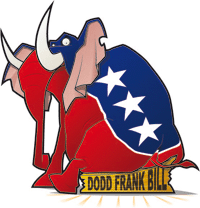
There is no immediate prospect of a move to make big changes to the Dodd-Frank financial reform bill. Republicans say they will try to lessen the impact of the bill, however.
It was apparent even before the electoral rebuff for the Democrats that banks will be able to adapt to the Volcker Rule elements of the reform bill with minimal disruption to their business models.
The swift delivery of a letter to Treasury secretary Tim Geithner by a senior Republican calling for a loose interpretation of the Volcker Rule highlighted the extent to which banks will be able to rely on further dilution of reform by their political allies.
Straight after the election Spencer Bachus, the likely next chairman of the House of Representatives’ financial services committee, issued a formal warning to Geithner that rigid implementation of Volcker Rule prohibitions could undermine US competitiveness.
US banks will still have to manage their ownership stakes in hedge funds and private equity firms to avoid technical breaches of new ceilings. They are also likely further to reduce their sponsorship of in-house standalone proprietary dealing units.
But it is clear that there is little prospect of meaningful disturbance to the way banks embed position-taking in sales and trading businesses that involve client interaction. Banks will remain free to make hedging decisions that involve risk assumption, with few constraints except the fear of market sanction in the event of losses.
European regulators have never shown any interest in disrupting the sales and trading operations of their universal banks, so the change in political climate in the US effectively ends the prospect of fundamental reform. Unless extraneous factors cause another shift in mood, that is.
Twists in the pursuit of insider-trading cases could return the spotlight to market practices.
The three hedge funds targeted in the recent round of probes by US investigators are not systemically important. Diamondback Capital Management, Level Global Investors and Loch Capital Management are minor players, although some of their partners have connections with SAC Capital, a bigger fund run by Steven Cohen.
SAC received a subpoena relating to the insider-trading probe and allegations that caused investors to lose confidence in the fund would certainly draw attention. An unwinding of a roughly $12 billion fund that is chiefly invested in stocks would not necessarily involve much market disruption, however.
Another firm that reportedly received a subpoena is Citadel, which is more tightly intertwined with the big investment banks than SAC, because of its historical focus on trades with a derivatives component and its attempt in recent years to build its own investment banking operation.
Any government allegations that prompted a loss of confidence in Citadel could cause issues for its derivatives counterparties and raise concern that investigations will spread to mainstream investment banks.
There was a collective sigh of relief across Wall Street dealers in June when a judge dismissed a case by the SEC against a former Deutsche Bank employee charged with insider trading over disclosure of information about a high-yield bond to a hedge fund client.
 |
There had been fears that the case would impair the market for credit derivatives – as the bond salesman had been accused of disclosing terms of a change to a bond offering that he knew would boost the price of related default swaps. A success for the SEC could have led to further cases over the many instances when default swap shifts or stock option trades indicated that information about client deals leaked ahead of public announcements. The dismissal of the case against the former Deutsche salesman and one of his clients at US hedge fund Millennium Partners, combined with the SEC’s lack of success in making allegations about CDO fraud stick against Goldman Sachs, raised hopes among bankers that supervisors would back away from pursuing potential abuses in relatively complex trading markets. Goldman paid a $550 million fine to settle the CDO allegations in July, but did not admit any wrongdoing and effectively fought the SEC to a draw.
Late November’s steady widening of the scope of investigations into potential insider trading by hedge funds has raised concern that investment bankers might eventually be snared in the enquiry net.
The raids on hedge funds also reminded bankers that criminal investigations develop a momentum of their own.
The political winds are blowing against a crackdown on the business models of the big banks. The Republicans are resurgent in the US and the renewed European sovereign debt crisis has reminded local politicians of the fragility of many of their banks.
But while politicians might be less inclined to get tough with their banks, they will also be forced to react to any evidence of market abuse by investigations that are already under way.
And that in turn could put an unwelcome spotlight on the details of the workings of the markets that supply the bulk of income for investment banks.



