|
|
|
Outstanding contribution to Islamic finance: |
In 2001 Afaq Khan made a decision that changed his life. He had been at Citibank since 1988 working first in Pakistan, then in Bahrain as a relationship manager for the region’s Islamic banks.
He was contemplating relocating to South Africa to work for Citi in conventional banking when he realized that he wanted to dedicate the rest of his career to developing the Islamic finance industry. Johannesburg’s loss has turned out to be Islamic finance’s gain.
Over the past two decades, with Citi, followed by HSBC Amanah, and now with Standard Chartered Saadiq, Khan has become one of the pioneers of the industry, helping to develop products across the Islamic banking spectrum, from sukuks to derivatives to cash management to shipping finance to basic credit cards and overdrafts.
Talking to Khan, it’s clear that the industry means more to him than just providing a career. He believes in its values. “I wanted to do something closer to my beliefs,” he says of his decision to knock back the offer to go to South Africa.
|
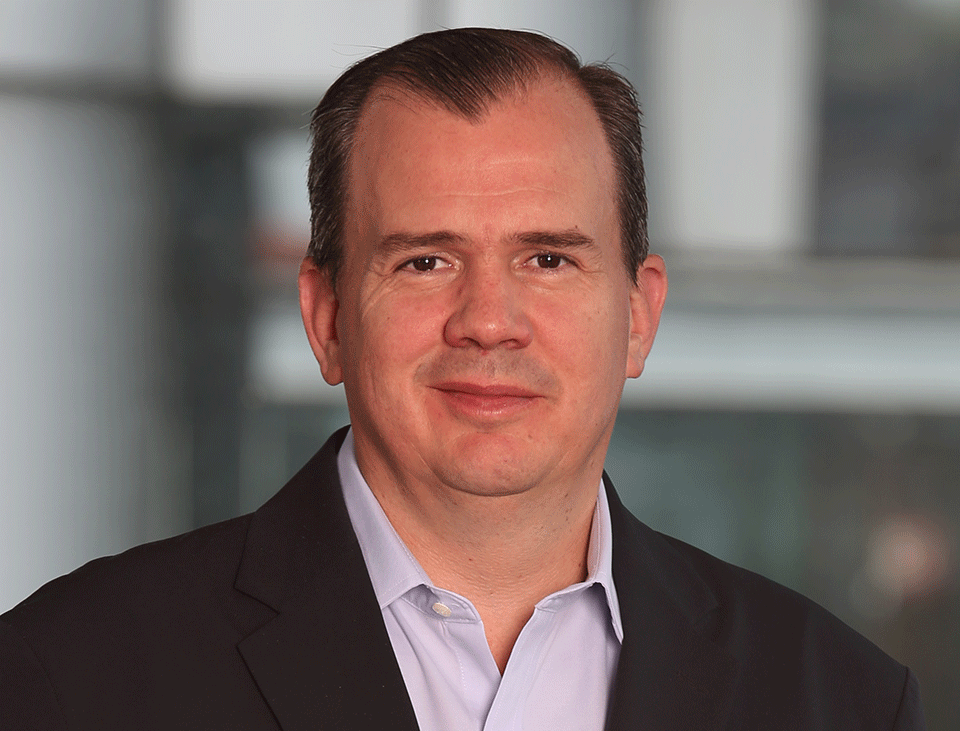
Afaq Khan, Standard Chartered Saadiq: followed his heart as an innovator |
|
|
That faith, in the widest meaning of the word, has dictated his career choices. So when Standard Chartered came calling in 2003 to hire him from HSBC to re-launch its Islamic finance business following the Asian financial crisis, one of the key reasons why he joined was because the bank said it would build in Pakistan, his home country. “It was an emotional decision,” he admits. Since then Standard Chartered, under Khan’s leadership, has grown into one of the foremost Islamic financial institutions in the world, covering retail, corporate and investment banking. The bank offers consumer-banking services in six countries: Pakistan, Bangladesh, Bahrain, UAE, Malaysia and Indonesia (where it operates through Permata bank, in which it holds an equity stake). In 2007 it adopted the global brand of Saadiq.
One of Khan’s highlights came in Pakistan when Standard Chartered worked with the government to develop Shariah-compliant products for its interbank money market as a shortage of investment options was hurting Islamic banks’ earnings. The bank helped launch a PRs45 billion ($525 million) Islamic treasury bill programme for the State Bank of Pakistan, thus allowing Islamic banks to meet the central bank’s statutory reserve requirements. “It benefited the entire industry in the country,” says Khan.
Another landmark product that he pushed was the development of Shariah-compliant contracts to hedge against changes in commodity prices. Launched last March, the product enables investors to protect themselves against price movements in goods such as sugar, rice and oil. The idea was first worked on in 2008 when oil prices were rising over $140 a barrel and is devised as a risk-management tool, not as a means to trade and make money. For Standard Chartered it complements its existing Shariah-compliant FX and rates hedging products, enabling the bank to provide risk management solutions across all areas.
Also last year Standard Chartered launched the first Islamic US dollar nostro account. The innovation means that Islamic banks across the world can now earn Shariah-compliant profits on their account balances at Standard Chartered Bank New York by using the facility. The facility operates on the Islamic finance principle of commodity murabaha. Profits are paid on a monthly basis. “It’s about making a statement to the market about our commitment to the industry,” says Khan.
He believes that in years to come both the US dollar nostro and the commodity hedging products will be seen to be as important to the industry as the sukuk market. “We’re at the education stage right now but when they become mainstream they will have the same impact as the sukuk,” he adds.
Khan’s experience and expertise is also evident in the sukuk market. When at HSBC he was one of the key bankers behind the first international sukuk – a $600 million, five-year deal for Malaysia in 2002. The transaction was being pushed by then Malaysian prime minister Mahathir Mohamad. But several hurdles had to be cleared before the deal could be launched.
The first was lack of roadmap. Things such as getting a credit rating, getting approval from Islamic scholars and regulators, building a book and achieving price guidance all had to be done almost from scratch. Then matters took a potential turn for the worse after Mahathir resigned from his party the day the deal was due to price. Luckily, he returned the following day, enabling the transaction to take off. What was impressive was the commitment from Islamic investors, especially in the Middle East, who maintained their order levels despite the political environment. It was an affirmation of their belief in the product and the credit, says Khan.
Since then Khan has achieved a number of firsts in the sukuk market, including debut deals for the government of Ras Al Khaimah in both local currency and in dollars; the first sukuk programme to be established in Kuwait, for National Industries Group; and Indonesia’s debut international sukuk.
A modest man, Khan says he has found a great home in Standard Chartered. “I’ve been extremely lucky to be at a bank where the senior management is very committed and supportive.”
He also acts as chairman of an NGO in Pakistan helping underprivileged children in small cities and rural areas with their education from kindergarten to university level. He plans to support budding entrepreneurs in his home country, whose biggest problem, he says, is a brain drain.