
In this year’s awards period, Bank of America posted the biggest year-on-year percentage increase in its sales and trading revenues of any of the big five US players, up 14% to nearly $17 billion, its highest level since 2010.
In absolute terms, the bank remains fifth on that list, but it is closing the gap on Citi and Morgan Stanley, who sit about 12% above it in revenue terms. For its momentum and the way in which it has been reworking its franchise in recent years, BofA wins the 2023 Euromoney award for the world’s best bank for markets.
Equities sales and trading revenues of $6.5 billion in 2022 were a record for the firm, while fixed income, currencies and commodities (FICC) – nearly breaking through $10 billion – saw its best result since the extreme period after the global financial crisis.
Shortlisted
- BNP Paribas
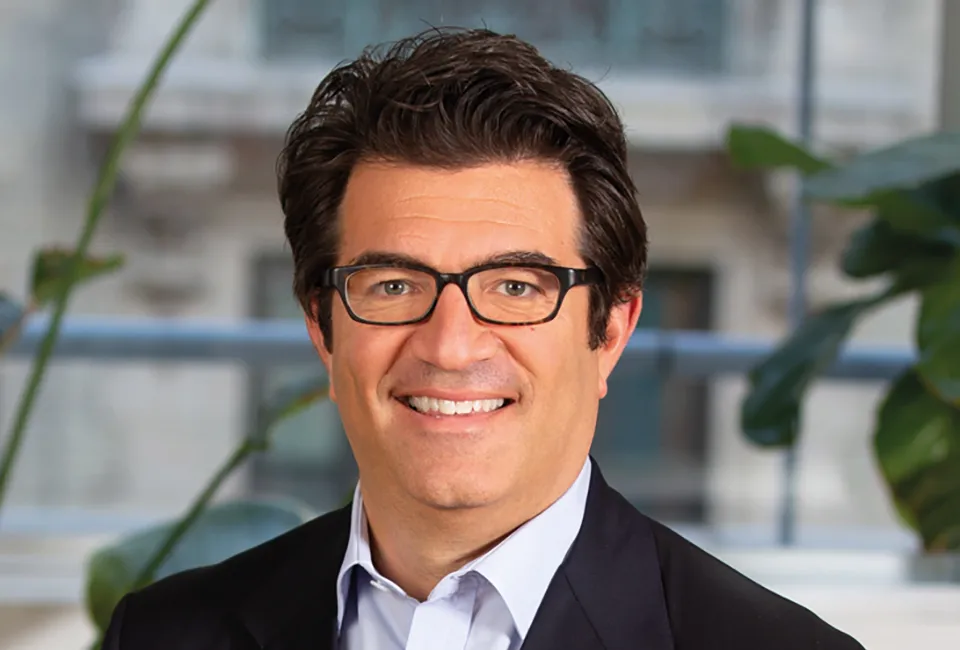
For Jim DeMare, BofA’s president of global markets since July 2020, it is the diversity of its markets business that is one of its greatest strengths. He looks at that through a few different lenses.
“We think that the best way to deliver for clients is to have a diversified offering,” he says. “Different products perform differently, and so we have a product mix. And then we also have diversification in the types of client, because you need clients to be doing things for different reasons to have a successful markets business.”
The final part, he says, is geographic diversification, capturing flows from different parts of the world. International operations accounted for 40% of sales and trading revenue in 2022, up from 33% in 2020.
DeMare was head of the FICC business when he stepped up to run all of global markets in 2020 and he was in the process of reorganizing it, bringing some units closer together. When Tom Montag, BofA’s longstanding investment bank leader, retired in September 2021, DeMare took on more responsibility for the strategic direction of the markets business. With that came an acknowledgement that it needed more resources, in terms of both people and capital.
That was partly down to the sheer growth in secondary markets. By its peak in early 2022, the US equity market was more than 80% bigger than it had been in 2016, for example. And in fixed income, in spite of central bank buying, the tradable market was up anywhere between 30% and 50%, depending on the segment.
Simply keeping pace with that – and to be able to support clients through it – meant increasing the balance sheet committed to the business. Capital allocated to the global markets rose from $36 billion in 2020 to $38 billion in 2021 and then up again to $42.5 billion in 2022. In the last three years, the division’s balance sheet has grown by $180 billion, reaching a record $870 billion.
This being BofA, growth is of course not just growth but also “responsible growth”. In the context of his division, DeMare calls this “running the store”, managing risks thoughtfully.
“We are not looking for one-off, complicated, operationally intensive trades,” he says. “We like businesses that we can replicate and where we can get scale with the broad group of clients that we have.”
Responding effectively to the turmoil of the past year has been challenging but essential. BofA’s work during the period of the crisis at Credit Suisse in March 2023 is a good example of how the bank has been stepping up the capabilities of its Europe, Middle East and Africa teams, which saw a doubling of credit volumes compared with February. Volumes with hedge fund clients more than tripled.
The bank traded $2 billion of additional tier-1 instruments in the week when Credit Suisse’s AT1s were written down, and BofA’s EMEA credit business ranked second in market share as a result.
None of this comes with undue risk: despite the chaos of that quarter, the bank saw no days of trading losses. It helps that it has some of the best analytics around: its Glass platform notably flagged up the risk of rates volatility in 2022, meaning that the bank was better positioned than some and therefore better able to be available for clients. That helped take BofA’s US linear rates business into the top three.
We like businesses that we can replicate and where we can get scale with the broad group of clients that we have
Jim DeMare
Part of the thinking behind reworking FICC was to create a more balanced business, in which macro might perform as strongly as the micro businesses – the likes of corporate credit, mortgages, asset-backed securities and municipal bonds. The micro had been doing well, but it became clear that the macro was lagging. The focus worked, says DeMare, citing the performance in rates.
In FX, the G10 and emerging markets businesses were put together, which better aligned with how clients thought about them, he says. It also hired intensively – adding more than 30 staff since 2020.
In 2022, the bank said it had seen market share increases of 20% in G10 and emerging markets FX since the rejig. DeMare thinks FX is where he has seen the biggest improvements in recent years. But the bank also invested in its commodities business too, something that was fortunate in light of the disruptions that then came from Covid and the war in Ukraine.
For all the success in fixed income, however, it is equities that has seen the bigger growth. It has always been the smaller business – until 2020 it was typically about half the size of FICC, at best.
That balance has shifted, even as FICC has also grown. Equities now accounts for more than 40% of the bank’s markets business, up from historic levels often below 30%. Part of that resource deployment has been a commitment to prime brokerage, as well as upgrading and expanding the US and European teams.
DeMare says that being a trusted and consistent provider is critical for a successful markets business, with confidentiality particularly valued when it comes to transferring risks for others without impacting the broader market. Ultimately, he sees the business as a series of partnerships.
“We have clients, not counterparties,” he adds.