 |
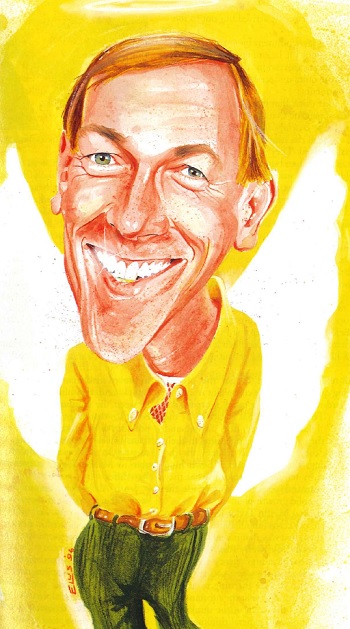
On the evidence of his most ardent supporters Martin Taylor, chief executive of the British clearing bank Barclays, is destined for nothing less than sainthood. Appointed two years ago to do one of the toughest jobs in UK banking, he has convinced shareholders and staff that he is the bank’s saviour. Ask a Taylorite to characterize the man and a string of superlatives gushes forth: brilliant intellectual, warm personality, rational, intuitive, tough, humane, erudite, approachable, far-sighted, down-to-earth, an outsider, insightful.
But, given the failure of the British banks to become leading international players, are the tireless efforts of even the most talented individual enough to make Barclays world-class?
One or two analysts who remain stubbornly outside the Taylor adoration circle are beginning to wonder. They argue that in spite of Taylor’s undoubted qualities, the underlying substance of what he has achieved at Barclays is less than it appears. The debate over loan-loss provisions, the share buy-backs, the internal restructuring, the focus on Europe – all have been much more dramatic at the ideas stage than in their ultimate effect. These analysts say what he has done so far is to re-engineer the bank in a short-term way rather than set it on a long-term growth path. The debate will get fiercer as Taylor’s term of office lengthens and there is a longer track record to judge him by.
But, whatever blows are traded between his supporters and the much smaller group of detractors, Taylor will undoubtedly be remembered as a radical who broke the cultural mould in UK banking. At the minimum, he will be credited with bringing up-to-date management thinking into a conservative industry even if he doesn’t achieve major strategic breakthroughs. How did a young man (by the standards of British banking at least – Taylor is 43), with no previous banking experience, get himself into a position where he could be considered for such accolades?
As with many high-fliers, Taylor owes his success to a combination of talent, determination and good fortune. He was born in
Burnley, an unglamorous town in Britain’s de-industrialized north, and a long way from the bright lights of the City of London. When Taylor was eight, his accountant father died, and his stepfather, who ran his own pharmaceuticals wholesaling business, sent him to a preparatory school, where he won a scholarship to Eton. Already he was beginning to display a diversity of intellectual interests and an unwillingness to be channelled by the education system along any one road.
Although naturally drawn to classics, he studied maths and science in the last years of school because he felt “desperately ill-educated in that area”, and then went to Balliol College, Oxford, in 1970 to read English. After a few weeks he fell out with the English department and decided to switch to Chinese, but the dons insisted he stuck out the first year before changing. That meant completing a three-year Chinese course in two years, and may explain why he didn’t obtain a first-class degree. “I was awfully frivolous at Oxford. I spent more time reading other people’s subjects than my own,” Taylor once recalled.
Four-year attention span
His butterfly tendencies were to the fore when it came to selecting a career: he chose journalism, the favoured pursuit of those with short attention spans and low boredom thresholds.
He didn’t even pick financial journalism, the more solid and respectable end of the profession, and was somewhat irritated when it picked him. In his first job at Reuters, the agency put him on the economics desk, a subject he says, “it would never have occurred to me to read”. He worked for Reuters in London, Paris and Frankfurt for four years before joining the Financial Times in 1978 where he became editor of the Lex column, which analyzes corporate performance. It was in this role that Taylor gained his insights into the workings of British companies, clearly thinking he could do better than existing management. Eventually, he launched himself into a business career.
“He was a very good analyst and was interested in the characters of the people who ran companies and how this influenced the way they managed,” says Barry Riley, a Financial Times journalist who was editor of Lex while Taylor was an assistant. “He was always very critical [of companies] and very ambitious, but it was a surprise when he went into industry. We thought he might get one of the FT’s top foreign postings in New York or Paris.”
An often-stated maxim of Taylor’s during his time as a journalist was that he never did a job for more than four years, and in 1982 he duly switched track completely by joining the chemicals group Courtaulds. Legend has it that Courtaulds’ chairman, Sir Christopher Hogg, was so impressed with Taylor’s performance as a questioner at a press conference that he offered him a job on the strength of it. While this may have made a good headline for the colleagues Taylor left behind, it is incorrect. Hogg and Taylor knew each other socially through mutual friends at Oxford and when Taylor decided the time was right to leave the FT he went to Hogg for advice. “I said he could do worse than come into industry but was not sure that he would want to because things were very difficult at that time,” says Hogg.
But Taylor, perhaps influenced by his northern heritage, wanted to get his hands dirty. He turned down offers to do stockbroking research in the City in order to tackle the problems of a British firm trying to stay competitive in the cheap-labour businesses of cloth and underwear manufacture. “There were tons and tons of talented people in the City,” he said in a newspaper interview while still at Courtaulds. “I couldn’t see myself making a significant contribution really, and I did feel that industry was far more in need of people than the City.”
Starting out as Hogg’s personal assistant in order to learn the business, Taylor became chairman of Courtauld Textiles in July 1988 and chief executive of the company in 1990 when it demerged from the group. Along the way he was involved in his fair share of factory closures, rationalizing the business so that while turnover may have declined, profits and earnings per share improved.
It was this track record that attracted Barclays’ headhunters to Taylor at the same time as Taylor was himself thinking about moving. “You don’t expect me to be chairman and chief executive of Courtaulds Textiles for the rest of my life?” he confided to a City friend over lunch in mid-1993. Whether the corporate grapevine was working is unclear, but within weeks came the announcement that Taylor would be the new chief executive at Barclays.
For beleaguered shareholders at Barclays, the appointment was “almost too good to be true”, to quote one. Barclays shares rose 4% on the news, while Courtaulds Textiles stock fell 2.6%. Investors were still recovering from the shock of Barclays’ £244 million ($380 million) pre-tax loss in 1992 because of imprudent property lending and the effects of the UK recession. The reporting of first-half profits of £335 million for 1993 had cheered them a little, as did the acceleration in earnings at Barclays’ investment banking arm BZW, but there was ongoing concern about Andrew Buxton combining the roles of chairman and chief executive of the group. Taylor’s appointment was a welcome relief to shareholders and many employees worried about the bank’s future.
What they saw in Taylor was a man of great breadth, displaying the varied qualities required of the boss of a large and complex company. An intellectual genius who speaks five languages besides the Chinese he read at Oxford, and who does sums mentally faster than colleagues with calculators, Taylor is nevertheless noted for his intuitive approach to management and for sometimes trusting gut feelings over fully rational decisions. “My stomach is almost always right,” he once said.
While noted for his success in business restructuring and for taking the tough measures necessary to get a company back in shape, Taylor is also admired for his human qualities: an ability to talk to employees at all levels on common terms; a penchant for discussion along with an openness to new ideas and criticism; a persona and charm that enable him to convert opponents to his way of thinking. Taylor’s character is full of contradictory facets that would probably be destructive in someone less accomplished, but in his case they seem to enhance his flexibility. The upshot is someone whose background is middle-class but whose independent stance makes him always seem the outsider. At Courtaulds while working among manufacturers he was regarded as a City person; at Barclays, ironically, he is seen as a manufacturer by some and as a business manager by others, but by no-one as a banker.
Taylor sees his independence as positive in management terms. “It has helped me enormously not to be a Barclays insider,” he says. “I also think it helped me quite a lot not to have the ideas of another bank and be comparing those with the way Barclays does things, much to the annoyance of my colleagues.”
Personality overstretch
Socially, Taylor is seen as aloof yet convivial. Riley of the Financial Times recalls that “Taylor was never a great socializer and definitely not one of the lads, but was easy to get on with”. Hogg says: “He was a joy to work with. He is very rational but also very human with a good sense of humour. Unlike a lot of people he never had an axe to grind.”
Drawing on his background as a journalist, Taylor has proven to be adept at promoting his ideas through the media. He tries to see as many as possible of the journalists and analysts who request interviews and meetings. But while eagerly stepping into the limelight on behalf of the bank, he stays as far away as possible when he leaves work.
Little is known about his private life except that he is married with two daughters, lives in Blackheath (a pleasant area of London but not one patronized by the rich and famous), and lists his interests as reading, music, travel and architecture. He is known to enjoy walking, a time he uses for thinking and talking aloud to himself about complex issues.
Taylor admits that he is not hugely extrovert and that his public role at Barclays causes him “personality overstretch” – hardly surprising given the number of roles he is required to play. He can be visibly nervous on occasions, as during his first annual general meeting with Barclays when 200 members of the Struggle Against Financial Exploitation (Safe) staged noisy protests over what they saw as the bank’s poor treatment of its customers. A quaking Taylor refused to stand to make his report and said he was more comfortable sitting. Predictably, Taylor’s salary, then pegged at £737,500, drew hostility and one share-
holder said that his move from Courtaulds seemed to be “like a football club hiring a synchronized swimmer”.
But away from the rough and tumble of shareholders’ meetings, it’s difficult to find anyone who has a negative slant on Taylor, in respect of his personal qualities. One or two analysts complain that when the going gets tough, Taylor rounds on them personally rather than answering the question. Many who know him complain that he simply talks far too fast. “He has so many ideas pouring out of his brain, it’s difficult for us mere mortals to keep up,” says Robin Gilbert, a City investment analyst who has known Taylor since he worked as a journalist. Taylor underwent speech therapy to slow himself down and Gilbert says he is now speaking at about a quarter of his original speed. He adds: “What you see is what you get with Taylor. No-one has any negative words to say about him.”
As far as Barclays’ shareholders and senior employees are concerned, Taylor’s magic spell remains unbroken since the day he joined the bank. Barclays’ shares trade at a premium to other UK banks and senior executives are enthralled with the open working environment their chief executive has fostered. Noted for his relaxed manner and casual dress, Taylor began his job at Barclays by describing bankers as “pompous and stuffy”.
In a more recent interview, he told Euromoney that Barclays suffered in the past from “confusing formality with discipline”. He said it reminded him of an ancient, hierarchical culture where people believed that if they obeyed certain rituals the sun would automatically shine and the rain would certainly fall.
“What we want is a culture where people don’t feel the need to come to meetings and never take their jackets off, and read out a 14-page prepared document. That’s a waste of time,” he says. “I want a culture where people have read the documents, where the documents are good and clear, where they can be challenged and discussed quickly and decisions made.”
Many Barclays executives were clearly desperate to break out of the straitjacket of a civil service-style formality that existed at the bank prior to Taylor’s arrival. These days they are enthusiastic as they explain the bank’s
new thinking.
“There is an open and questioning environment,” says Brandon Davies, treasurer for UK banking services. “At one time people never questioned policy; now asking questions is encouraged and ideas are coming from much lower levels. We are creating a fluid organization. At first there was some insecurity about changes but, as they have gone on, people have become more relaxed about it. They realize that change can come about without them losing their status in the bank.”
In fact, so infectious has Taylor’s quest for change become that some staff are urging him to go faster. Taylor recently told a colleague that, when he first joined the bank and visited retail branches, they complained of how impossible it was to keep up with the pace of technological and market change. Now when he talks to them they worry that the bank isn’t going fast enough.
Says one Taylorite at Barclays: “I would like to see things being done faster. Martin Taylor is very much on his own, maybe he needs a think-tank around him to get the process moving quicker.” But the complaint of one or two hard-nosed analysts is much more fundamental. They ask: “What exactly is the process?” Likeable as they find Taylor, and much as they welcome his openness to their enquiries, they still find his strategy for the bank lacking. They accuse him of bewitching the market by telling shareholders what they want to hear and yet failing to provide the bank with a solid growth plan.
“A lot of what Martin Taylor has done is to give voice to concerns [about Barclays] and to deal with them in a way that is slightly alien to a lot of his peers,” says Gerry Rawcliffe, senior analyst at UK-based ratings agency Ibca. “But there is a slight element, when you are listening to him, that you are listening to an MBA speak, and you wonder what the substance is.”
Rawcliffe adds that a lot of the thinking at Barclays is in line with general thinking at UK banks and was being put into practice before Taylor arrived. These include such things as improved risk management, the best use of capital and the blurring of the boundaries between the commercial and the investment bank so that large corporate customers are provided with a kind of one-stop shop for loans as well as security issuing and M&A advisory services. “How much [of this] is attributable to Martin Taylor is questionable,” says Rawcliffe.
Jenny Alexander, associate director at Ibca, says: “Barclays would have recovered and would be doing very well whether they had appointed Martin Taylor or not. It will take five or 10 years to properly judge his performance.”
Less patient observers say the market will not allow Taylor that long and they feel that most of the measures taken so far have not addressed the crucial issues. Some analysts detect Taylor’s Courtaulds restructuring formula being reapplied at Barclays and they are starting to be concerned about its limitations. Courtaulds Textiles has not fared so well since Taylor left. “Barclays is playing good bank, bad bank. The theory is, if you get rid of the bad bank, you will be left with the good bank. Fair enough: the problem is where do you find growth?” says Norrie Morrison, who recently joined Nikko Europe as a banking analyst. Before this Morrison was with Kleinwort Benson where he co-wrote a critical report on Barclays, published last summer, in which he advised investors to “sell Barclays, buy Lloyds”.
Chief among Morrison’s criticisms of Taylor’s strategy is his decision to shrink the loan book, especially loans to large corporates where margins are thin. Taylor’s argument is that lending to large corporates long ago became a commodity business with poor earnings and is interesting only if it leads to fee income for other services. Large banks did it because they always had, without asking why. Taylor’s strategy is to carry only lending that is genuinely profitable or essential to secure a profitable relationship. Barclays’ executives say they have been so bold as to ask corporate customers what the minimum participation in a syndication would be that would entitle the bank to be considered for other business.
Questionable assumptions
According to the Kleinwort Benson report, shareholders were led to believe that while Barclays suffered from reduced income during 1994, this was the price to pay for the transition to a higher-quality business. Margins had improved and would continue to as the bank took on new business. The report questions this assumption and says: “Barclays is in a volume/margin squeeze; while its net interest margin is supported by a shrinking loan book, any attempt to resume lending will remove this benefit”.
By contrast “Lloyds [a rival UK clearing bank] has succeeded in growing its income by being less aggressive on pricing in 1993 and 1994”. The report also says that Barclays’ costs are less firmly under control than Lloyds’, and that Barclays’ emphasis on the investment banking side of the business will lead to a more volatile earnings stream.
Sceptical analysts are also dismissive of Taylor’s emphasis on risk management and his much-trumpeted share buy-backs. Admirers believe he has made considerable progress by making individuals responsible for loans rather than committees and making everyone in the bank more risk-aware. But Morrison says: “There are analysts around who recall being lectured by Barclays on risk management back in 1986. They thought they had it cracked then and they were one of the last banks to suffer in the recession, but they didn’t escape. Risk management is fundamental but it doesn’t help you grow the business.”
What is more, a key Taylor initiative on risk failed to take off. He wanted to allocate a certain amount of capital against individual loans based on the risk of default as well as to make general provisions in case some of them went bad. The aim was to get a better picture of the bank’s risk profile and make allowances for it. But this move partly misfired because the bank’s auditors and the Inland Revenue said these new provisions could not be tax-deductible in the same way that provisions against specific bad debts are.
The debates about risk and lending margins are closely connected with another Taylor-inspired debate about how much capital a bank should have. If a bank can assess its risks better and allocate capital accordingly, and if it pulls out of high-risk, low-margin business, it may need less capital. Rather than use the excess capital imprudently, as banks have always been accused of doing, far better to hand it back to the shareholders, says Taylor. He calculates that Barclays needs between £6.5 billion and £7 billion of capital and has led two share repurchases: one last year involving £180 million worth of shares and another costing £306 million in February.
Tim Clarke, director of broker Panmure Gordon, is unimpressed. “They’re only buying back 2% chunks of shares. That’s not capital buy-back, that’s short-term capital adjustment. To say ‘we’ve got 2% too much capital’ is highly contentious. No-one can tell within 2% whether they have too much. I doubt whether they can tell within 5% or 10%.”
Clarke links the disappointment over the buy-back to Taylor’s management style. “He is good at grabbing headlines and being up with the latest thing that analysts and the press want to hear about. But the follow-through is beginning to be disappointing.”
Clarke cites the failure of Barclays to articulate its European strategy as another example. As part of the management restructuring that Taylor carried out in 1994, Carlos Martinez de Campo was put in charge of the entire European retail business and given a reporting line direct to Taylor.
This was a surprising move given the small amount of total assets and profits that Europe accounts for. “One of the key strategic questions for Barclays must be its strategy in Europe. It’s been one of the problem areas,” says Clarke. “The signal [the reshuffle] gave was that Barclays was going to take a major initiative in Europe on the retail side, that it was going to expand in some dramatic way.” So far no such move has been announced. Asks Clarke: “How long can the jury [judging Taylor’s performance] stay out? You’ve got to see results.”
Taylor says that with European retail, “we didn’t sit around talking about strategy. The place was just bleeding. We have been trying to get rid of the bits that were dangerous”. A strategy of focusing on the upper-middle market with a strong asset-management slant is now in place. On share buy-backs, Taylor comes close to agreeing with his critics. “It’s something we will do as often as we need. It’s a capital management programme.”
Although some financial-sector analysts have their doubts about the Taylor approach, the stock market has been giving him the benefit of the doubt (the share price fell after the 1995 results announcement on February 27, but it recovered later on news of the latest buy-back).
Taylor could still win the argument if he can find other sources of growth apart from lending and demonstrate over time that Barclays uses capital better than its competitors. The purchase of asset manager Wells Fargo Nikko Investment Advisors for $440 million in mid-1995 was a very clear example of the way his mind is working.
Combining this business with that of BZW Asset Management has created one of the leading institutional fund managers in the world. Taylor sees this as a growth area which should provide a stable earnings stream, which is sharp contrast to the flows from investment banking.
He once told a group of analysts that asset management would be Barclays’ fourth box of activity, with the other three being retail, commercial and investment banking, and there is speculation that the asset management side could be pulled out of BZW and given independent status. “[The acquisition of Wells Fargo Nikko] was Taylor’s first deal [as Barclays CEO],” says a Barclays executive close to the deal. “He was terribly enthusiastic about it.”
Last month Taylor visited Japan for the second time since becoming chief executive and, while it was his chiding of Japanese banks for failing to write down their bad loans that caught the newspaper headlines, the real purpose of his visit was almost certainly to convince pension fund managers there of
the advantages of using third-party invest-
ment managers.
Since Japanese public and pension fund assets currently stand at $2 trillion, and are expected to increase to $3 trillion by 2000, and since only between 3% and 4% of the total corporate funds are externally managed – compared with nearly 40% in the US – there are some rich pickings on offer.
Can Taylor find other seams to mine as potentially lucrative as this one? If so, the sceptics may not want to be reminded of their present scribblings in a few years time, and Taylor’s halo may remain in place.
What his boss thinks
The reason Martin Taylor hasn’t made more dramatic strategic changes at Barclays is that he wasn’t supposed to, says his boss, chairman Andrew Buxton. The thinking behind his appointment was to bring in fresh ideas from outside and to change the management style, not change the fundamental business.
“The basic strategy hasn’t changed,” says Buxton. “Barclays is a successful business and Martin has focused us fairly clearly on having a stable, quality business. It’s a track we were on before he arrived but not to the same extent.”
Buxton says comment by journalists and analysts about the lack of change “is a function of huge expectations that were hyped in the media quite unnecessarily” after Taylor’s appointment.
“I don’t think that many people in the media appreciate that there was a recovery going on at Barclays anyway and that we had changed the strategy of the group before Martin arrived. They expected Martin to sell this and buy that, but that’s not Martin’s philosophy. He wasn’t satisfied with the quality of the portfolio and, for example, has tackled the French business very aggressively over the past two years, but he hasn’t changed the basic strategy [of the group]. He has changed the way the group is managed and the focus on management issues is much greater than before.”
Buxton says that officially the chairman is responsible for strategy but, in practice, both he and Taylor work together on it. “I am not going to take a strategic decision before we have talked it through together.”
Before Taylor’s appointment Buxton was criticized for holding both posts and he says with hindsight he wished he had split the roles earlier, not for reasons of corporate governance, but because of the practicalities of managing a company as large as Barclays. It has made possible some of the Taylor innovations, such as increasing the number of people who report directly to the chief executive and improving staff access to
the CEO.
Buxton admits that banks can be hierarchical places with committee cultures. “I was always worried I would be brainwashed by the system before I reached a senior enough position to change things,” he says. “I like to think this didn’t happen. I am quite prepared to challenge the group over what’s best for the business. Martin and I are both business managers.” – BC
The homilies of St Martin
On management style I think people have got individual styles of management but I believe they should be a reasonably broad spectrum because the style of management appropriate to one situation can be different to that required by another. A manager who only has one tool kit can get into trouble if he or she meets a situation that doesn’t fit it. I don’t like being typecast as a particular sort of manager because it suggests I’m only happy in a particular type of situation.
On understanding a business I spent an awful lot of time [in 1994], about six months or so, trying to build an intellectual map of the business so that I understood the linkages and also understood that when something happened externally what that meant for all parts of our business. It takes quite a long time to build that model but I find it quite hard to operate without one. I think I have got one now. It’s not at all perfect. It looks like one of those maps that people drew in the 17th century: China is too small and the great southern continent is half there and half not there, but it gets better every day as the details are filled in.
On not being a banker I try to be myself. I think there are some admirable things about bankers. I haven’t got 20 years of history or banking experience in my head but I do have strong feelings about what is good and bad banking, and I’m very clear on where I want Barclays to go. There are two perils that an outsider faces in an organization like this one: one is to be sucked in, the other is to be rejected. The line between the two is quite narrow and in my early days here I found it not all that easy to navigate.
On dress code I have never had any views on dress code. I think people have to be comfortable the way they are. People have to be free to express their own personalities and I would encourage them to do that. But I try to make the meetings I go to more business-like and less formulaic and get way from the idea that we have a meeting every Tuesday and that’s the kind of meeting we have. There was an awful lot of old ideas carrying on in the business where people were doing things because they always had. We had just forgotten why we here and what we were trying to do.
On changing people’s attitudes Its difficult [to do] with some, not difficult with others. I think some people [at Barclays] have been very relieved to have things done differently, not all of them were happy. The business was not totally successful and there was a lot of concern. People knew that what they were doing wasn’t working. I found I came into a business where, if anything, the problem was they expected magical results too quickly. They weren’t opposed to change.
Relationships between commercial and investment banks The principal differences between investment banks and commercial banks arise from the fact that a commercial bank has franchise income and endowment income so you know, at the beginning of the year, if you do nothing you are going to get some money through the door.
An investment bank doesn’t [know this] except on businesses like asset management. There is automatically a greater sense of urgency and that drives a whole lot of other differences and behaviour, such as compensation packages which are the symptoms of this rather than the root cause. They are different sorts of business to run. That said there are considerable linkages between them and one of my most serious objectives has been to get the boundaries between businesses right, because they were wrong, and to make them boundaries rather than barbed-wire fences, and to create synergies across the businesses.
Size of bank capital I don’t believe capital is the great icon. It’s unhealthy for institutions to have too much. They tend to get flabby. In the cycle, the time when banks have most capital is the time when they shouldn’t be spending it. At a time of low credit asset growth and low inflation we can invest heavily in the business – for example we bought Wells Fargo Nikko Investment Advisors for around $440 million – and still have substantial capital. If you have too much you find it burns a hole in your pocket and you do something silly with it. – BC



