
For many banks, sustainable finance is about more than just finance, it is about the quality of advice they provide and what they themselves are doing to be more sustainable.
In this area, the leading banks in central and eastern Europe hold their own among their global peers. They have raised billions of euros of capital in sustainable formats, advised retail and wholesale clients, and made strides in driving their own operational sustainability.
But the bank that has shown leadership in all these areas is ING – CEE’s best bank for sustainable finance this year.
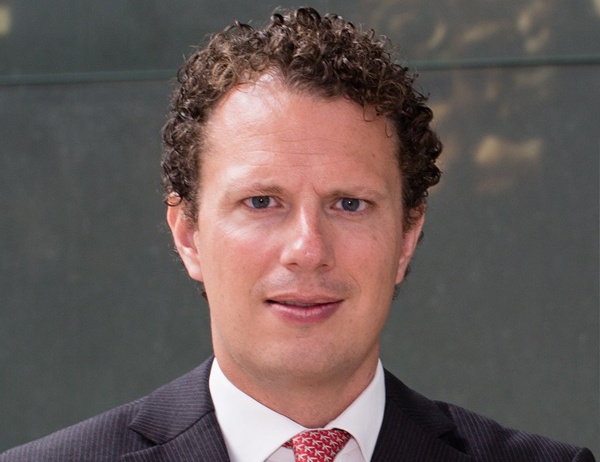
The business, led by Robert Spruijt, head of sustainable finance in Europe, Middle East and Africa (EMEA), arranged 356 sustainable finance transactions – primarily involving sustainability-linked and green loans and bonds – worth €76 billion for clients in EMEA last year and €115 billion globally.
Among several standout transactions ING was involved in, one of the largest and most consequential in CEE was the €4.1 billion green loan financing for Baltic Power, Poland’s first offshore wind farm. ING was lead arranger and sustainability coordinator on the transaction, which is not only Poland’s largest financing for a single investment but also one of Europe’s largest in the offshore area.
ING was involved in many other sustainable financings in Poland last year, driven by its local subsidiary, ING Slaski. Further south, another key transaction was the €100 million syndicated sustainability linked loan for Bulgarian car dealer Moto-Pfhoe.
ING offers a range of sustainable finance options to its business banking customers in CEE, including sustainable loans, leasing solutions and sustainability improvement loans in Poland, Romania and Turkey.
The bank also supports the growth and development of emerging sustainability focused technology companies, in sectors such as the circular economy, bio-chemicals and waste and water, with equity investment and subordinated debt.
Among several standout transactions ING was involved in, one of the largest and most consequential in CEE was the €4.1 billion green loan financing for Baltic Power
Supporting the financing is the bank’s investment in advisory services and tools, such as its carbon calculator, launched last year to help SMEs calculate their carbon footprint using their own data on energy consumption, raw materials and resource use. In addition, the bank created a new unit, the sustainable value chains team, to provide financing and advice to clients in new industries needed to support the sustainable transition, such as battery manufacturing, electric vehicle charging and charging services, recycling, bio-based materials and cleantech.
ING is also focused on providing sustainable finance options with sustainability advice on the retail banking side. It offers sustainable mortgages that incentivize customers to choose energy-efficient homes and unsecured sustainable consumer loans for energy efficient renovations, as well as loans in some markets, such as Romania, to finance solar energy installation.
These options are supplemented by the increasing amounts of educational material the bank publishes on sustainability for retail customers, including a range of tools and platforms that can, for example, help support them in their renovation efforts.
The bank’s own performance in sustainability is strong. Last year, it maintained its double-A environmental, social and governance rating from MSCI, making it a leader on ESG among 190 global banks rated by the index provider.



