
There is more than one way to judge the success of Banco Santander’s financial inclusion programme. It can point to the fact that it is well on the way to its 2019 target of reaching 10 million individuals by 2025. In fact, the bank is so well ahead, with more than 7.5 million reached so far, that it is about to reset the programme for a more ambitious 2025 target.
However, there is something more revealing about Santander’s success in financial inclusion. Recent appointments by the firm to its retail banking divisions in Brazil and Mexico are of individuals that had previously headed up their banks’ microfinance initiatives. In Brazil, Tiago Abate, individual segment executive director, also supervises microfinance operation Prospera, of which he was previously head, while in Mexico, Norma Castro, executive director for financial inclusion, now heads up the bank’s Tuiio and mass-market services.
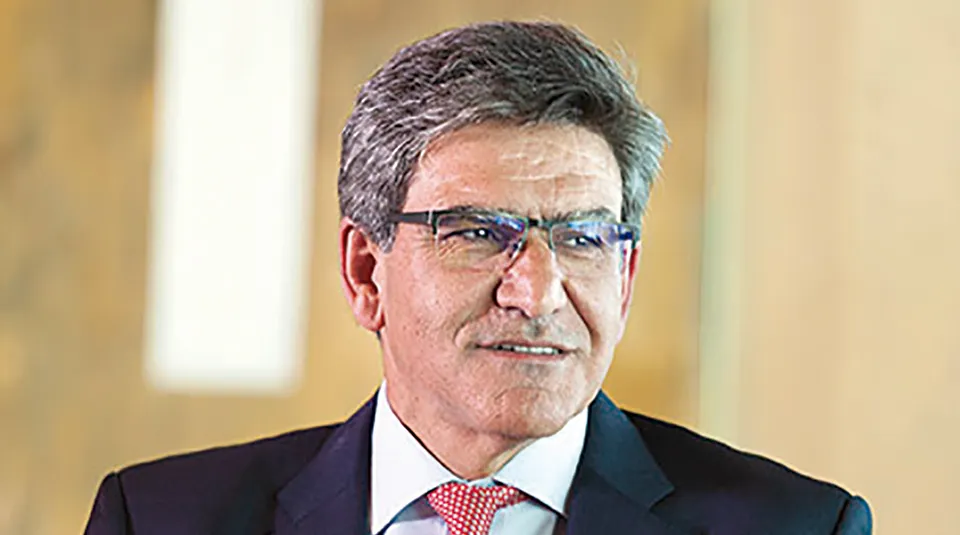
According to Santander chief executive José Antonio Álvarez, this shows that the skills that have been developed within the bank for serving this segment are becoming more relevant for broader retail banking and especially the mass market.
Shortlisted
- BNP Paribas
- Citi
“It’s an interesting dynamic and shows the importance of financial inclusion to the bank internally, as well as delivering on our aims to help the communities in which we operate,” he says.
Santander is a big bank in both Europe and Latin America and has a longstanding tradition of financial inclusion initiatives. Previously, it developed products and services individually for the lower-income segments of each national market, but now it is pooling resources and experience to create a regional approach.
“When in 2019 we disclosed to the market our responsible banking commitments, we had the ambition to include one regarding financial inclusion, targeting unbanked and underserved and low-income customers in our markets,” says Álvarez. “We mapped all of the initiatives running in different countries that would help us pursue this goal and calculated our overall 2025 target using not only a top-down but a bottom-up approach.”
The bank identified many quick wins – initiatives that could be easily rolled out in other markets. For example, Santander Brasil has been conducting microfinance lending through its Prospera programme since 2002. Santander now has this product running in eight countries – most recently, Prospera was launched in Colombia, Peru and Chile in 2021.

Also in 2021, Santander disbursed €571 million to support one million micro-entrepreneurs (72% of whom are women). These microfinance programmes benefit from a hybrid model of in-person and online agents, with disbursements in less than 24 hours, and the support of commercial agents, which enhances the customer experience. Every programme is rated well in its market, with an average net promoter score above 80.
Álvarez says that the guiding principle of the initiative should be profit with a purpose, and indeed some of the bank’s credit programmes for underserved populations are profitable. However, he also stresses that while profitability is important for the sustainability of the strategy, it is not the only consideration. For example, the bank’s efforts in financial education don’t directly generate revenue and are performed for the broader “societal good”.
During the pandemic Santander helped the elderly increase their digital finance literacy, allowing them to use online tools and avoid erroneous transactions and fraud. In 2021, Santander’s banks in Mexico, Portugal and Spain also tailored products and services to their needs, while in the UK, it has encouraged customers with dementia to inform the bank of their diagnosis so that it can provide them with specific customer support.
The hurdles to financial inclusion vary worldwide, Alvarez says.
“In developing markets, our purpose is to financially include people – bring individuals into the banking system. In mature markets, the aim is to ensure that no one needs to leave the financial system.”
He says that the emergence of fintechs has been a welcome development and has shown how innovative technology can lower the cost of servicing clients. Nevertheless, he is convinced that the future of financial inclusion belongs to the banks, arguing that a hybrid model will prevail as a physical presence is also vital to support excluded communities.
In developing markets, our purpose is to financially include people – bring individuals into the banking system. In mature markets, the aim is to ensure that no one needs to leave the financial system
José Antonio Álvarez
To this end, Santander has been working on expanding its geographical network into underserved areas of the markets in which it operates. For example in Argentina, Santander has eight financial inclusion branches that have brought services closer to more than 250,000 people in under-banked neighbourhoods in Buenos Aires.
Santander also provides physical points of contact through partnerships with other businesses, such as its collaboration with Spain’s state-run postal service and its network of 4,000 rural post offices.
Another measurement of success has been the improvement to Santander’s brand among its own staff.
“In late May this year, we had an internal session called ESG Talks where we pulled together the leaders of some of the main elements of the financial inclusion strategy,” says Álvarez. “A lot of employees connected, and the feedback received was wonderful. Employees clearly felt proud that we’re not just doing business, we’re doing business that generates positive results for parts of our communities that have been excluded from the financial system for too long.”


