Not everyone has a photograph of their own office building on their office wall. But for Ashok Varadhan, co-head of global markets at Goldman Sachs, a print of the bank’s headquarters lighting up a dark Manhattan skyline as the city was battered by Hurricane Sandy in 2012 is a reminder of what good risk management looks like.
Years earlier, the bank had bought thousands of sandbags. And rather than bury its emergency generators in the basement, it put them on a higher floor. When the floods came, the preparation paid off: Goldman had power when many did not. As Varadhan likes to say: “Preventative care matters.”
Shortlisted
- Citi
- JPMorgan
And so it proved in the period under review for Euromoney’s awards this year, which captured not only the dislocation of the pandemic but also a host of other traps set for the unwary. With losses to banks of more than $10 billion, the meltdown of Archegos Capital Management in March 2021 was one that stood out, not least because Goldman Sachs managed to extricate itself with little impact, despite being one of Archegos’s primary brokers.
How it managed to do so is hardly the stuff of mystery. It mostly involved doing dull things like taking care over margin requirements and endless consideration of the concentration of the client’s portfolio relative to the market capitalizations of the underlying companies.
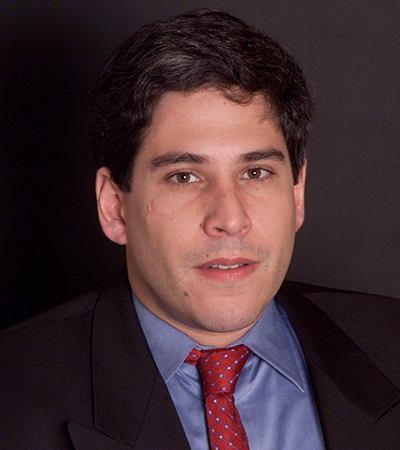
When it came to it, Goldman also needed the equities trading franchise to enable it to liquidate quickly and effectively. But Marc Nachmann, global markets co-head with Varadhan, reckons that this was only a small part of the reason the bank came out unscathed. The rest had been done much earlier behind the scenes.
“One of the big differences for us was the risk management that the team had done in previous months,” says Nachmann. “This is what you do all day long for thousands of things and you perhaps only see the benefit a few times, so you have to have a culture where people are being correctly recognized for it.”
That’s because, as with many virtues, evidence of the finest risk management can be hard to demonstrate. Done badly, things blow up; done well, no one notices.
But like all insurance, caution comes at a cost, says Varadhan. “By not participating, it can cost you share; by managing risk, it can cost you revenues.”
Perhaps so, but there is little evidence that Goldman has suffered unduly on either count. Fixed income and equities revenues rose 48% in the 12 months to the end of March 2021, a bigger increase than at any of its big rivals. At $23.5 billion, Goldman’s global markets revenues were only surpassed by JPMorgan.
At its investor day in January 2020, Goldman set a target of being top three in wallet share with the top 100 markets clients. It’s now at 69, on the cusp of its interim 2022 target of over 70, after wallet share gains of more than 160 basis points since its investor day.
The firm is delivering on a few more of those targets too. Having committed to upping its game in fixed income, currencies and commodities financing, after de-emphasizing it back in the late 1990s, it posted its highest ever revenues in 2020 – and is now trending ahead of that on a rolling 12-month basis. In equity it is seeing record prime balances and this in the year of Archegos.
Having identified $700 million of expense cuts in its global markets business, Goldman has executed on $400 million. And it has reallocated some $1.25 billion of capital to accretive opportunities, out of a target of $2 billion.
Unflinching focus
For Nachmann and Varadhan an unflinching focus on risk management is one of the four key factors behind Goldman’s success in its markets business. The others are diversification, consistency and technology.
With the widespread availability elsewhere of liquidity and information, the focus of markets businesses has changed for all banks. Price discovery ability is not the differentiator anymore. In securities, for the most part, everyone’s prices are now the same.
“Now it is much more about solving for complexity, providing certainty of execution and taking care of the pre-trade and post-trade client experience,” says Varadhan.
In the pandemic year, Goldman got that right. It means digging into exactly where it can add value for a client. The financing of complex portfolios, the warehousing of risk or the construction of hedges to capital markets transactions – these are the activities where Goldman thinks it is worth playing, not in a $100 million clip of dollar-yen.
Clients are getting bigger and they are more cross-asset class than ever
Marc Nachmann, Goldman Sachs
It has also meant taking the relationship approach of capital markets and applying it to the secondary businesses. It helps that Nachmann has run Goldman’s investment banking franchise in the past, but it also helps that, through its ‘One GS’ initiative, the entire firm is working to move away from the transactional approach to clients that it has traditionally had.
Similar thinking is behind Goldman’s dogged desire for a balanced business. Most rivals are weighted heavily to one markets franchise or the other. At Morgan Stanley and UBS it is equities. Practically all the rest lean heavily on fixed income. In a typical quarter at Goldman Sachs, fixed income and equities are now practically the same size.
“We made the strategic decision a couple of years ago to be committed to all products in all regions, and I would say that this has worked out well,” says Nachmann. “Clients are getting bigger and they are more cross-asset class than ever.”