As October 2019 was nearing its end, the focus for Argentina – and for many international investors interested in the region – was on the final head-to-head presidential election, scheduled for Sunday October 27.
Commentators were in overdrive talking about the importance of the election for the country – as well as it being crucial for its neighbours. What was less commented on (in fact it was largely ignored) was the ratification of a trade treaty between Argentina and Paraguay, pushed through on Friday October 25.
That agreement, which created a legal treaty for the importation and exportation of cars and car components, was arguably more important in the long-term for Paraguay’s economic development than the outcome of the presidential election. Along with a similar treaty with Brazil, which was ratified by the Brazilian Congress in February 2020, it creates the possibility for Paraguay to begin making plans to build a car industry in the country.
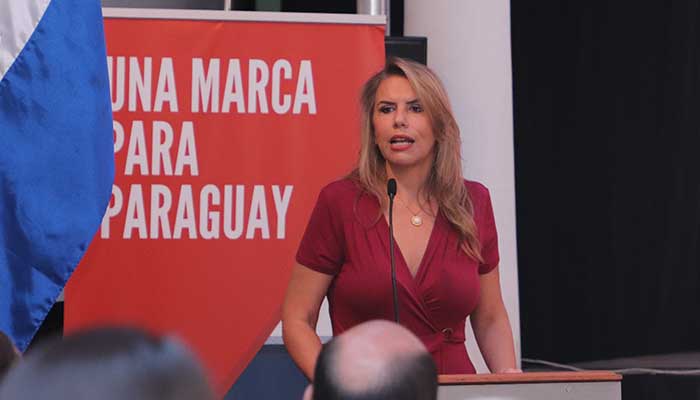
“Paraguay is a small internal market so foreign direct investment (FDI) is almost always done with a view to exporting to the regional market,” says Liz Cramer, Paraguay’s minister for industry and commerce, who points to the deal’s significance. “The car industry is one of the biggest in the world and, incredibly, auto also moves about 300 other parallel industries. Today car manufacturing is done on a regional basis and these treaties give us the legal basis to attract investment for pan-regional car manufacturing.”
Cramer declines to comment on the negotiations or the timing of the passing of the legislation in Argentina or Brazil, but the weary tone of her voice speaks louder than her words: “The whole of the second half of last year was focused on these negotiations, and it wasn’t easy because you have a lot of interested parties.”
These interested parties were the reason why car manufacturing and sugar production were the only two industries excluded from the original Mercosur agreement – the Treaty of Asunción – signed by Argentina, Brazil, Paraguay and Uruguay.
It was only the negotiations between Mercosur and the EU that created the possibility for this area finally to be revisited. As the EU-Mercosur treaty covered the car industry, the incongruous prospect of greater liberalization between the two trade blocs than existed internally within Mercosur itself provided the context for Paraguay to win the right to create an export-orientated car industry.
“We are working on a long-term plan,” says Cramer. “We need to understand what we can aim at, what types of industries we can attract to incorporate Paraguay into the regional supply chains. But first we needed that [legal] base, otherwise we wouldn’t have the possibility to negotiate with new investors.”
The possibility of building a car industry in Paraguay, which has much cheaper costs for business in terms of labour, energy, and corporate and export taxes than the rest of Mercosur, should help develop that plan. The demographic bonus will also help attract investors: the average age of the population is under 30 and Cramer says it will enjoy a demographic benefit for at least the next 40 years.
Energy is probably our main resource and we have to use it wisely
Cramer highlights that diversification is vital – the country’s economic stagnation last year when drought severely affected the country’s agricultural sector was proof that the significant progress done to date needs to be pushed much further.
“Manufacturing represents 20% of our GDP but it is itself dependent on primary products,” she notes, explaining why the economy’s GDP growth is still vulnerable to agricultural volatility. That type of manufacturing has been a deliberate strategy – aiming to push the economy further down the value-added chain of its primary products (its exports of vegetables, for example, reached about $1.1 billion in 2019) – but non-correlated diversification is increasingly the goal.
That too has been growing. The country has a Maquila regime, whereby companies are given exemptions from import duties for a number of inputs involved in production for export, as well as various tax benefits. The Maquila regulation was introduced in 1967 but only began to grow at a significant pace following the wider pro-business reforms undertaken since 2010. There are currently 150 companies operating under this regime that export mainly automotive parts, clothing and textile articles, and plastics. Exports have grown from $53 million in 2017 to $546 million in 2018 (the last year for which we have full data).
Maquilas are mainly owned by Brazilian businesses (80%) and part of the recent growth in these companies has been due to frustration among Brazilian-based companies over that country’s economic performance and its relatively high costs of labour, taxes and regulatory compliance.
BOTTLENECK
However, further growth is being hampered by the physical infrastructure – there is just one bridge between Brazil and Paraguay and Cramer points out that this has created a huge “bottleneck”. The government has responded with plans for three more bridges between the two countries – one purely for goods. It is also working to upgrade physical infrastructure on its borders with Argentina and Bolivia (beyond which it has an agreement with Chile for the export of goods to Asia).
Paraguay is also pursuing trade agreements covering Pacific markets to create export diversification. It is in negotiations with Korea (which Cramer notes is a large player in the car industry), Canada and Singapore. The last of these brings the possibility of wider access to the Association of South East Asian Nations (Asean) markets. This is important, given that Paraguay has no trade or diplomatic relations with China – nor is there any prospect of this in the near future as the country is committed to its strong ties with Taiwan. Paraguay does import plenty of Chinese products, however, through third-party countries – largely Brazil.
“Paraguay is under construction,” says Cramer, adding that the government is building internal road and river links to the interior of the country – the Chaco – which was once thought of as unproductive territory but is now, thanks to technological development, suitable for the production of soy and grains. Already Paraguay has jumped to fourth spot in the global production league tables. Cramer says that despite the drive for diversification, agriculture and cattle “will always be extremely important industries – we just want to compete on quality, and on niches, because if we approach the market on a purely commoditized basis we will struggle against markets with greater scale.”
The construction of the country goes beyond developing the transportation infrastructure and the international legal framework. For example, Cramer says she believes that a telecommunications cable that will link the country to the other side of the Atlantic, through Brazil, should be switched on “within months” and will improve the country’s internet capabilities. A second cable is planned to the Pacific, going through Bolivia, with a third through the Paraguay river to Argentina “that will be more challenging”. Cramer says that once they are operational Paraguay will be well placed to attract international technology companies, “or at least part of their business chains”, as well as being better placed to foster a domestic tech start-up industry. Better tech infrastructure will also boost the fundamentals for other creative and modern service industries.
Paraguay has also been working with the World Bank to introduce legislation that will boost its position in that international organization’s “Doing Business” rankings.
“We are working to improve the productivity of the country in all areas but some – like building infrastructure and improving educational standards – are long-term challenges. We also looked at what short-term changes we could make that would be most effective in improving our attractiveness to FDI – and help our diversification objective,” says Cramer.
As a result, the country has already introduced legislation for a new regulatory regime that allows new businesses to open within 72 hours – “the team tells me it will be quicker than 72 hours but I’m committing to 72 hours,” says Cramer – and is cheaper and easier for entrepreneurs. Two other reforms are in the works: one will allow SMEs to be able to use non-physical assets, such as receivables, as securities for new credit; and the other will bring a bankruptcy law that will essentially establish a “Paraguayan Chapter 11”.
As well as working to improve its weaknesses, Paraguay is being careful in how it plays one of its strongest cards to attract FDI – its abundant, cheap energy (cheaper than anywhere in the region and less than half the cost of that in Argentina and Brazil and one-third of electricity in Chile).
CAUTIOUS AND STRATEGIC
Some in the private sector speculate that Paraguay should seek to bring in bitcoin/cryptocurrency manufacturers to generate revenues. However, Cramer indicates that the government intends to be cautious and strategic in the use of its natural energy bounty.
“Energy is probably our main resource and we have to use it wisely, and that means selling to the best investor that brings the best outcome for the Paraguayan economy. That means bringing jobs, environmental benefits and maybe bringing in new industries or positioning us in specific niches,” she says. “It’s not just a matter of selling energy. We have a surplus now, but we won’t have forever.”
Cramer says the recent agreement with Brazilian-based ECB Group is a perfect example of the type of investment Paraguay hopes to attract – development of a green or renewable biofuel plant, called Omega Green. The plant will cost $800 million and ECB says it will have an $8 billion impact on Paraguay’s economy over the coming decade: 3,000 jobs in the three-year construction period and then 500 direct jobs (many of which will be highly-skilled positions) and 1,500 indirect jobs in the local economy. It will also consume around 20% of the country’s soy production.
“It’s exactly the right type of industry for Paraguay,” says Cramer. “It takes the best of what we have – the surpluses we still have – and it positions us for where the future is. It creates a large number of jobs, of which many will be highly skilled, such as for engineers. And it’s all going to be for exportation, at least initially, and may lead to other investment in the renewable energies.”