On Monday, Singapore’s OCBC Bank issued a press release touting the financial benefits of its Virtual SME Campus, a series of two-hour webinars that aim to equip local small and medium-sized enterprises (SMEs) with the digital skills to go online and get selling fast.
It’s a message of hope and good cheer. And of gentle bank PR spin.
It also ticks a lot of boxes. OCBC targets all sectors, but particularly the Lion City’s food and beverage (F&B) industry, hit hard by Covid.
The webinars – so far, 30 have been streamed to 5,000 staff at 2,500 SMEs – help firms figure out how to tap into capital financing support schemes, reach out to new customers in China and southeast Asia, and adapt to life after coronavirus.
Everyone loves a bargain, but $6 for a bottle of fermented tea?
It’s well coordinated, as you’d expect from one of Asia’s best-run banks. The campus was created in alliance with Amazon, Google and Shopee, a local e-commerce platform, as well as Enterprise Singapore, part of the ministry of trade and industry.
The scheme is designed to stand atop existing foundations, notably OCBC’s Start Digital Pack, a tidy little bundle of support services including human resources, digital marketing and cyber security, offered free for the first six months.
F&B firms also get to hook themselves up to the bank’s local food delivery platform, Butleric.
There’s a broader context here, too. A city that prizes social cohesion moved quickly to prop up smaller firms, the bedrock of the economy, when Covid hit.
In the first quarter of the year, Singapore banks agreed to let SMEs defer principal payments on secured-term loans until the end of 2020. In a note issued on September 10, DBS said an extension of loan moratoriums was “likely on a targeted basis going forward”, with banks to help SMEs restructure loans and reschedule payments.
Jarring
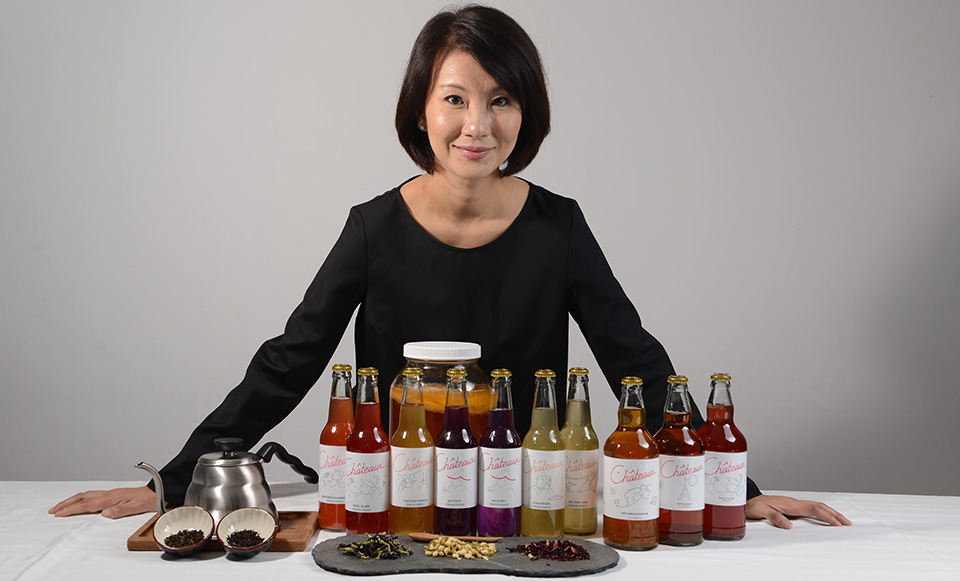
It’s all good stuff, but there is one rather jarring note: OCBC has decided to showcase Lim Geok Keng as the public face of its virtual campus.
Lim’s company makes kombucha, the hugely fashionable probiotic drink that claims to restore guts to good health and boost immune systems. The fitness community has jumped all over it, with sports stars including rugby luminary Jonny Wilkinson, founder of No1 Living, rushing to roll out their own brands.
There’s no doubt she’s a prime candidate for the role. Her firm opened for business in August 2019. After consulting with the bank, she scrapped plans to open a physical store after the pandemic hit, opting to invest in a digital shopfront instead.
Lim’s firm is called Châteaux. It contains all the right hipster-catnip phrases – artisanal, hand-crafted, small batch – and claims to “personalize the brewing time … to obtain the best kombucha profile for our customers”.
That clearly doesn’t come cheap.
The branding is redolent of 1920s Paris, including the art deco daubs that adorn each bottle, and the choice of name for each flavour: ‘All That Jas’, ‘Couture Passion’, ‘Goldginger’ and so on. A six-pack, available direct from Châteaux’s website, currently costs S$39.90, down from S$49.90 ($37).
Everyone loves a bargain, but $6 for a bottle of fermented tea?
One hopes that Lim will be a success, maybe a big one. Starting a business is tough – most small firms, of course, fail within the first year. A portion of the proceeds she makes from each sale goes to help a local non-profit, Community Chest.
Her story is a good one, a virtuous one.
However, at a time when so many are struggling to pay the rent, and with thousands of SMEs in the Lion City facing the need to restructure loans, Lim, founder of a company that makes health drinks for people with spare cash to splash, might not be the obvious face for OCBC’s new virtual campus.