
Citi chief executive Jane Fraser’s oft-cited observation that its treasury and trade solutions (TTS) businesses are the bank’s crown jewels gives some indication of just how important these businesses are to the top of the firm.
The numbers are impressive. Citi transacts in 145 currencies, is a member of 280 clearing systems globally and in the third quarter of 2022 had almost 10% of the large institutional segment globally, according to Coalition Greenwich.
It processes $4 trillion in payments across 160 countries daily, making revenues of $3.4 billion in the first quarter of 2023.
“We had a record year in 2022,” says Michael Fossaceca, managing director, North America region head at Citi TTS. “We grew by 32% and had our best year ever with record revenues and profitability.”
Shortlisted
- Bank of America
- JPMorgan
But sheer size is not the differentiator. There are plenty of other competitors such as JPMorgan and Bank of America that have huge scale in the payments business. Few areas of banking are experiencing technical change at the speed of payments and treasury, and the amounts of money that the large players are now investing in digital innovation is creating an unbridgeable gap for smaller banks.
“The world is changing so dramatically,” says Fossaceca. “Every company around the world is evolving its business model and looking at different ways to reach their customers – in e-commerce, supply chain and real-time treasury marketplaces.”
Coming up with solutions to those challenges demands constant innovation and initiative. The pressure is on as TTS relationships will cement the bank’s position in its core segments and strengthen ties within the commercial bank.
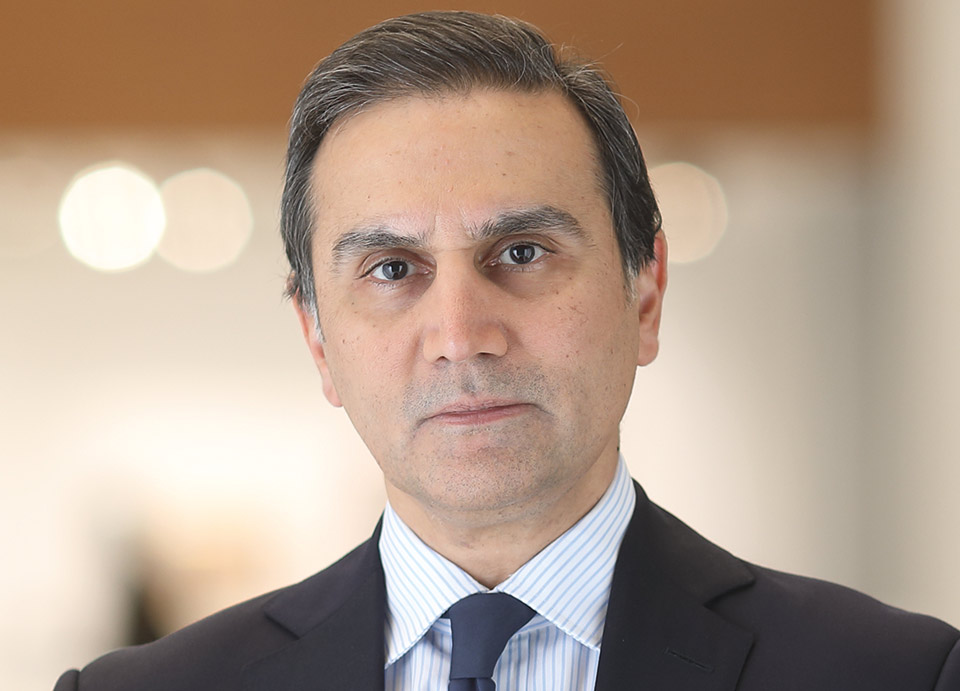
“We want to grow in the mid-market and have doubled down in the commercial bank this year,” says Anupam Sinha, North America head of payments and receivables at TTS business. “Many firms go global quickly so are looking for global solutions that can rapidly be scaled up and down.”
In October 2022, the bank launched a new real-time liquidity offering in response to changing consumer behaviour, the increased use of instant payments and the proliferation of new e-business models. Institutional clients can now automatically transfer cash balances between accounts to optimize available funds.
“If corporates want real-time payments, then they need real-time liquidity. We have to create a frictionless world,” Fossaceca explains.
The goal is ‘always-on’ liquidity.
“The nature of the world’s leading corporations and their banking needs are changing,” says Shahmir Khaliq, global head of TTS. “At Citi, we continue to build and operate the most robust and far-reaching payment rails in the industry, with operations covering major e-commerce markets and supply chains across every industry.”
We continue to build and operate the most robust and far-reaching payment rails in the industry
Shahmir Khaliq
In March 2022, Citi launched its Yankee Sweep service via IntraFi Networks, which allows institutional clients with US accounts to sweep cash into demand deposit accounts at participating US branches of non-US banks. Deposits are split among banks in the destination bank network, providing greater bank diversification.
The network currently consists of four banks – Toronto Dominion, Sumitomo Bank, Mashreq Bank and National Bank of Qatar – but will likely grow to around 10 banks.
“Real-time liquidity is a significant focus,” explains Michael Berkowitz, global and North America head of product management, liquidity management services. “We have seven-day sweeps in the US and South Korea and can move money real time between accounts in different countries at any time. We are now working on an internal proof of concept using tokenized assets.”
Citi participated in a proof-of-concept project last November with the New York Innovation Center (part of the Federal Reserve Bank of New York) to explore the feasibility of an interoperable digital money platform known as the regulated liability network (RLN).
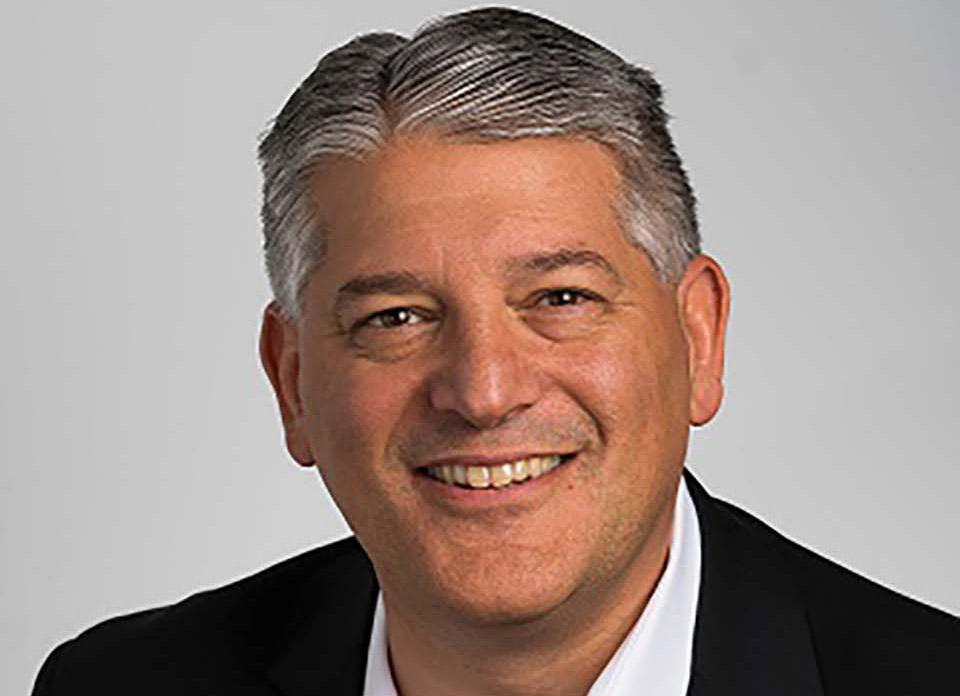
“One of the possibilities we envision is that the regulated liability network architecture might form the basis of the next generation of market infrastructure,” Fossaceca tells Euromoney. “The current findings indicate a promise for future capabilities as a shared ledger accessible across public and private entities working on an interoperable platform. Over time and with more analysis and development, it may unlock the potential to enable quicker and more efficient settlement and allowing tokenized liabilities to be exchanged among banks in real time.
“The future benefits of RLN are along those lines – it is all about operating 24/7 and integrating with other networks and rails.”
Citi is one of the leading providers of instant payments globally: it processes on average five million instant payment transactions a day, representing 80% growth in the last 12 months.
“We have to make sure the network remains relevant as clients’ business models evolve, for example direct to consumer and the shared economy,” says Sinha. “We have enabled clients to make payments across 95 markets through one single connectivity. Instant payments has been a phenomenal success. There are 35 schemes in more than 60 countries with more than five million transactions a day.
“There has been significant adoption of new business models,” he explains. “In Brazil, we are using Pix as a mechanism of collection; we are trying to disrupt the receivables side of the business.”