In the end, everything comes down to the documents. More than anything else, it is the millions of pages that detail how transactions should take place and what information the parties to a trade should be aware of that are the lifeblood of the primary debt capital markets.
Trawling through all that can be a dull job, but until fairly recently someone – or many thousands of people, usually lawyers – had to do it. Increasingly, though, that is not the case. For some of those working in the developing ecosystem of companies that are trying to find neat ways to modernize the business of bringing borrowers and lenders together, documentation has been the vital starting point of their endeavours.
NowCM, a key player in that ecosystem, knows more about this than many. Chief executive Robert Koller first automated a prospectus for a debt issuance programme about 11 years ago when he was still a capital markets lawyer at Simmons & Simmons. The servers he was using back then hadn’t been tested like that before and promptly crashed when the system went live.
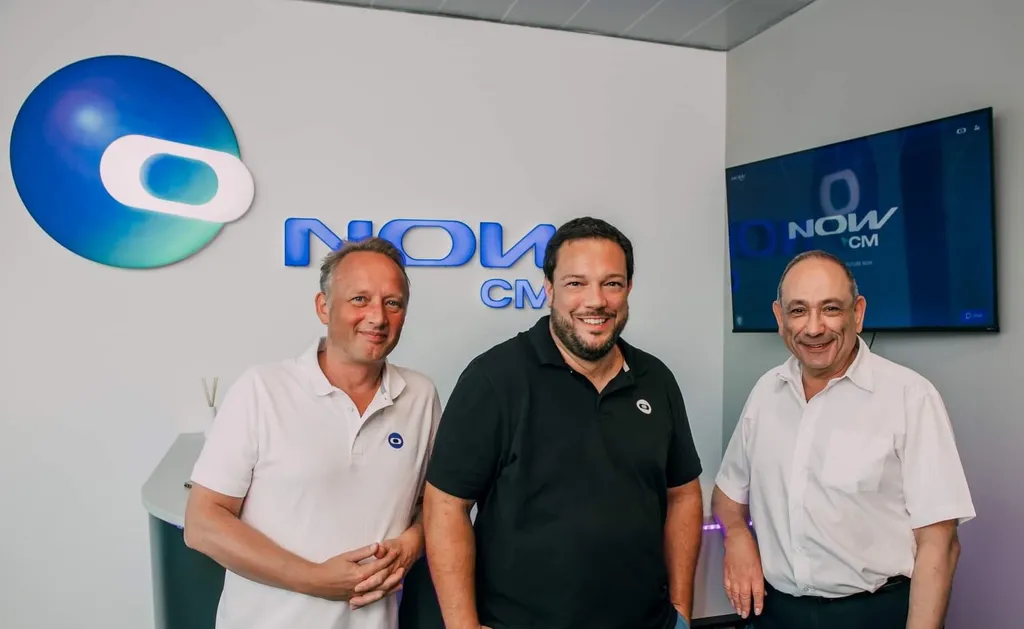
If Koller learned one thing from that experience, it was the vital importance of investment in documentation-automation technology. He has been focused on it ever since, founding NowCM in 2015 alongside Fredrik Creutz and David Laderman.
Back then it was called eppf Group, but was already billing itself as a capital-markets-as-a-service provider, as it still does.
In recent years, NowCM has been announcing connections and collaborations with other players in the broad capital markets digitalization world, but in January 2023 it took a big step forward with the acquisition of all the assets of Nivaura, which was founded in 2016 to try to make capital markets workflows smoother and less complex.
For NowCM, the Nivaura deal represents something of a new direction given Nivaura’s focus on tokenization solutions, but also fits in with its aim to be ‘distributed-ledger technology ready’.
For the sector more broadly, meanwhile, it is an important step towards consolidation.
Consolidation is the watchword in the digitalization of capital markets right now, and it is clear that NowCM sees itself as a prime mover in this. The goal is to create not so much a platform as an entire ecosystem. Koller likes to compare the pipes that NowCM is laying down to a mobile-phone operating system, running the infrastructure and with some native applications of its own, but then with specialized services and functions created by others and bolted on top.
BondAuction, the DCM auction platform founded by bond market veterans Peter Charles and Spencer Maclean in 2021, is one such example, having agreed in December 2022 to connect with NowCM in several ways. Issuers will be able to consult both the NowBooks traditional order book process and the BondAuction auction book at the same time.
Investors active on NowCM’s multi-lateral trading facility (MTF) will be able to take part in auctions being executed on BondAuction, which will also be able to tap into the NowDocs documentation-automation platform.
In February 2023, NowCM announced another collaboration, this time in Asia with Marketnode, a joint venture between SGX Group and Temasek that is also building digital capital markets infrastructure. It uses a pre-trade digital issuance engine called Gateway to connect to a blockchain-enabled issuance platform called Core. NowCM’s agreement sees Gateway integrated with NowCM’s transaction management applications.
If it sometimes looks as if there is something of the chemistry experiment about the gradual mixing together of the constituent parts of this ecosystem, then it seems appropriate that NowCM’s Luxembourg headquarters is in Rue du Laboratoire.
Data, data, data
“We have been working on building the leading product for about eight years without really pivoting,” Koller tells Euromoney after announcing the Nivaura deal. “We’ve added things here and there, but we really always had in mind that we needed to lay the foundations for a real platform – and in these kinds of areas that means starting with the basic part, which is legal documents, prospectuses and other tree-killing stuff.
“It always circles back to the documentation, because in the end documentation is information,” he adds. “People don’t write prospectuses because it is fun or because they are great literature but because investors need to get information.”
NowCM started out from there, but in recent years many peers have ended up pivoting to documentation alongside their specialism. While Nivaura, for instance, was initially focused on tokenization, in time it also developed its general-purpose legal markup language (GLML) for documentation, with a dictionary of about 500 variables.
For NowCM, this was another of the attractions of the Nivaura deal. It has now absorbed the GLML into its systems, so anyone who was using it can interface with NowCM seamlessly.
With our proposition, because we want to grow the market, everybody wins
Robert Koller, NowCM

Koller says that NowCM’s data model has developed to the point where it is juggling some 5,000 variables. To put that into context, the common data dictionary that the International Capital Market Association (Icma) is developing to meet the challenge of how to achieve interoperability between the 50 or so debt-issuance platforms that now exist is looking at fewer than 200 variables.
Practically everything that NowCM does is intended to work towards perfecting the ways in which issuers and investors can interact in real time. But where its business becomes most interesting is in the applications of that. After all, Koller and Creutz regularly say that they are much more interested in things that can grow the overall market, not just eliminate inefficiencies for existing users.
“You’ve got to start by creating the data, negotiating the data and managing the data in some form to be digital,” says Creutz. “But we also have in our business model an issuances vehicle that we can connect to the documentation and workflow because we want to provide access to new issues really easily and in a more affordable way.
“And we think that’s a value proposition that’s not only interesting for people who haven’t had access to capital markets before, but also to investment banks looking to grow their business.”
Much attention in the digital capital markets arena is paid to process – the endless quest to simplify and accelerate aspects of doing deals. Worthwhile of course, but focusing just on that arguably misses a lot of the point and certainly misses the opportunity.
“If you focus only on process, everyone ends up cannibalising each other’s fees because someone can do something better or more quickly,” says Koller. “But with our proposition, because we want to grow the market, everybody wins, even if it becomes more efficient and more real-time.”
The way he tells it, the competition is not for the same fee pot but for bringing more people to the market.
Where next?
Koller and Creutz are an interesting double act: Koller is the sober-sounding technician while Creutz is the uber-enthusiastic advocate, much given to shout-outs to his coding team that get more effusive with each LinkedIn post. Get him on the topic of where NowCM’s applications could lead to, and it is hard to slow the runaway train.
“The next thing we want to do is to answer the question of ‘Ok, so what? What do you do with real-time execution?’” says Creutz.
Quite a lot, as it happens. After all, that is a discussion that can quite quickly lead to a conversation about price discovery. A borrower that can issue bonds quickly, and certainly within the same day, can effectively blur the primary and secondary marketplaces.
Creutz warms to his theme: “And if I can execute that on a real marketplace, then that’s even cooler, right? So not just a bulletin board or something that you just show to the market, but a real marketplace.”
That is why last year NowCM bought NowCP, a regulated MTF in France. Issuers have already pushed more than €10 billion of commercial paper through it, and the company hopes soon to extend its licence to eurocommercial paper (ECP) and to bonds.
This is what NowCM thinks is the most interesting long-term value proposition for its business. Price discovery in Europe is effectively closed off from all but the relatively select group of companies that can easily tap the capital markets through traditional issuance processes – and even then, it is far from a real-time procedure.
By some estimates, only about 25% of financing is done through capital markets in Europe. In the US, it is typically about 80%.
And financing becomes more expensive when done away from a live market, particularly when the banks that must provide it are subject to ever-more onerous requirements for capital that is ever-more expensive.
“The docs are really just the sideshow – they happen to be front and centre of the debate, but they are just the sideshow,” says Creutz, as if impatient to get on to more exciting things.
“The sideshow, but also the entry point,” adds Koller, dutifully.
There is some even funkier thinking going on in other asset classes too.
Creutz notes that even the world of syndicated loans shares many of the variables that NowCM is already dealing with and therefore could be a candidate for shake-up. After all, many syndicated loans settle on a T+30 basis, meaning that for that time banks must hold that funding on their balance sheets and finance it.
“Now of course we happen to have an MTF, and we have the tokenization tool that we got from Nivaura, so, hey presto, you can have a clearing system for loans and settle them at T+1,” says Creutz. “That means huge capital savings for banks.”
Unregulated island solutions don’t provide the connectivity, interoperability and stability that their regulated counterparts in financial markets require
Robert Koller, NowCM
Something like that is still some time off – participants would need to be interacting with NowCM’s MTF on a blockchain and the tokenization process would need to be fully integrated. And the company’s focus is still on bonds.
Issuers who work with NowCM are seeing other benefits – ones that fit in with the view that Koller and Creutz have of the platform being an enabler of other people’s solutions as much as anything else. One big sovereign and supranational agency issuer that NowCM works with told it that while it had originally seen it as a cost-saving story, it had now realized that processing the data through NowCM’s systems allowed the issuer to interact with third parties to do other things with that data.
Not everything is a headlong rush, though. For all the talk in markets of how digital bonds issued on a blockchain might be the future, for the moment NowCM argues that it will take a long time for digital bonds to be mainstream. Until then, what is needed is a way of bringing ‘real’ bonds into real time, with real-time documentation processing and real-time data models.
What NowCP gives NowCM is the ability to operate a real primary marketplace – the NowCP MTF is the only primary marketplace for debt issuance in the world. In doing so it avoids the regulatory free-riding of calling yourself a marketplace when you are anything but.
The difference is critical: if you have something more akin to a bulletin board, then you can show levels to the market but you cannot transact – to do that you need to switch to another medium, calling an investor or issuer on the phone or via Bloomberg chat to do the deal.
“Only in the regulated marketplace are you actually allowed to trade and negotiate and come to a legally binding agreement, and then at the push of a button you can issue a bond like we’re doing now with commercial paper,” says Koller.
He thinks that this is why the future of digitalized capital markets belongs exclusively to regulated platforms – like NowCM’s – that have myriad connections to allow participants to do what they need to do.
“Unregulated island solutions don’t provide the connectivity, interoperability and stability from a capital point of view that their regulated counterparts in financial markets require,” he says.
Crisis thinking
Euromoney first sits down with the NowCM team for this story in early February, but catches up with them again in the wake of the financial sector turmoil in late March that culminated in the collapse of Silicon Valley Bank and the rescue of Credit Suisse.
It is also just after Icma’s Bond Data Taxonomy (BDT) Working Group – of which NowCM is a member – has formally launched its BDT to promote automation and reduce the risk of fragmentation by providing a set of standards.
At the same time, NowCM announced that its termsheets were compatible with Icma’s BDT.
“The Icma move fits in with the overriding philosophy that we have about interoperability,” says Creutz.
Reflecting on what they have just seen happen at numerous financial institutions, Koller and Creutz sound more convinced than ever of the necessity of real-time access to capital markets.
The broader balance sheet of a financial institution needs to become real-time. Speed matters
Fredrik Creutz, NowCM

“We have seen unprecedented outflows at some institutions, and it is clear that one part of the balance sheet is becoming more real-time,” says Creutz. “At the moment there is jet fuel behind deposits, and the rest of the balance sheet needs to catch up.”
Intriguingly, NowCM has been approached by authorities investigating this very topic and wondering if there might be a way for financial institutions to use the kind of immediate access to capital markets that platforms such as NowCM can offer as a bulwark against liquidity crises.
“We have had discussions with central banks and academics exploring whether there might be a way that investors could pre-commit money in the good times – and be paid a premium for doing so – so that an institution could push a button when it needed to and issue in real time,” says Creutz.
Ideally, Euromoney assumes, such a method would be like the policy bazooka of former ECB president Mario Draghi: a measure whose very existence might negate the need to use it. The objective would be to create the perception that an institution could survive outflows easily because of the knowledge that it could quickly access additional funding to support them.
That in itself should act as a counterweight to any wobble in confidence.
But if it should need to be used, the point is that it could be triggered very quickly at the first signs of a problem, such as an increase in net deposit outflows.
What SVB showed – in contrast to the outflows at a bank such as Washington Mutual during the global financial crisis of 2008 – is that banks now need to be able to respond within hours, not days or weeks.
“What we are saying is that the broader balance sheet of a financial institution needs to become real-time,” says Creutz. “Speed matters.”
CP can help
The crisis has played out in other ways too. In the new climate of fear, bank deposits are a risk product and depositors will expect to be paid accordingly.
That will throw up awkward questions about the profitability of the typical banking business model, but until banks catch up with the new reality the nervousness is being reflected in a wall of cash moving into money market funds.
Those, of course, invest partly in commercial paper, but Koller says that investing directly in the underlying commercial paper issued by prime corporate clients is also an alternative – and NowCM can help with that.
Increasingly, clients are looking to its CP marketplace as a place to park liquidity with prime corporate issuers of commercial paper – NowCM is even doing so itself with its own cash.
“It works like sending a transfer to a bank – you negotiate, accept the rate and get CP delivered,” he says.
At the moment this is still a smallish venture: there are about 40 issuers on NowCM’s CP platform, mostly French, and with about €1 billion of issuance each month.
“More and more people are viewing the curve,” says Creutz, “and while the size of issues is not increasing, the number of issues is.”
A platform that just does docs is like a mobile that can only call one number
Fredrik Creutz, NowCM
What is clear is that NowCM’s solutions and the ecosystem in which it sits are gaining more momentum after the latest bout of turmoil.
“We have had a lot of dialogue in the last 14 days that we’ve never had,” says Koller. “People are calling us and saying: ‘Have you thought about this?’”
This is how the likes of NowCM and its peers will take their next steps forward, by creating systems that are completely open to interfacing with others. After all, if there is one theme that Koller and Creutz keep returning to, it is connectivity. They see NowCM as just one element of an interconnected web that makes the most of solutions that have been designed in different places.
It is another way of saying that while addressing the problem of digitalizing documentation has been important, even critical, to success, the future of NowCM’s platform depends on the bigger goal of interoperability – hence the importance of an apparently mundane development such as implementing the Icma BDT.
The development of separate and competing elements that cannot interact helps no one, say Koller and Creutz. In that respect, the Nivaura deal was a step in the right direction, with the integration of its mark-up language, and the Icma taxonomy adoption is similar.
The goal is always to ensure that a counterparty who is conforming to a particular set of standards gets the same treatment on NowCM’s system as if they were native to it.
After all, the success of a platform such as NowCM’s will be defined by the extent to which it is capable of doing multiple things, or allowing other parties to do them in its environment.
“Docs are great,” says Creutz. “But a platform that just does docs is like a mobile that can only call one number.”