“This was very, very hard. As simple as it sounds, this was probably the most work we’ve ever done for a single transaction at Onyx at JPMorgan.”
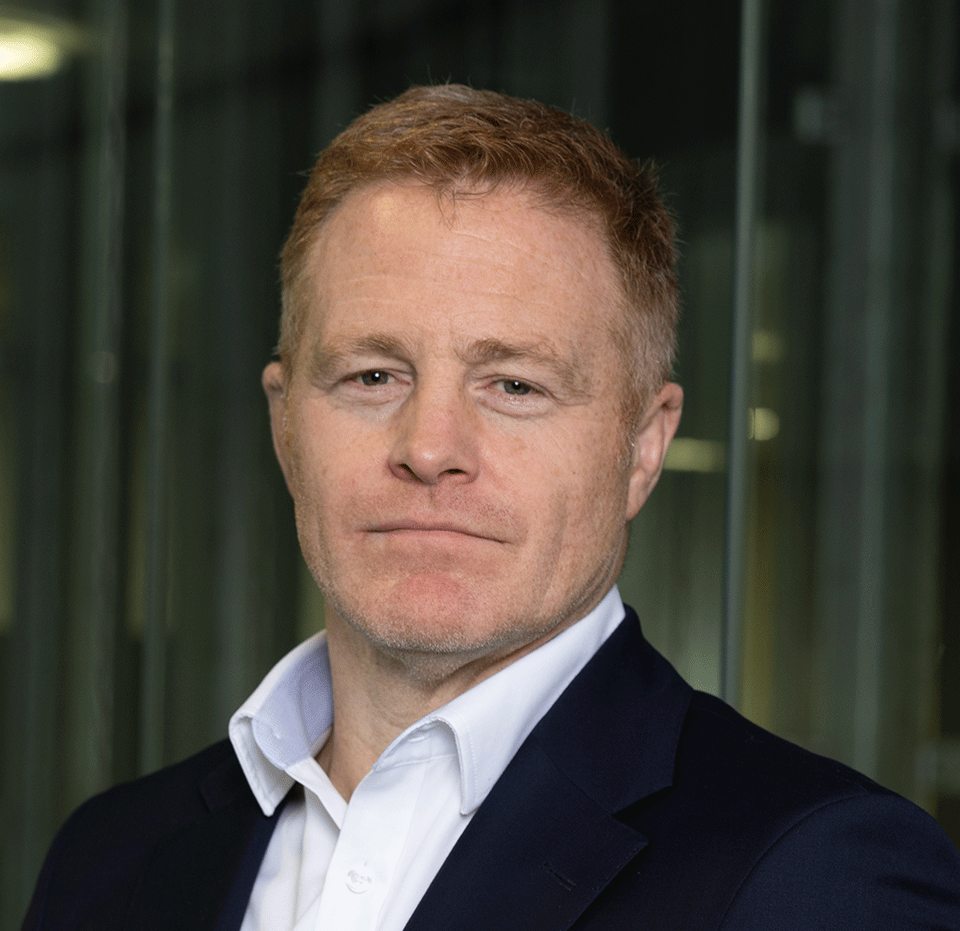
Umar Farooq, who leads the Onyx blockchain and innovation division of JPMorgan, is talking about a landmark DeFi (decentralized finance) deal announced in Singapore on November 2.
The transaction, conducted by DBS, JPMorgan and Japan’s SBI Digital Asset Holdings under the Monetary Authority of Singapore’s Project Guardian initiative, delivered a live cross-currency transaction with tokenized yen and Singapore dollar deposits.
It also simulated an exercise buying and selling tokenized Singaporean and Japanese government bonds.
The importance of this transaction is that it attempts to bridge two apparently disparate worlds: DeFi, a digital world where parties deal directly with one another without multiple intermediaries; and traditional mainstream finance, given the shorthand TradFi.
“The DeFi world has always used crypto assets, whereas in the TradFi world we deal with government securities and cash: these are not digital assets,” says Han Kwee Juan, managing director and group head of strategy and planning at DBS. “What we have done is take those TradFi assets, tokenized them, and made them into their equivalent as digital assets.”
The tokenized assets take a bearer form, meaning whoever holds it is the owner of it.
A lot of work
The point of this deal was that it proved cross-currency transactions of tokenized assets can be traded, cleared and settled instantaneously among direct participants, the MAS says.
If that sounds reasonably simple, there was a great deal more to it.
“We’ve been working on blockchain for eight years,” says Farooq. “But working on blockchain where it’s behind your walls and you have full cyber control is one thing. When you are interacting with DeFi protocols, when you are trying to have verifiable credentials around identity, to write smart contracts that will be publicly visible, and putting a real transaction on the blockchain, we wanted to do it in a manner where all of the controls were checked.”
Although this was a pilot transaction, he says the banks approached it as an offering ready to go live, looking for everything that could possibly go wrong and trying to mitigate 20 or so different risks.
For the smart contracts, for example, the team engaged an external audit. External regulators were largely unfamiliar with the ideas – although MAS itself, in the spirit of learning, fostered the whole thing – “so you have to make all these people comfortable,” Farooq says.
To Han, one of the biggest achievements was that the transaction simultaneously replaced multiple intermediaries.
Traditionally, he says, in a trade, banks contact each other electronically and agree on a price, but behind that a whole other series of intermediaries is active: the correspondent bank, managing the currencies; the custodian banks, holding the securities that get traded; and broker-dealers in between.
“That is a lot of people,” he says. “What we wanted to do with Guardian was to say: can we reimagine that?”
To make it scalable, at least in theory, they had to use a public blockchain, and settled upon Polygon, a platform that runs alongside Ethereum and brings scalability to it. But within that public framework, they added permissions – sort of guardrails – in order to limit who could take part.
We achieved atomic trading, settlement, clearing and custody in one – that’s quite incredible
Han Kwee Juan, DBS
With that done, “we achieved atomic trading, settlement, clearing and custody in one,” Han says. “And that’s quite incredible.”
The pilot involved using smart contracts to provide liquidity, and another set of contracts for the purchase and sale of the assets.
Han says: “All these are transacted based off an automated market-maker, which is essentially a smart contract which does pricing for the transactions, in place of what you would typically encounter in the over-the-counter market where somebody quotes you a price.”
To make sure the prices were real, they streamed information in from Bloomberg.
“Smart contract hacking was something we considered,” Farooq says. “With this particular transaction, the smart contract risk is limited because it is two parties involved to transact a single trade; it is not like someone is going to run away with a bunch of money. But we wanted to do it to understand the whole risk landscape.”
And the point of all this effort?
“We had a pretty strong belief that this is something the world would want to do,” Farooq says, “so you might as well do a much more heavyweight pilot.”
Reinvention
One only bothers doing all of this if one has a belief that something material is going to assemble in the DeFi space. Tokenizing is conceptually interesting, but a very long way from any kind of mainstream utility beyond early experiments with stablecoins or central bank digital currencies.
“If public blockchains were to survive long term – and I think there’s a high likelihood that they would – then you would have more and more assets that will be tokenized,” says Farooq. “If they do get tokenized, you do need money to transact.”
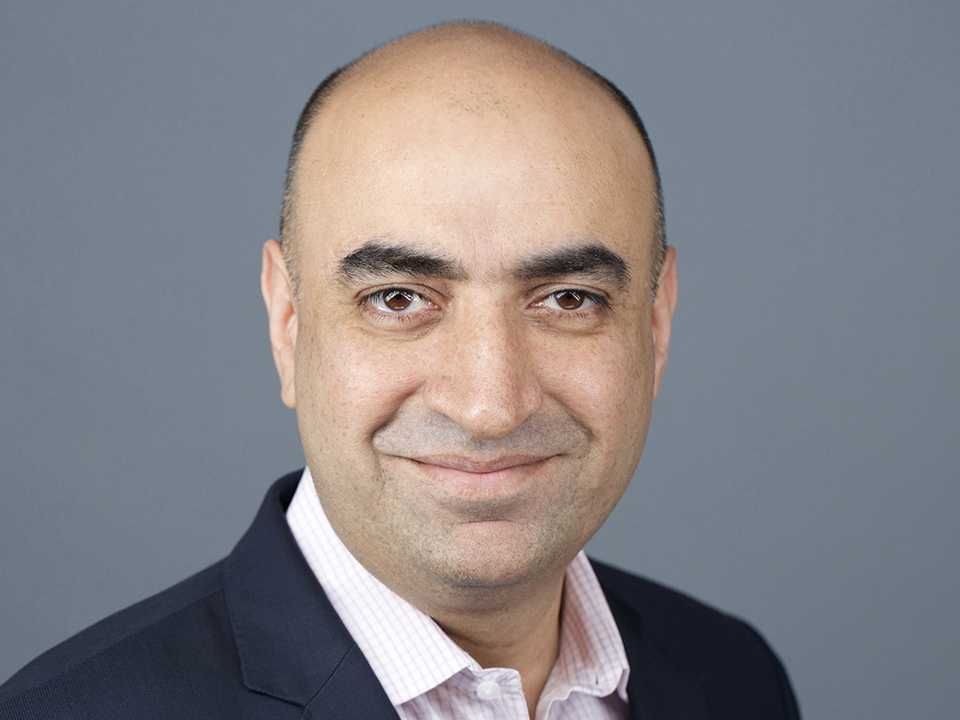
While stablecoins are good, Farooq says, “they are good for the scale at which we are operating today. They will not work for billions of dollars of transactions, because large hedge funds and asset managers are unlikely to take even a small amount of risk on billions of dollars, and they’d much rather be with a global bank in that case. So we need to have a solution for that potential future.”
Such a world would need not only central bank digital currencies but tokenized commercial bank deposits.
“It’s almost like reinventing the current financial structure,” Farooq says, “but in a more tokenized fashion.”
Sopnendu Mohanty, chief fintech officer at the MAS and the architect (or at least enabler) behind many of these initiatives, is optimistic that all of this work is worthwhile.
“The live pilots led by industry participants demonstrate that with the appropriate guidelines in place, digital assets and decentralized finance have the potential to transform capital markets,” he says. “This is a big step towards enabling more efficient and integrated global financial networks.”
Safeguards
Alongside the pilot deal, Oliver Wyman and the three banks jointly launched a report, Institutional DeFi – the Next Generation of Finance?
The report distinguishes between the broad ideas of DeFi and what it calls institutional DeFi – “a system that combines the power and efficiency of DeFi protocols with a level of safeguards to meet regulatory compliance and customer-safety requirements.”
Many existing DeFi protocols, it says, lack identity solutions to allow institutions to meet anti-money laundering and know-your-customer requirements, or sufficient resilience against cybersecurity threats.
“There is also limited, if any, recourse for investors should something go wrong. Firms need to develop safeguards to address these challenges before DeFi protocols can be adopted at scale in mainstream finance.”
Concerns like this were at the heart of the MAS’s intentions when it formally launched Project Guardian in May.
Firms need to develop safeguards to address AML and KYC challenges before DeFi protocols can be adopted at scale in mainstream finance
Umar Farooq, Onyx
At launch, the MAS said it wanted to explore the use of public blockchains to build open, interoperable networks for digital assets to be traded across platforms and liquidity pools, but it also said it wanted to make sure there were guardrails in place. It spoke of “trust anchors”’ – regulated financial institutions to screen and verify credentials to those who wish to participate – as well as “institutional grade DeFi protocols”, such as regulatory safeguards and controls, and smart contract auditing capabilities. All of these were in evidence in the pilot deal.
A broader question from all of this is whether any of it is good for banks. As the MAS itself points out, the principle established in this pilot “frees up costs involved in executing trades through clearing and settlement intermediaries, and the management of bilateral counterparty trading relationships as required in today’s over-the-counter markets.”
But banks have done rather well out of those arrangements for a century or more.
“If you take the view that in the future all nine billion people start dealing with each other, you could easily make a case that you don’t need banks,” says DBS chief executive Piyush Gupta. “I don’t think you’re going to wind up there any time soon.”
He predicts “a more intermediated form of DeFi, where you’ll still find a role for intermediaries.”
He draws the analogy of commercial banking at the time that capital markets gained traction, when people thought banks would no longer be needed. Instead, banks developed new areas of expertise, which became investment banking as we understand it today.
Festival initiatives
The announcement of the deal came alongside the Singapore Fintech Festival, held in physical form for the first time in two years, across Singapore’s sprawling Expo near Changi Airport.
As it often does, the MAS used the festival to announce a number of different initiatives. In addition to the updates on Project Guardian, it also launched two new industry pilots.
One, with Standard Chartered, is on trade finance, “an initiative to explore the issuance of tokens linked to trade finance assets,” the MAS says. “The project aims to digitize the trade distribution market, by transforming trade assets into transferable instruments that are more transparent and accessible to investors.”
The MAS also announced a wealth management initiative with HSBC, UOB and Marketnode, “to enable digital issuance of wealth management products, enhancing issuance efficiency and accessibility for investors.”
Separately, Standard Chartered announced it would make a strategic investment in Partior, the cross-border settlement exchange that emerged from a previous MAS project, Ubin. Partior was founded by JPMorgan, DBS and Temasek last year. In addition to its investment, Standard Chartered will serve as the first euro settlement bank for the platform; Partior covers eight global currencies and plans to expand beyond them.
One of the conference headline sessions was titled ‘DeFi versus TradFi’, and the language suggested two competing and irreconcilable ideas. Farooq thinks that is the wrong way to look at it.
“I don’t think it’s a conflict,” he says. “TradFi has been there for hundreds of years, evolving, DeFi is relatively new. I think these two will merge in one way or another. If you can tokenize traditional assets and put them on a blockchain, the DeFi tech is going to merge with traditional finance.
“I don’t think the crypto universe is going to grow to the scale where it becomes a scale competitor to commercial markets.”
JPMorgan transacts more than 10 times the total market cap of crypto in a day, he says. “And that’s just us.”