COUNTRY INDEX

|
AFGHANISTAN |
|
Best Bank: Afghanistan International Bank |
|

Afghanistan International Bank remains a standout in this troubled country: the only bank with US dollar clearing through a recognized international bank, and therefore a vital conduit for global financial links at a critical time. Even during the chaotic conditions after the announcement that US troops would withdraw from Afghanistan, the core online transactions performed by AIB were active for all bar a two-week period following the regime change when all banks were directed to close.
Just as importantly, the bank’s investment in security systems and procedures meant there were no injuries to staff.
It is no surprise the UN selected AIB as its partner to assist with the provision of aid into Afghanistan, and AIB remains a key link with multilaterals and NGOs.
Its financial performance is almost an afterthought in such conditions, and naturally total revenue decreased by 22.2% (to Af2.22 billion ($25 million)) on the back of myriad challenges beyond the bank’s control. But it still has a capital-adequacy ratio of 14.9%, managed to increase both assets and deposits through 2021, and was, remarkably, still profitable, bringing in an after-tax gain of Af236 million. Surely no profit in our awards was harder to earn than this.

|
AUSTRALIA |
[index] |
|
Best Bank: National Australia Bank |
||
|
Best Investment Bank: Goldman Sachs |
||
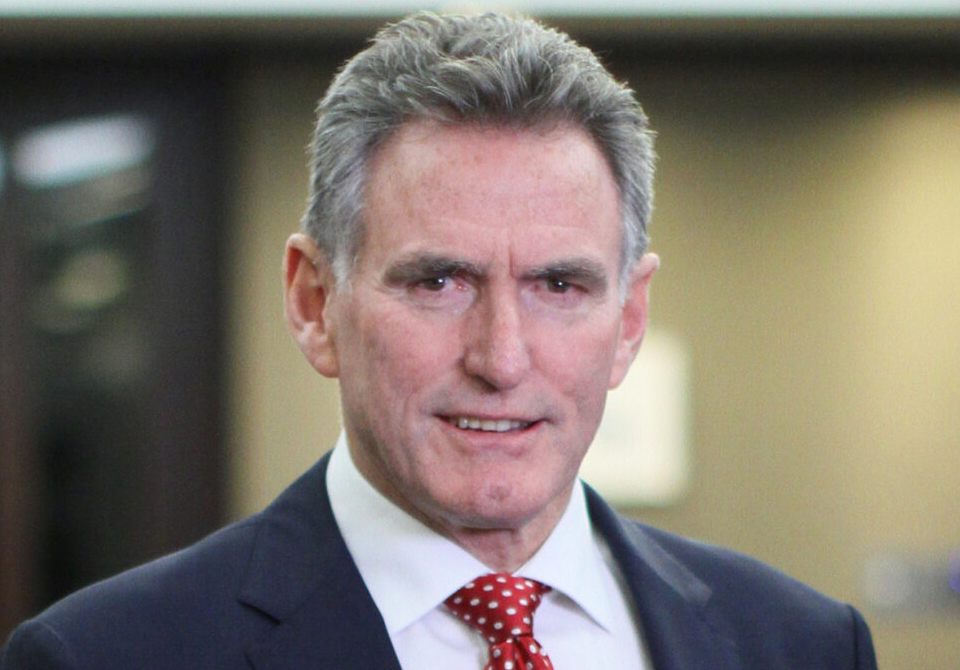
While last year’s winner, the hard-to-define Macquarie Group, delivered a knock-out record profit this year, we opt instead to recognize a turnaround story this time: chief executive Ross McEwan’s achievement at National Australia Bank.
The bank reported a 4.1% rise in interim cash profit of A$3.48 billion ($2.5 billion) for the half-year to March 31, 2022, increasing its dividend. McEwan spoke of “progress of our strategy, confidence in the sustainability of our performance and our continued optimism in the medium-term outlook for the Australian and New Zealand economy.”
Analysts have been impressed. “What’s not to like?” asked Macquarie, while Morgan Stanley spoke of “building a track record”.
NAB has, for years, been an underperformer. When McEwan stepped up in 2019, he was greeted with AGMs full of growling pensioners moaning that the share price hadn’t moved in a decade. He moved the bank forward from the embarrassment of the Banking Royal Commission, invested to fix shortfalls in banking technology, and boosted market share in business and home lending.
The purchase of Citi’s consumer assets in Australia points to ambition. There’s more to do but McEwan has got his bankers back on side and his shareholders mollified. That’s more than a start.
Goldman Sachs retains the highly competitive best investment bank award for a strong year that illustrated the bank’s ability to pivot in changing times – and our review period was all about changing times.
When the opportunity was all about equity capital markets, Goldman did more than anyone else, leading the largest primary follow-on in ASX history for CSL at A$6.3 billion, executing the biggest block trade of the period for IDP Education at A$1.2 billion, and joint leading IPOs including the biggest (GQG Partners, A$1.2 billion) and the most interesting (Judo Bank and APM among them).
And when the place to be was M&A, Goldman was everywhere. As a buy-side adviser, it was on the side of the purchasing consortium for Sydney Airport, the largest ever all-cash acquisition in Australia at $21.7 billion. Having helped CSL with its follow-on, it also advised it on the $11.8 billion acquisition of Vifor Pharma.
As a sell-side adviser, key roles included advising Afterpay on its $26.9 billion merger with Square and the sale of BHP’s petroleum assets to Woodside Petroleum for $13.7 billion. And in defensive roles, clients included Oil Search, AGL, Spark Infrastructure and others.
All told, Goldman advised on $79 billion of cross-border Australian M&A, arguably the year’s abiding theme.
Add in a successful year in debt finance embracing complex acquisition facilities, financial institution capital raisings and both domestic and global issues for Australians, and you have a year of activity that could not possibly have been more rounded.

|
BANGLADESH |
[index] |
|
Best Bank: Eastern Bank |
||
|
Best Investment Bank: City Bank Capital |
||
Eastern Bank was the Bangladesh institution that delivered the greatest progress through our period under review. Its net profit grew 13.5% to Tk4.65 billion ($53 million) in 2021, while its return on equity of 15.51%, cost-to-income ratio of 39% and non-performing loan ratio of 3.7% represents the best trinity of metrics in the industry.
Eastern bounced high from Covid. The pandemic gave the bank a chance to strengthen its Insta Banking model, including its EBL Self Service hub and digital loan platform, electronic know-your-customer, a new chatbot model, the EasyCredit model to convert unused credit-card capacity into loans on request, and the Skypay online payment gateway. Behind all of this is Project Rupantor, which seeks to upgrade the bank’s entire core banking system, a long-term project that went live in April 2022.
Eastern has also committed a total outstanding of $450 million to state-of-the-art RMG (ready-made garment) factories, which ought to improve not only the productivity of the sector but the livelihood and safety of the employees within. This, in turn, links with the bank’s instrumental role in Bangladesh trade; a Murabaha financing facility with the Islamic Development Bank’s trade finance subsidiary was important in this respect, allowing the bank to provide better financial support to small and medium-sized enterprises.
Investment banking in Bangladesh is becoming a competitive field; there are numerous boutiques and bank subsidiaries, while internationals such as Credit Suisse have started to take a look.
City Bank Capital retains the award it lifted last year. It now boasts a seven-year operating profit compound annual growth rate of 31%, with its team of 32 generating Tk345 million ($4 million) of after-tax profit in the year to December 2021.
The most eye-catching deal in our review period was a Tk30 billion green sukuk for Beximco, the largest private-sector group in Bangladesh, a diversified group that was busy this year with the acquisition of Sanofi Bangladesh. The sukuk aligns with four of the UN’s sustainable development goals, and brought the company to Shariah investors. The proceeds were used not for Sanofi but to build a solar plant and refinance the expansion of a textile division in a more energy-efficient manner.
“Structuring this instrument and closing it in such a short time truly deserves appreciation,” says Beximco managing director Osman Kaiser Chowdhury.
Another interesting deal, though much smaller, was a Tk100 million qualified investment offer for Oryza Agro Industries, which makes fish and poultry feed. Elsewhere in the business, the portfolio management arm has $961 million under management.

|
BRUNEI |
[index] |
|
Best Bank: Baiduri Bank |
||
Baiduri Bank is a full-service firm, considered the leading conventional player in Brunei, and enjoying a productive spell. Its net profit, at Br$58.5 million ($42.8 million), was up 3% year on year in 2021, while loans, deposits, assets and tier-1 capital all grew.
Subsidiaries Baiduri Finance and Baiduri Capital grew faster still, with net profit up 8.5% and 168% apiece.
Return on equity stands at 12.42%, the cost-to-income ratio is falling and dropped below 50% during our period of review, and the non-performing loan ratio stands at a healthy and improving 1.42%.
Since a strategic refresh in 2020, Baiduri has sought to align itself more clearly to environmental, social and governance principles. An example of the bank’s community engagement was an initiative to support local food truck vendors during Ramadan. Another was the launch of an app called Mengalinga – ‘we care’ – which connects volunteers with NGOs and government agencies that need them.

|
CAMBODIA |
[index] |
|
Best Bank: ABA Bank |
||
We receive more and more pitches in Cambodia every year, including from international houses engaging with the growing frontier market. But ABA Bank continues to stand apart.
The largest Cambodian bank with $7.9 billion in assets by the end of 2021, up 28% year on year, the bank continues to grow across the board. Deposits rose 29% to $6.3 billion, gross loans 38% to $5.3 billion, and net profit at $212 million has almost doubled in two years.
Behind these figures are a commitment to digital that has led the nation. Some 100 million more transactions were made in ABA Mobile in 2021 than 2020, reaching 250 million. Their combined value, at $124 billion, is more than four times Cambodia’s GDP. Multiple new features were unveiled in 2021, including instant account opening and QR cash withdrawals.
Elsewhere ABA boosted local e-commerce through its PayWay platform, integrated its internet business banking platform with cloud-based accounting platform Xero, distributed loans throughout the local economy and expanded its network of self-banking spots, places that have been used more than two million times since launch in July 2020.
Incidentally, it is very likely we will give a Cambodia investment banking award next year given the activity that is now ramping up in the country, but not enough significant deals closed during our review period this year to warrant it.

|
CHINA |
[index] |
|
Best Bank: China Merchants Bank |
||
|
Best Investment Bank: Goldman Sachs |
||
It was another great year for China Merchants Bank. The Shenzhen-based lender posted net profit attributable to shareholders of Rm119.9 billion ($17.9 billion) in 2021, up 23.2% in a tricky period. Net interest income came in at Rmb204 billion, up 10.21% on an annualised basis.
The bank posted a return on average equity and assets of, respectively, 16.96% and 1.36%, both up sharply from the previous year. Non-performing loans fell, dipping to 0.91% at the end of 2021, against 1.07% at the same time a year ago.
But you expect this with China’s big lenders: time after time, they post big numbers. Rarely does a big Beijing-controlled lender malfunction – though it’s perhaps worth watching out for this in the current year, given the fragile state of the economy.
What makes China Merchants Bank stand out from the domestic crowd, year in and year out, is the range of its services and the sense that it defines itself as a world-class lender, not just as the best bank in Asia’s largest economy.
It is big in retail (170 million consumers use its offline and online services) and corporate banking: as of the end of 2021, the total number of business clients topped 2.3 million. Its Zhaoyang Plan is a new platform designed to educate good fund managers, then spring them onto the market. In the 12 months to the end of March 2022, the bank unveiled 253 new mutual funds, with total assets under custody of Rmb407 billion.
China Merchants Bank is regularly and rightly cited as the best onshore provider of private banking services. Its Zhao Bao wealth management service is designed for inclusivity: to ensure no one with reasonable financial means and the desire to save for the future, is denied access. At the end of 2021, the number of customers on the platform had topped 15 million, with total assets under management of Rmb135 billion.
The investment bank award was a close call, but Goldman Sachs takes it. The Wall Street firm was a powerhouse in M&A, completing six deals in the awards period, worth a total of $8.73 billion, for a share of 12.9% of the market. It also completed more onshore equity capital market deals than any of its international peers: 52 in all, worth a total of $17.4 billion.
What impressed was its ability to get the right deal for the client across the line, and to target transactions with immediate and lasting value. And all that in a torrid year that saw China’s property sector unravel, the economy lose momentum, and a strict Covid-related lockdown imposed on Shanghai.
A good example is BeiGene’s $3.5 billion listing on Shanghai’s Star Market. Goldman was joint sponsor and joint bookrunner on the largest global healthcare listing of 2021. It also made BeiGene the first firm to be publicly traded simultaneously on the Star Market, Hong Kong and New York.
Other standout deals include Bilibili’s $1.6 billion sustainability convertible bond, priced in November 2021 – the first-ever environment, social and governance convertible issued by a Chinese corporate. The bank was lead bookrunner and sole sustainability structuring advisor. It played a lead role on Baidu’s inaugural $1 billion sale of dual-tranche, SEC-registered senior unsecured sustainability notes.
Xiaomi’s $1.2 billion sale of dual-tranche144a/RegS senior unsecured bonds also caught the eye. It marked the inaugural dollar-denominated green bond offering by a Chinese tech and media firm, and the longest-dated sustainability-themed print in the sector. Goldman was lead-left joint global coordinator and sole green structuring adviser on the July 2021 sale.
In M&A, the firm advised Reckitt Benckiser on the sale of its infant formula business to investment firm Primavera Capital for $2.2 billion and advised AIA on its $1.9 billion purchase of a 24.99% stake in China Post Life Insurance, boosting the firm’s presence in the mainland.
It was a banner year for the US firm in other ways. In October 2021, it secured approval from China’s securities regulator to take full control of its onshore securities business – spanning investment banking, research, equities and fixed income – and renamed the business Goldman Sachs (China).
In terms of business development, it is a huge plus.
“With full ownership under a unified platform, we can attract the best talent, recruit in a more coordinated fashion and brand ourselves accordingly in the market as we do globally,” says co-head Sean Fan.

|
HONG KONG |
[index] |
|
Best Bank: DBS Bank |
||
|
Best Investment Bank: Morgan Stanley |
||
For the first time in many years, Hong Kong has a new winner. Singapore-based it may be, but DBS Bank’s financials alone justify it securing this award – one that tends to usually go to a larger UK-headquartered rival.
DBS posted net profit of HK$6.9 billion ($880 million) in 2021, up 27% year on year, with non-interest income up 21%, average cheque and savings account balance up 30%, and the ratio of non-performing loans to all lending down to 0.73%.
This flew in the face of logic. Each of DBS’s rivals saw localized profits fall sharply, as torrid prevailing conditions mitigated against success. Hong Kong has struggled through a series of awful years, only to suffer again in early 2022 when the Omicron variant of Covid tore through the city.
Not so DBS. A host of factors helped the Singapore-based lender land this award, some dating back years. One was the resolve not to focus on China’s big property firms. Pretty much every other local bank did – to their detriment, as a decades-long cycle began to turn, leaving overleveraged developers mired in debt and struggling to meet repayments. It was a conscious decision, and DBS stuck to its guns.
Instead, it chose to focus on core services: wealth management, capital markets, multinationals and larger small and medium-sized enterprises, retail banking, and corporate banking. DBS is no longer the little kid in the playground. It has grown fast but quietly and is now larger than its local peers.
Group-wide investment in digital paid off in spades in the pandemic. In 2021, 55% of smaller firms were onboarded digitally, against 31% a year ago.
Strong digital foundations help it to save money and allot capital better, further boosting the bottom line. In the period 2017 to 2021, DBS saw non-interest income rise at a compound annual rate of 10%, against a local industry average of 2%. Its cost-to-income ratio fell by one percentage point last year, against an average sector-wide rise of 10 percentage points.
In April 2021, DBS bought 13% of Shenzhen Rural Commercial Bank, becoming its largest shareholder. It signed strategic partnerships with SRCB and Postal Savings Bank of China under the aegis of China’s Wealth Management Connect – a sign the bank is planning for a proliferation of new business when the borders between Hong Kong and China finally reopen.
So – 2021 was great for DBS Bank in Hong Kong. But can it maintain its momentum?
“It is not a one-off year,” says Sebastian Paredes, the long-time chief executive of DBS Bank (Hong Kong). “Our performance has been consistent through the years. We are a neutral and very friendly bank, we are fully committed to the Hong Kong market, and we will continue to be.”
It is hard to find a headline-grabbing transaction in Hong Kong that Morgan Stanley didn’t manage last year. The Wall Street firm was a league-table leader that topped the rankings in Hong Kong equity capital markets (including all IPOs and follow-on and convertible offerings), according to Dealogic, in the year to the end of March 2022, completing 41 deals worth a total of $13.4 billion.
Morgan Stanley also topped the rankings in local equity offerings by foreign corporates – notably, the growing number of mainland firms who, under pressure from US and Chinese regulators, are quitting New York and re-listing in Hong Kong.
The investment bank topped that table for the second year in a row, completing 40 transactions worth a total of $13.5 billion.
It was lead-left joint sponsor and joint global coordinator on Hong Kong’s first special-purpose acquisition company when Aquila Acquisition went public, raising $128 million. Another highlight was Chinese electric vehicle maker Nio, which opted for a ‘by way of introduction’ listing that saw it float shares on Hong Kong’s main board without raising new funds. Again, Morgan Stanley was lead-left sponsor. Both offerings were completed amid tough market conditions in March 2022.
If there was a theme that dominated Hong Kong’s capital markets last year, it was advisory. The bank completed 12 M&A deals over the awards period, worth a total of $21.9 billion.
A key deal in the period was the $3.8 billion sale of LF Logistics to Danish shipping firm Maersk. Morgan Stanley advised Li & Fung on the sale, which head of Hong Kong coverage Michael Vollmerich describes as a “hugely successful private capital M&A trade” for the Hong Kong group.
His team assembled a select group of potential global bidders, led by non-Asian blue-chip names keen to expand their remit in the region.
“It is very hard to build up this kind of unique footprint,” Vollmerich said. “We sought out a buyer who could not build this network of assets quickly and organically.”
They got it.
Other key deals include $2.8 billion-worth of block trades for Chinese pharmaceutical firm WuXi Biologics, a monster $14.7 billion block trade for Tencent, and the $618 million Hong Kong listing of US- and London-traded biopharmaceutical firm Hutchmed.

|
INDIA |
[index] |
|
Best Bank: HDFC Bank |
||
|
Best Investment Bank: Citi |
||
HDFC Bank continues to set the standards against which other Indian domestic banks are compared. In the year to March 31, 2022 – a difficult environment for many in financial services – HDFC’s profit after tax rose 14.6% to the equivalent of $4.88 billion.
Deposits grew 12.7%, borrowings 31.6% and total assets 14.2% in a year in which HDFC delivered 16.9% return on equity. In a challenging environment, retail and treasury profit fell, but was more than compensated for by a knockout 38.6% growth in the wholesale banking business. And through all of this, non-performing loans – consistently the lowest in the industry through Covid – fell to just 1.17% gross.
HDFC Bank has managed this so consistently over the years by doing the simple things right. It has steered clear of scandal, its risk-management division is peerless and it never does anything stupid.
Based on this sturdy foundation, it has then found the best things to excel at: the largest cash-management player in the country, for example, and a leader in supply-chain financing, as well as a local bank of choice for multinational corporations operating in India. A steadfast commitment to digital will help keep it ahead of the pack.
India’s investment banking award was the single most hotly contested category in all of the Asia awards this year. Three local houses (Kotak Mahinda, Axis Capital and ICICI Securities) and four international (Morgan Stanley, Citi, JPMorgan and Credit Suisse) were in with a shot at this award and we could have made a case for any of the seven. This was a great year to be good in India.
Citi lifts the prize for having the deepest across-the-board expertise. In equity capital markets, it was on all of the landmark tech IPOs – the good (Zomato, Policybazaar, Nykaa) and the bad (Paytm) – as well as the largest FIG IPO for Star, a host of big block trades including SBI Card, a $2.4 billion rights issue for Airtel and a qualified institutional placement for Shriram.
It was among the top tier of M&A advisers in the country, and not just because of the sale of its own consumer business to Axis. Other key roles include advising L&T Housing Finance in selling its investment management arm to HSBC, Reliance on its sale of US shale gas assets, Fullerton on the sale of its India arm and ADQ on its acquisition of a stake in Tata Motors’ electric vehicle subsidiary.
There were other names that also excelled in ECM and advisory, but they didn’t then offer Citi’s strength in debt. This was a characteristically diverse year: bank capital issues for HDFC and Axis, TMT for Hexaware, Summit and Wipro, ESG bonds for Shriram, Adani Electricity and JSW, the largest-ever Indian foreign currency bond issue in a $4 billion deal for Reliance, and loans that supported the largest-ever leveraged buyout-loan transaction for India (Mphasis/Blackstone) as well as deals for BPEA and Wipro.

|
INDONESIA |
[index] |
|
Best Bank: Bank Central Asia |
||
|
Best Investment Bank: UBS |
||
Bank Central Asia, which we admired enough to make it our best bank in emerging markets last year, had a characteristically flawless time of it this time around too. In financial 2021, it grew net profit 15.8% to Rp31.4 trillion ($2.2 billion), and assets 14.2% to Rp1,228 trillion.
A dominant transaction-banking franchise has long been the secret sauce for BCA’s success and so it continued this year, helping to strengthen the bank’s current and savings account core funds, which grew 19.1% year on year.

When you have that sort of base beneath you, you can do a lot: the 8.3% loan growth in financial year 2021 to Rp622 trillion – and 11.3% growth in corporate lending – was a very useful stimulus to a domestic economy that was harshly challenged by the pandemic. In particular the edible oil, telecommunications and infrastructure sectors have benefited as well as micro and small and medium-sized enterprises across the board. Being a digital leader has helped.
As usual BCA leads the field in return on assets (3.4%) and return on equity (18.3%), but perhaps of greater significance is its momentum in environmental, social and governance. Its volume of sustainable financing in 2021 reached Rp154.4 trillion, up 20.9% year on year, in a country that needs this area to develop. BCA president director Jahja Setiaatmadja continues to run the steadiest of ships.
Indonesian investment banking was a very tightly contested category, with several international and local banks in the frame. UBS showed the greatest range of deals across disciplines.
There were three IPOs of consequence in our review period, and UBS was on two of them: lead-left global coordinator and domestic underwriter on Bukalapak’s $1.5 billion listing (having conducted a $234 million private placement for the issuer four months earlier) and joint global coordinator on the $771 million IPO of Avia Avian, a local paint company. Bukalapak (its recent tech stock plunge notwithstanding) was the largest-ever IPO in Indonesia and the biggest tech listing on a southeast Asian exchange: a local landmark.
In debt capital markets, UBS stood out for its variety. The $1.75 billion dual-tranche RegS issue it led for Indofood CBP Sukses Makmur, its debut offering, was the largest RegS bond ever by an Indonesian corporate, and the largest such corporate deal from Asia for two years; no Indonesian corporate had ever issued 30-year RegS paper. A $1 billion bond followed for the same issuer months later.
Also with UBS as a joint global coordinator, BNI (Persero) launched the first ever additional tier-1 bond from an Indonesian bank, the Republic of Indonesia launched a multi-currency triple-tranche SEC-registered offering and tender offer going out to 40 years, and Pakuwon Jati demonstrated there was still life in Asian high yield – twice.
Key advisory roles included the sale of Vale Indonesia to Indonesia Asahan Aluminium, a state-owned enterprise.

|
JAPAN |
[index] |
|
Best Bank: MUFG |
||
|
Best Investment Bank: Morgan Stanley |
||
A curious thing happened at MUFG’s third quarter earnings result in February: it declined to revise its full-year forecast (¥1.05 trillion – $8.2 billion), despite already having beaten it in the first nine months of the year (¥1.07 trillion, a 76.3% increase over the corresponding nine months a year earlier).
Caution like that reflected an experienced sense of trepidation about the outlook for Japan in an economy, already fragile, that has remained heavily restricted far later into the pandemic than most others in the world, China notwithstanding.

Kanetsugu Mike, MUFG’s chairman, has long talked about the three pillars of the bank’s strategy: corporate transformation, growth and structural reforms.
MUFG’s results briefing did not celebrate a record number, but instead dwelled upon supply-chain blockages, chip shortages, Omicron and provisions.
And, when the full-year results were announced three months later, management was half right.
The total full year profit was Y1.13 billion: an improvement and a record, but showing signs of the weight of war in Ukraine and disruption worldwide.
MUFG was also very honest that the biggest reason for the profit improvement had nothing to do with Japan, but was instead due to Morgan Stanley-related profits and net gains in equity securities.
Still, a record is a record. Return on equity, which MUFG has long urged to go higher, climbed from 5.63% to 7.79% over the year, more than respectable. Digital transformation is gathering strength, the bank’s Asia network of assets is well-placed for a post-pandemic rebound, and although the non-performing loan ratio climbed, it did so modestly, from 1.14% to 1.18%. Nothing is ever easy in Japan, especially in a time of global uncertainty and inflation, but MUFG could not have done much more in the last 12 months.
This time around, Morgan Stanley, supported as always by its investment banking JV with MUFG, was not the runaway leader it often is: missing out on the Japan Post equity capital markets mandate pushed it to an unfamiliar low level in the league tables. But it still lifts the prize for its across-the-board strength.
On M&A, Morgan Stanley advised Bain Capital on the acquisition of Hitachi Metals in a $8.4 billion deal, exactly the sort of conglomerate divestment to foreign private equity that has characterized the better deals of recent years (and surely concludes Hitachi’s admirable commitment to reshaping itself for the future). The bank also advised Eneos in its sale of its stake in Nippo Corporation to Goldman Sachs, and then its repurchase of the same stake in the privatized entity. It helped MBK Partners sell Accordia Next Golf to Fortress, Sbiper’s share issuance to Carlyle Japan, and VisaQ’s acquisition of Coleman Research Group.
The biggest deal was MUFG’s sale of Union Bank, which Morgan Stanley was always going to get, but it was still a deal with challenges.
Capital markets standouts included a $4 billion primary and secondary follow-on for Renesas, followed later in the year by a $1.35 billion debut dollar green bond for the same issuer; a ¥50 billion euro-yen convertible for Mercari, $2.75 billion of green bonds for Honda and transition bonds for Nippon Yusen Kaisha and Japan Airlines.
Japan has long been an Asia-Pacific pioneer on green bonds; now transition bonds have entered the mainstream too.

|
KOREA |
[index] |
|
Best Bank: KB Kookmin |
||
|
Best Investment Bank: Credit Suisse |
||
There is a case to be made for all three of South Korea’s top banks to be the best this year. KEB Hana has the highest margins and strongest profitability, driven by a strong small and medium-sized enterprise loan portfolio. Shinhan has made the most progress in digital transformation and has entered into an exciting new strategic alliance with KT, the leading telco.
But KB Kookmin, the largest of the banks by assets, takes our award for 2022. It led the field in loan-book growth in the first quarter year on year, at 5.4%, and has the highest net interest margin, at 1.58%.
The bank has benefited from an excellent call in being an early investor in Kakaobank, perhaps the only pure-play digital bank in Asia that is actually profitable. The Kakaobank IPO – initially supercharged, then dampened considerably with the rest of the tech sector – has given a boost to Kookmin’s returns this year and will continue to pay off.
KB Kookmin also stands out for a redoubled commitment to international expansion, exemplified by its acquisition of a controlling stake in Cambodia’s microfinance lender Prasac. There is potential for this to be converted into a full commercial bank, giving the Korean lender a foothold in a dynamic, if small, dollar-based economy in Asia.
This year, the investment bank category was a tight award that could have gone four different ways. It is lifted by Credit Suisse ahead of its US competitors for the number of key IPOs it got on and the range of its advisory work.
There were five IPOs worth more than $1 billion apiece in South Korea during our review period, making it an essential market for international investment banks to show strength in.
Credit Suisse was conflicted out of the biggest, for LG Energy, but was on the other four: Krafton, Kakaobank, SK ie Technology and Hyundai Heavy Industries. Between them they represent the story of Korea’s year: fintech and gaming knockouts like Kakaobank and Krafton, to the return of boring old industry with the biggest-ever listing in Korea’s shipbuilding sector for Hyundai.
Credit Suisse is the banker of choice to the SK group, which is a highly useful client to have. This year, that one client led to no less than five advisory roles, the biggest being on the spinoff of SK Square from SK Telecom.
Another key advisory role was the sale of a 30% stake in Doosan Infracore to a Hyundai-led consortium; again, this was Credit Suisse’s seventh deal for Doosan. All told Credit Suisse announced and completed 14 advisory deals in our review period.
In debt markets, the standout was $500 million of additional tier-1 sustainability notes for Shinhan Financial Group.

|
MACAU |
[index] |
|
Best Bank: Bank of China Macau branch |
||
A regular winner of this award, Bank of China holds 36 branches in Macau and assets of P780 billion ($96.5 billion), constituting more than 40% of local market share across a full suite of banking services. Also a note-issuing bank, it is part of the fabric of Macau’s financial infrastructure, a clearing bank for all currencies in use there, and chair of the Macau Association of Banks.
Faced with a tough environment through the pandemic, Bank of China set about a series of initiatives through our review period. One was a survivorship plan, as it calls it, to assist small and medium-sized enterprises that were stretched by circumstances.
Another was a further commitment to digital development, while another is to support the development of a cooperation zone between Macao and Guangdong in Hengqin. This has included initiatives on cross-border wealth management and tax financing.
The bank has also tried to develop Macau’s financial markets, underwriting all local bond issuance, taking the Guangdong provincial finance department into Macau to issue bonds, and issuing biodiversity-themed green bonds worth Rmb1.8 billion ($270 million).

|
MALAYSIA |
[index] |
|
Best Bank: Public Bank |
||
|
Best Investment Bank: CIMB |
||
Public Bank consistently boasts the healthiest ratios in the business, a testament to efficiency and prudence. This was true as Malaysia descended into the pandemic; it is still true as the country begins to emerge from two years of onerous restrictions, and it is little surprise to find Public Bank come out of the whole process with the lowest gross impaired-loans ratio in the sector, just 0.3% (at CIMB, for example, it is 3.5%).
The numbers are characteristically fine. Net profit grew 16.1% to RM5.67 billion ($1.3 billion) in 2021 despite a slight slide in total revenue.
Return on equity stood at 12.4% and returns were improved by a cost-to-income ratio of just 31.6%: both the best numbers in the industry.
Public Bank continues to shine at what it’s good at. It is the leading domestic financier for the purchase of both residential and commercial property, as well as passenger vehicles; its unit-trust and fund-management businesses go from strength to strength; and at the grass-roots level it scores highly for customer service.
If there has ever been a question about Public Bank, it is about how this conservative and steady institution can roll with change, but it is making good progress with its digital agenda, with transaction volumes on its mobile banking platform up 89.6% through the year.
It has refined its environmental, social and governance policies and has made a welcome commitment to achieving RM40 billion of ESG-friendly financing by 2025, RM25 billion of it in energy-efficient vehicles.
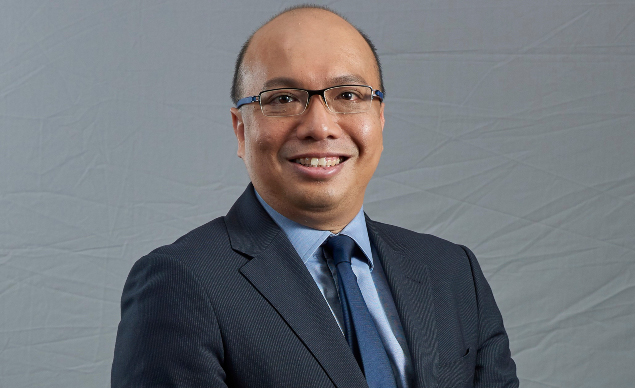
CIMB had an excellent year and leads Malaysia’s extremely competitive investment banking market, clinching our award from Maybank. Abdul Rahman Ahmad has had a successful first two years in charge.
Our review period was a testing time that required banks to be able to adapt and bring different products to clients at different moments. CIMB managed to help clients get IPOs away even after the great rotation in markets at the end of 2021; Farm Fresh’s RM1.1 billion listing came in March 2022 amid geopolitical tension and inflationary concerns, with the assistance of 30 cornerstones. It also handled block trades and placements for Mr DIY Group, Inari Amertron, Axis Reit and others.
CIMB also led in debt markets, with notable deals from the sovereign and Khazanah down to the maiden issuance of Hanwha Q Cells, in an issue of green bonds guaranteed by Asean’s Credit Guarantee and Investment Facility.
And in advisory, key deals included the acquisition of Repsol’s oil and gas assets in Malaysia and Vietnam by Hibiscus Petroleum, an investment by Bow Wave Capital and AIA into TnG Digital, the privatization of Koufu Group and the disposal of Malaysia’s primary cruise gateway via a competitive sale process.

|
MALDIVES |
[index] |
|
Best Bank: Credit Suisse |
||
No award was made for the best bank in the Maldives this year. In investment banking, there were two key deals: a $200 million sukuk bond issue for the Republic, and a $200 million tap offering. Both came under the $1 billion trust certificate issuance programme the Maldives has in place, and Credit Suisse led them.
The sukuk was the more important, being the first ever by the Republic and marking a return to the dollar public markets for the first time since 2017.
It also funded the very first liability management exercise by the sovereign, with the redemption of outstanding securities bringing it better terms.
In a difficult year for a tourism-reliant economy in a pandemic, the Maldives had to pay up for its money: a 9.875% five-year sukuk. At least it gave high-yield bankers something to do following the collapse of the Chinese property issuance market. Credit Suisse, well-known for its frontier market work in South Asia, was a joint bookrunner on both.

|
MONGOLIA |
[index] |
|
Best Bank: Khan Bank |
||
Khan Bank continues to lead the Mongolian banking market and is growing steadily as the country has begun to recover from the shocks of the pandemic. Its net profit after tax, at Tug291.5 billion ($9.4 million), was up 80.8% year on year and was more than that of its four biggest rivals combined in 2021.
Total assets grew 11.2% to Tug13.5 trillion in 2021, a clear leader in the industry; loans grew 32.9% as business activity resumed, deposits grew 12.1%, and return on equity hit 22.2%.
Khan Bank’s reach – already impressive, covering 82% of Mongolian households – is being supplemented by a digital transformation strategy. This is entering its second phase: the first, to create the necessary platforms, is complete, and now the mission is to increase the yield of those platforms. Online channels were developed and the bank became fully automated through 2021, and now it remains to be seen how much traction can be achieved.

|
MYANMAR |
[index] |
|
Best Bank: uab |
||
We did not give an award in Myanmar last year in light of the military coup, but opted this year to reward the banks that are continuing to deliver despite the twin shocks of political crisis and the pandemic.
It would be a reach to say that anyone has great numbers in Myanmar; it tells you something that uab’s non-performing loan ratio, of 8%, is the lowest in the country. But it’s also important to remember just how fast Myanmar grew before being beset by current crises.
Uab’s profit after tax is well down year on year but it boasts a five-year compound annual growth rate of 120.1%. That was off a low base, but loans are up a CAGR of 14.8% and deposits 11.7%.
Also, in difficult circumstances, uab has done well on the things it can control, most obviously costs and efficiency: a cost-to-income ratio of 37.5% is uncharted territory in Myanmar.
The bank is also trying a range of other measures, from digital apps to supporting a reality television programme to raise awareness on entrepreneurship.

|
NEPAL |
[index] |
|
Best Bank: Global IME Bank |
||
Global IME Bank has been steadily expanding across Nepal since its inception in 2007, acquiring 18 smaller enterprises along the way, and it is time to acknowledge its progress. Today it is the most profitable commercial bank in the country, with NR3.03 billion ($24 million) for the third quarter, the most recent quarter with numbers available to us.
The bank is the only one in Nepal with an international presence – rep offices in the UK, India and Australia, alongside longstanding cooperation with the IFC and KfW – but it is the domestic presence that matters here.
With 48% of its loan book in retail and small and medium-sized enterprises, business was hit badly by Covid, but through careful refinancing and restructuring it has emerged intact, using the opportunity to introduce new loan products to help businesses get through.
Ultimately the NPL ratio of 1.13% has actually improved through the pandemic, and NPL coverage stands at 209%.
Like other Nepali lenders, Global IME has sought to empower women with dedicated entrepreneurship loans and savings schemes.
Also in our review period, six new deposit products were launched, targeting the unbanked.

|
NEW ZEALAND |
[index] |
|
Best Bank: ANZ |
||
|
Best Investment Bank: UBS |
||
The New Zealand chunk of ANZ’s operations continues to outgun any domestic player. Income from New Zealand, excluding institutional, reached NZ$1.85 billion ($1.21 billion) in the first half of ANZ’s 2022 financial year, with NZ$139 billion of net loans and advances outstanding by March 2022; Bank of New Zealand, the largest local player, has NZ$97.8 billion of loans and advances to customers as of March 2022 and its total operating income was NZ$1.5 billion.
New Zealand has been among the world’s most cut-off economies through Covid and is only now reopening to the world.
Consequently, the spurs to new business have been domestic: ANZ grew home loans by 7% half on half, increasing its market share to 30.7%, and it remains New Zealand’s biggest fund manager and KiwiSaver (a state voluntary retirement savings scheme) provider, managing over NZ$37 billion in investments for more than 650,000 investors.
ANZ also supported New Zealand’s largest-ever sustainable financing during our review period, a NZ$1.25 billion deal with Metlifecare and Auckland Council, creating sustainability linked derivatives in the New Zealand market.
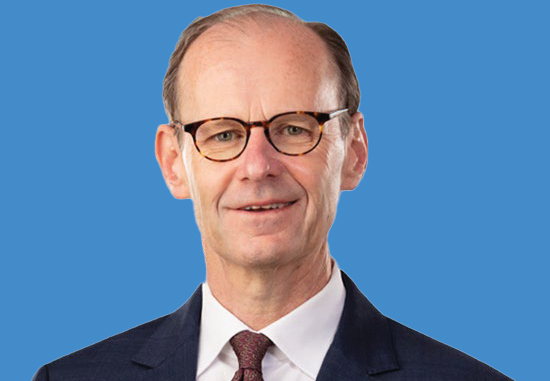
Shayne Elliott is in his 10th year as group CEO, and while Australian banking continues to have its challenges, New Zealand has been steadily productive throughout.
In investment banking, UBS may have had to do some rebuilding in Australia after departures to Barrenjoey and Jarden but it remains in rude health in New Zealand.
In our review period, UBS completed the largest follow-on equity raise in New Zealand’s history, a NZ$1.2 billion issue for Air New Zealand, as well as the year’s largest IPO, for Vulcan Steel.
M&A mandates included the NZ$1.7 billion 2degrees/Orcon merger, and the NZ$391 million sale of NZ Bus to Kinetic. And in debt capital markets, UBS led Auckland Council’s first-ever offshore green bond, for €500 million; the New Zealand government’s longest-dated debt transaction, a 2051 print; and the first ever Kiwi dollar-denominated term loan-B tranche, for Trade Me Group.

|
PAKISTAN |
[index] |
|
Best Bank: HBL |
||
|
Best Investment Bank: Credit Suisse |
||
HBL enjoyed its strongest-ever performance in 2021, and, by extension, the strongest performance in Pakistan. Its Rs62 billion ($351.2 million at the time) consolidated pre-tax profit for the year represented 17% year-on-year growth. After-tax profit of $201.1 million equivalent was also a record. It became the first bank to achieve a Rs4 trillion balance sheet – Rs4.3 trillion by the end of the year, up 12% in 12 months – while total deposits at Rs3.4 trillion were up 19%.
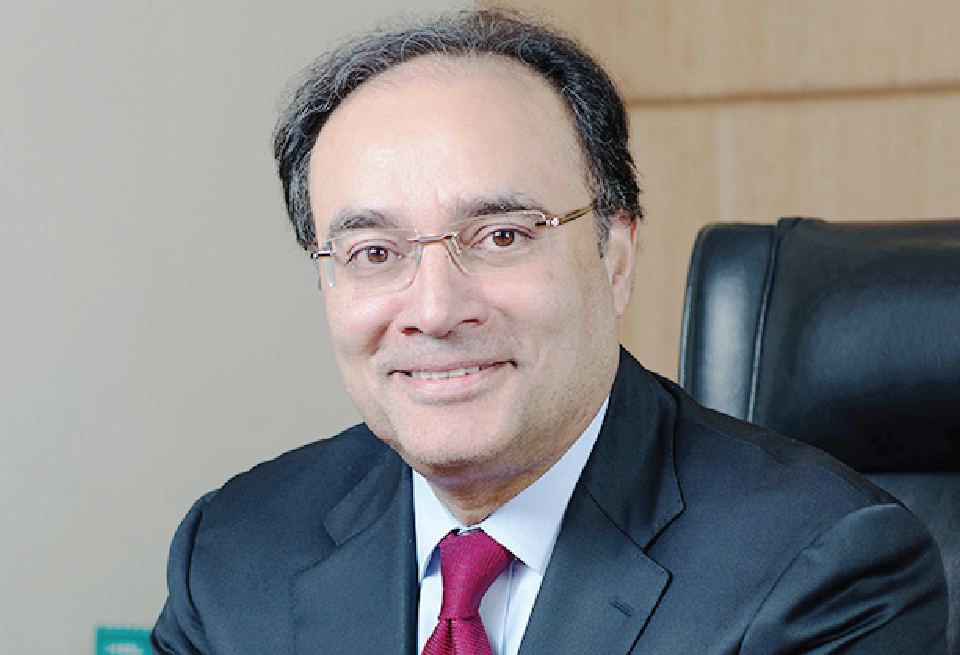
Alongside all of this, expenses remained steady and asset quality improved; HBL uses a metric it calls the infection ratio, and its current level of 5.1% is an all-time low. Chief executive Muhammad Aurangzeb is delivering.
Several engines drove all this: a vibrant year in consumer banking, digital momentum, record volumes in cash management, and a 20% growth in the farmer financing portfolio.
A commitment to become meaningful in Islamic finance showed great progress this year too, with the conversion of Islamic windows to branches boosting the network from 62 to 259 branches.
HBL is also the only Pakistani bank among the signatories of the Green Investment Principles, China, and in 2021 extended its existing commitment to stop financing coal to industries that contribute to deforestation.
Credit Suisse has long put its balance sheet and its credibility on the line in Pakistan, backing the country through frequent political change. It remains the most committed foreign investment bank in the country and builds deals the local market either won’t or can’t do.
As usual there were large bond and sukuk offerings for the Islamic Republic of Pakistan: three of them, the most notable of which was a $2.5 billion triple-tranche 144a/RegS bond in April 2022. Credit Suisse was also joint mandated lead arranger and bookrunner on a $343.5 million syndicated term-loan facility for the ministry of finance with both a conventional and an Islamic tranche.
But the most interesting work happened away from the state, where Credit Suisse helped K-Electric arrange the $414 million ECA-supported financing of a combined cycle power plant, Bin Qasin Power Station III outside Karachi, which uses regasified LNG.
This deal was arranged amid political uncertainty, the pandemic, renegotiations of commercial terms on power purchase agreements with power producers elsewhere in Pakistan, currency depreciation, inflation and budget concerns. Not the easiest backdrop, but it got done.

|
THE PHILIPPINES |
[index] |
|
Best Bank: Metrobank |
||
|
Best Investment Bank: UBS |
||
A changing of the guard this year, as Metrobank pushes aside bigger BDO Unibank and nimbler Security Bank to post the best numbers in a mercurial year.
Metrobank’s net income rose 60% to P22.2 billion ($424 million) in 2021, the best in the business. But this wasn’t all some one-off release of provisions: although non-performing loans declined by 12% over the course of the year, the coverage ratio has been held at 175%, double the industry average. The NPL ratio stands at just 2.2%, the best in the industry and barely half the 4% industry average.
But Metrobank’s story was about more than prudence.
The bank is out there supporting a reviving economy; commercial lending was up 6% in the fourth quarter and credit-card receivables by 5%.
It took advantage of Covid, as all Philippine banks and regulators did, to push digital channels, and launched a host of new services such as its Cash Pick-Up feature on the mobile app, basically a domestic remittance platform; its MetroRemit app and wallet for cross-border transfers; and a campaign to encourage debit facilities.
Pretty much the entire street rates Metrobank a buy right now in recognition of a growing bank with strong capital and asset quality.
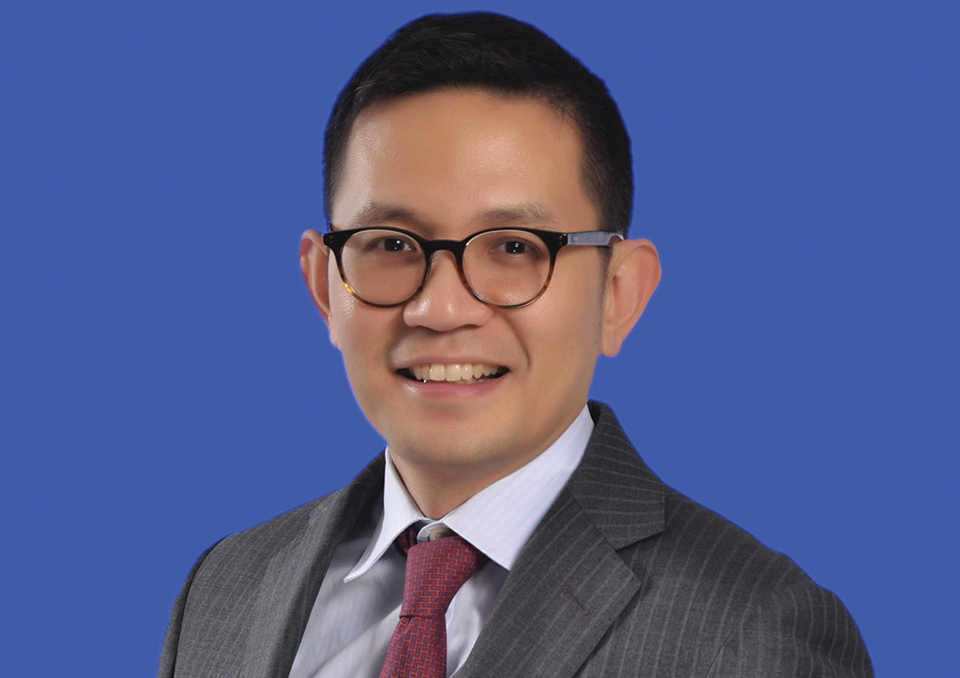
UBS, which takes the investment bank award this year, has long been the dominant foreign bank in the Philippines, and it was stronger than ever. Lauro Baja leads a successful operation that was busy across all disciplines in our review period.
Pick of the equity capital markets work was a lead left role on Monde Nissin’s $1.1 billion IPO, the biggest-ever float from the Philippines and the largest food and beverage IPO ever from southeast Asia. UBS delivered eight of 11 cornerstone investors in the deal.
The bank was also on the IPOs of two real estate investment trusts (RL Commercial and Filinvest), as well as an accelerated secondary for a third, and follow-ons for AC Energy and Synergy Grid.
Key debt deals include a $2.25 billion triple-tranche issue for the Republic of the Philippines rendered memorable for its inaugural environmental, social and governance characteristics. There were two deals for DoubleDragon, a perpetual green bond for Acen and other deals for Ayala, SMC and Petron.
In advisory, standouts were Globe’s $350 million data centre joint-venture partnership with Ayala and STT GDC, and AG&P’s $320 million capital raising from acquirors including Osaka Gas.

|
SINGAPORE |
[index] |
|
Best Bank: UOB |
||
|
Best Investment Bank: Credit Suisse |
||
UOB combined a strong year with a sense of vision about its future.
Last year, we recognized UOB’s fastidious ability to support its small and medium-sized enterprise client book through Covid, and over the past 12 months we have seen that forbearance and client knowledge translate into an impressive bounce. UOB’s S$4.1 billion ($3 billion) net profit was up 40% year on year, with return on equity up to 10.2% and records across the board: net fee and commission income up 21% to S$2.4 billion, record wealth management fees, 10% loan growth.
Underpinning it all was asset quality with a 37 basis-point improvement in credit costs on loans, to just 20 basis points, and non-performing loan ratios steady at 1.6%. Senior managers believe that despite new geopolitical and inflationary pressures, most of their clients are out of the woods now and no important further impairment is expected. UOB played the pandemic about as well as it could have.
There is a great deal else happening – a conversation with UOB involves so much more discussion of sustainability than it ever used to, with programmes of real substance underway – and its digital presence is going from strength to strength in Singapore and across southeast Asia.
On that point, although UOB’s acquisition of Citi’s consumer finance businesses in four southeast Asian markets does not yet factor into our regional categories until it is approved and bedded in, the sense of ambition in that acquisition deserves comment. It will double UOB’s retail base in four markets and move its existing strategy five years ahead of schedule. It was a bold move and it looks like a smart one.
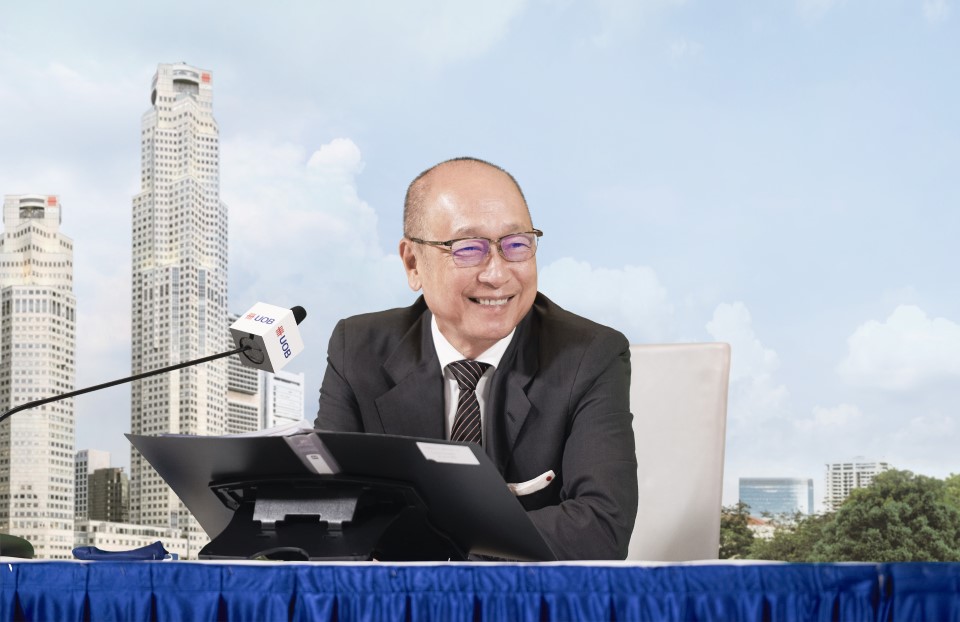
UOB chief executive Wee Ee Cheong has made one of the biggest calls of his career with the Citi acquisition.
DBS had a record year and was in most respects exceptional, but its censure from the regulator for its digital outage weighs against it this year.
How can Credit Suisse win best investment bank when it wasn’t on the Grab/Altimeter Capital deSpac, by far the biggest deal in the city state? That may have been a defining transaction and a record-breaker, but it was also a good deal to miss.
It had governance problems from the outset and has so far lost about 80% of shareholders’ money. Missing that didn’t hurt the Swiss bank, nor did being on it bolster JPMorgan or Morgan Stanley particularly.
Characteristically, Credit Suisse was everywhere else, sometimes visibly, sometimes not. In M&A, you could hardly move without finding it. It advised on the complex strategic review and sale process for SPH, involving the demerger of the newspaper and media business and its sale to the Cuscaden consortium.
Credit Suisse was one of the advising banks responsible for getting Sembcorp Marine to merge with Keppel Offshore & Marine, two Temasek companies that should have been merged about 20 years ago but whose differences had until now made the marriage impossible to consummate.
Credit Suisse was chosen by UOB to advise on its acquisition of Citi’s consumer businesses in Singapore and across southeast Asia; advised PSA on the acquisition of BDP; helped Olam with the sale of a minority stake in Olam Agri to Salic; and was part of a landmark cross-border take-private transaction by Founders and CVC that would take a feature to explain its complexity. There were plenty more besides.
Outside of M&A, the bank was on two IPOs, for TDCX in New York and DaiwaHouse Logistics Trust in Singapore and handled the first ever SGX Spac IPO for VTAC.
A key debt deal was a senior and tier-2 bond offering for UOB. As usual it was finding the angles and the twists for clients. Edwin Low taking over as chief executive of southeast Asia is also a good move, and the internal promotions of long-serving experts – Kuan-Ern Tan to southeast Asia and frontier markets co-head, Angeline Aw to head of Singapore coverage – speaks to strength in depth.

|
SRI LANKA |
[index] |
|
Best Bank: National Development Bank |
||
|
Best Investment Bank: NDB Investment Bank |
||
We are used to seeing National Development Bank win in our investment banking category – and it does so again – but this year it stood out as a bank overall.
Sri Lanka is, of course, in considerable straits as a nation right now. One of the knock-on effects of unrest on the streets is that it makes digital offerings more essential and safer for those who might otherwise have to go to the branch to get things done.
NDB Neos is one of the most popular mobile apps in the industry and went from strength to strength in 2021, with the value of transactions through the app up 196% year on year. Its new NDB Zee Youth Account is well-placed.
The bank is also supported in difficult times by the efforts it has put into its risk-management framework in recent years. These – perhaps through foresight rather than luck – have included some measures that have today become essential: effective management of foreign currency liquidity positions, enhanced cybersecurity risk management, clearly defined risk appetite limits, and better environmental, social and governance monitoring.
Beyond all this, the bank just performed well across the board during our review period: retail, small and medium-sized enterprise, wholesale, project and infrastructure financing. The last of these perhaps stood out, achieving 16% growth, with a non-performing loan ratio of only 0.3%. Bank-wide, profit after tax was up 15% year on year to SLR6.36 billion ($18 million), while return on equity stands at 12.27%.
There are no surprises on Sri Lanka’s best investment bank: NDB Capital Group remains the largest and leading full-service investment banking cluster in Sri Lanka, and its investment banking arm – NDB Investment Bank – leads the field. In 2021, it handled SLR75 billion of capital-market transactions, covering more than 50 deals, both records for the bank and the country. The revenue NDBIB gleaned from all this, at SLR393 million, was up 267% year on year at a return on equity of 30.2%. You don’t see numbers like that anywhere else.
The deals in question included five public equity offerings, among them a secondary public offering (Sri Lanka’s first for a decade) for SDB Bank, as well as the first enterprise software company to list in Sri Lanka. M&A highlights included the divestiture of the listed renewable energy player Panasian Power, and in debt markets the bank spearheaded the reprofiling of LOCL Group’s debt position, including several public and private bonds.

|
TAIWAN |
[index] |
|
Best Bank: CTBC Bank |
||
|
Best Investment Bank: Goldman Sachs |
||
No one could hold a candle to CTBC Bank in Taiwan this year. The firm is the island’s largest domestic lender as measured by assets, revenues and earnings. It posted net income of NT$29.8 billion ($1.01 billion) in 2021, up 9% on an annualised basis – beating all of its main rivals. Its loan book expanded 10.8% over the calendar year, thanks to strong activity across corporate loans, mortgages and unsecured consumer loans.
A good year in wealth management helped it to post a 9.2% year-on-year rise in fee income. It posted a post-tax return on its equity of 9.47% and on its assets of 0.63%, with net revenues up 6%. The bank has strong foundations, with a tier-1 capital adequacy ratio at the end of 2021 of 11.5%.
Perhaps the most notable feature of a year peppered with a surprisingly large number of onshore financial services M&A deals was the sight of the Taipei-based lender raising its stake in Thailand’s LH Financial to 46.6% from 36.6%, a move that also enabled it to secure more than half the seats on the group’s board of directors. It now has 375 branches in 14 countries and regions – including 108 in Thailand alone – with a notable focus on key growth markets in southeast Asia. Every year, Taiwan’s best banks only get bigger, at home and abroad.
Taiwan isn’t a hotbed of digital financial innovation, but CTBC more than holds its own. Of its 10.14 million retail customers, well over half are predominantly digitally active. In the past year, it unveiled a new AI-powered wealth management dashboard that gives private bankers and relationship managers a clearer picture of client portfolios.
CTBC was also highly active in capital markets. Its syndicate desk had a knockout year. It completed 35 deals as mandated lead arranger, including the $640 million leveraged buyout of contact lens-maker Ginko International by Glamor Vision. It shone in the sustainability space too, its syndicate desk working hard to raise capital for two big new offshore wind projects, Greater Changhua South East (NT$82 billion) and ZhongNeng (NT$45 billion).
Goldman Sachs had its fingerprints on every big and innovative deal that mattered in Taiwan this year. In M&A, the bank ranked first among investment banks overall, completing $3.14 billion-worth of deals. It led the way among foreign lenders in debt capital markets too, completing four big deals worth a shade over $3 billion in total. Last year, the bank generated $30 million in investment banking fees – double the amount earned by the second-placed firm – according to Dealogic.
Taiwan’s capital markets are not broad, but it has a handful of global-facing corporates that tap them on a regular basis. When they do, they often turn to Goldman. It helped semiconductor giant TSMC raise $4.5 billion via an SEC-registered bond in October 2021 – the largest print by a Taiwan corporate – and $3.5 billion via a 144a/RegS debt offering in April. Goldman was sole global coordinator on both, and Frank Chen, managing director at the bank in Taipei, reckons it can claim credit for 80% of total economics on each transaction.
The US bank was sole books on TSMC’s $1 billion 30-year formosa bond in September 2021. It also advised on Qatar Petroleum’s $12.5 billion print in June, an offering that marked the largest-ever corporate formosa bond issuance.
The local special purpose acquisition company market never truly got going, but the bank was on hand to help AI specialist Perfect Corp go public via a $1 billion merger with Provident Acquisition. The de-Spac was anchored by capital from a host of luxury goods names, including Chanel and Shiseido.
In an unusually strong year for onshore financial-services M&A, Goldman was the exclusive financial adviser to China Development Financial Holding’s $2.8 billion acquisition of a 52.7% stake in China Life Insurance (Taiwan). It was exclusive financial adviser to Prudential Financial on the $187 million sale of its domestic business to Taishin Financial Holding in June 2021.
The latter marked the first cross-border Taiwan FIG-sector deal since the start of the Covid crisis, but Chen thinks the M&A market will get a big boost as borders reopen.
“Travel is becoming manageable now, and we are seeing a big pick-up in activity in Taiwan M&A conversations,” he says. “CEOs are on the road again looking at assets, so we anticipate deal flow getting back to 2019 levels.”

|
THAILAND |
[index] |
|
Best Bank: Kasikornbank |
||
|
Best Investment Bank: Morgan Stanley |
||
Kasikornbank wrests the award away from Siam Commercial this year with an excellent set of numbers. Its net profit figure, up 29% year on year at Bt38.1 billion ($1.12 billion, led the industry, as did its net interest margin at 3.22%, while it beat SCB on gross loans and non-performing loans (3.76%) and matched it on return on equity (8.3%).
Part of the reason for these numbers is digital progress, underpinned by the K Plus mobile banking app that hit a customer base of 17.7 million users by the end of 2021. Upon this foundation has been built a range of new features, among them an open-banking platform, the appearance of credit products, and various user-friendly features.
The Blue Connect wallet links the bank to all PTT gas stations – truly ubiquitous in Thailand – and Café Amazon branches. And the bank has founded Kubix, a new company dedicated to digital assets, the first in Thailand to be given permission to operate an initial coin offering (ICO) portal.
In a category that tends to alternate between Morgan Stanley and UBS – among the friendlier rivalries, with lead bankers at each admiring the other – the US bank had the more defining set of transactions this year.
One of the more interesting deals in our review period was Ares SSG’s sale of a 50% interest in G Steel Group, the largest flat steel producer in Thailand, to Nippon Steel. Morgan Stanley’s strength in Japan was helpful here, and the result was a strong outcome for all involved. Morgan Stanley advised Ares.
Capital markets highlights included a successful overnight block trade in Krungthai Card, a joint global coordinator role on the Ngern Tid Lor SET IPO, and a sole global coordinator role on a $1 billion tier-2 sub debt notes offering for Bangkok Bank.

|
VIETNAM |
[index] |
|
Best Bank: Techcombank |
||
|
Best Investment Bank: Credit Suisse |
||
Chief executive Jens Lottner is leading Techcombank from strength to strength as Vietnam begins to recover from Covid restrictions.
The bank grew profit before tax by 47.1% year on year in 2021 to $1 billion, a new record for a private bank in Vietnam, and followed it up with 23% year-on-year growth in the first quarter of 2022. Techcombank is among the leaders in digital, data and customer service quality, all of which have helped during difficult times.
Covid occupied much of the year, with the bank rescheduling $513 million of loans in 2020/21 and granting $23.5 million of interest reductions and waivers. The result was a lot of potentially troubled borrowers instead exiting the programme without penalty, leading to a dramatic drop in outstanding reschedule loans; today the non-performing loan ratio stands at just 0.7%, among the lowest in the industry.
In these vexed times it is encouraging to find a bank that is growing in headcount. It hired 4,375 new employees in 2021, 700 of them in tech, and emphasized training for all of them.
The bank’s $17.4 million contribution for community support, including hospital construction and provision of medical equipment, should not be overlooked.
Vietnam’s best investment bank was one of the easier awards to decide. Whichever way you sliced the data, Credit Suisse was the leader for M&A, equity capital markets and for financing during our review period. It handled 14 deals in a year when nobody else handled more than eight.
As is often the way in Vietnam, a handful of issuers or buyers dominated the year, none more so than longtime Credit Suisse client Masan Group.
In December 2021, Masan announced a $350 million investment into its integrated consumer retail subsidiary, The CrownX, by a consortium of investors including TPG, Adia and Temasek subsidiary SeaTown. This concluded an eight-month period in which Masan had sold chunks of the same business to Alibaba and SK Group, sold its feed-related business to De Heus, and sold a stake in VinCommerce, also to SK Group. All told, the five deals netted $2.2 billion and Credit Suisse was the sole financial adviser to Masan on all of them.
Elsewhere, Credit Suisse scored M&A advisory roles for Bitexco Power and VP Bank, handled syndicated loans and a sustainable exchangeable bond for Vingroup, led a block trade of Vietcombank shares, an exchangeable for Novaland and loans for FE Credit and BIM Land.