
Jump To
The past 12 months have been among the most challenging in the history of foreign exchange. The global pandemic saw the markets tackle a surge in volatility, the disruption of remote working and the consequent rise of electronic and algorithmic trading.
Negotiating this environment does not seem to have fazed JPMorgan, which again tops the overall market ranking in our FX survey this year. UBS is again ranked second and Deutsche Bank moves up the ranking from fourth last year to third in 2021.
The overall top six is completed by fourth-ranked XTX Markets, which falls one place from last year, Citi, which maintains last year’s fifth position, and Jump Trading, which moves up from seventh to sixth.
Outside the top 20, the big movers are Flow Traders (up from 46th in 2020 to 26th), Jane Street Capital (74th to 29th) and Solid, which rose from 97th to 41st. IndusInd Bank made it into this year’s top 50, having been in 182nd place in 2020.
For Chi Nzelu, head of macro-ecommerce at top-ranked JPMorgan, availability of service has been a key consideration for FX customers since the early part of last year. The extremely low volatility that had existed in most FX markets since the 2008 global financial crisis suddenly reversed once the pandemic took hold.
There has been a significant push for greater transparency around risk transfer
Chi Nzelu, JPMorgan

“Larger clients – hedge funds, real money funds and to some extent banks – had to rely on services from their main providers and those whose systems were not designed to cope with sustained levels of heightened volatility had a lot of work on their hands,” he tells Euromoney.
Clients were looking for liquidity in FX options and non-deliverable forward (NDF) markets, primarily on single-dealer platforms, although there was also a pickup in activity on multi-dealer platforms. Algorithmic trading increased in importance and accounts for an increasing percentage of overall FX business from clients looking for pre and post-trade transparency.
Buy-side traders working largely from home had to cope with a significant increase in the number of trades to execute and turned to algos in order to focus on the more time consuming, less liquid and complex trades.
“There has also been a significant push for greater transparency around risk transfer, providing transaction cost analysis for clients that are not using algorithmic trading,” says Nzelu. “G7 market making has been relatively stable – the most interesting development there has been around margin compression and cost of execution.”
The way JPMorgan estimates its cost of liquidity and risk management has been refined over the past few years and the bank is confident that its platform is able to evolve in response to changing market demand.
“We are able to apply lessons learned in cash market making to NDFs or options, for example,” Nzelu explains. “We have also introduced a number of execution algorithms over the last 12 months, including increasingly adaptive algos.” These are algorithms that can be programmed to reactivate themselves once markets have stabilized.
There have been changes around how real money funds and hedge funds execute, but this appears to be more of a global trend based on preference for using either single-dealer or multi-dealer platforms and the need for transaction cost analysis, adds Nzelu, who says the bank’s focus remains on its single-dealer platform.
Automated trading is key in satisfying a large, diverse client base with different individual objectives, Nzelu explains. “Building an automated trading business has been a long-term commitment and will continue to be a focus of investment for us,” he says. “Ultimately we aim to be available in every service on every platform in every region where it is commercially viable.”
Electronic trading
Several major FX banks introduced enhancements to their electronic trading platforms over the past 12 months in order to make them more attractive to traders working away from their offices.
In March, BNP Paribas announced that ALiX (its FX digital trading assistant launched in September 2019 for algos only) was available for spot, forwards, swaps, options and orders, while Barclays introduced BARX Book for FX, which gives corporate and institutional clients access to principal liquidity streams and an increased number of external liquidity providers.
Standard Chartered enabled auto-risk management in the fourth quarter of 2020 and said it was working to develop this for Asian non-deliverable forwards with progressive expansion in currency pair coverage and client coverage.
Second-ranked UBS closed the market share gap with rival JPMorgan this year thanks to a strong performance in the spot/forward outrights segment and electronic trading. Non-financial corporates were particularly attracted to UBS’s proposition and its share of this market increased almost fivefold to propel it to fifth position overall. The Swiss bank also did well in emerging markets, jumping from sixth to third and only 0.41 percentage points behind second-placed Deutsche Bank.
Last year provided certain challenges in the market around disruptive, volatile episodes in the early months of the year
Hans Ephraimson, Deutsche Bank

The latter moved from 10th to fourth in the non-financial corporates segment and had a significantly increased market share in Asia.
“It is difficult to make material headway in the overall ranking, but I would say that last year provided certain challenges in the market around disruptive, volatile episodes in the early months of the year followed by rather benign market conditions,” says Deutsche Bank’s managing director and head of FX sales, Hans Ephraimson.
“The client base that we cover expects that, in those types of markets, we are always available to trade on whatever risk they need to trade,” he adds. “Disruption in Asia was probably more acute than in the other regions and we were functional and operational during that period of time. Clients came to us with their market risk and we were consistently there. I think that is where we picked up market share.”
According to Ephraimson, this approach was also a factor in the bank’s share of non-financial corporate business increasing by almost 150% from 2020.
“We have had consistent messaging in terms of coverage,” he says. “The most important thing for us is to put product, risk pricing and content in front of these institutions at the times when they need to trade risk; and that is most crucial when they have the most risk to trade, which tends to be in a disruptive market.”
Ephraimson reflects that events that create disruptive markets typically last for a short period of time – anything from 24 hours to a few weeks – whereas the pandemic has gone on, ebbing and flowing in different parts of the world.
“The pace of change is by default normalized and your operating model is mostly in crisis mode,” he says. “Clients are trying to evaluate the risk they have and what they need to do and the types of insight we provide them is different from what we would provide in a normal market. We need to look at how new information falls into clients’ risk modelling, especially in the corporate space where you are talking about cross-border multinational clients.”
He reckons Deutsche Bank did a good job of giving clients the information they needed to help them make risk decisions, as well as being there with consistent risk pricing.
“In terms of operation structures, I don’t think we have changed anything fundamentally over the last 12 months. But it would be remiss of me to say we haven’t learned how to improve on what was already a pretty good infrastructure and operating environment,” says Ephraimson.
One of the most interesting developments at fifth-ranked Citi over the last 12 months has been its move away from multi-dealer platforms, reflecting a trend highlighted in the Bank of England’s London foreign exchange joint standing committee semi-annual foreign exchange turnover survey for April 2020. This found that the average daily volume of spot transactions conducted on multi-dealer platforms fell sharply from 28% of the market to just 10%.
It should come as no surprise to learn that many banks are taking a hard look at how they interact with their clients. Many have deided that only those platforms that have invested in areas such as code compliance and contingency planning are good enough to represent the access point
Value of service
At the start of the year Euromoney looked at how the coronavirus crisis had accelerated the evolution of market trends.
The days when large banks were the only institutions capable of delivering tier-one liquidity to the market are long gone. In many cases, the technology and pricing that non-bank market makers use and the risk parameters they have in place are on par with the largest financial institutions.
The extreme market dislocation that occurred in March and April 2020 caused many of the traditional liquidity providers to reassess their business and operating models and be more selective when providing liquidity.
However, this has not translated into increased market share in this year’s survey. XTX Markets dropped a place in the overall rankings this year and saw its market share drop behind that of Deutsche Bank. And although Jump Trading improved its performance, its combined market share was lower than last year.
If someone had suggested even a decade ago that the leading custody banks would be among the leading sell-side providers and that they would become increasingly important to an FX client’s wallet by 2020, few would have taken them seriously.
That is the view of Jason Vitale, global head of FX at BNY Mellon, which stands at 13th in the overall rankings, up from 15th last year.
Clients are looking for front-to-back outsourced solutions to be increasingly electronic and integrated
Jason Vitale, BNY Mellon

“We are now major providers to the overall FX market, particularly in our sweet spot with asset managers,” he says. “There has been a shift over the last three to four years. Previously, clients primarily cared about liquidity provision and price. Now those are a given and their focus is on the value of service, as well as innovative, creative solutions to address their investment challenges.”
He sees the role of custody banks as outsourced providers to a large extent, helping clients navigate the full lifecycle of the investment process. In addition to liquidity provision, custody banks can now help clients access security markets, provide transparent hedging programmes and manage payments and receivables.
Access to a rules-based menu of execution options is important to managers, as is pricing flexibility in terms of rate sources, execution times and methodology that allows them to meet intended investment objectives and benchmarks.
As Ed McGann, global head of FX program and platform sales at BNY Mellon told Euromoney earlier this year, being able to provide measurement of execution quality includes price information, market characteristics and any market impact from the execution.
BNY Mellon is ranked ninth for disclosed volume. “For us the disclosed ranking is especially important as these are our full-service, sell-side peers,” says Vitale, who is also proud of the fact that the bank secured the number one ranking for overall service this year, swapping places with last year’s category winner State Street.
Vitale points to BNY Mellon’s continued service enhancements as clients increasingly look for their counterparties to help provide integrated solutions. He also believes the industry is entering a new phase of electronification. “Clients are looking for front-to-back outsourced solutions to be increasingly electronic and integrated into the full execution lifecycle,” he says.
The bank also sees the need for providers to deploy electronic services in security execution, automated hedging programmes and payment capabilities.
Vitale suggests clients have begun to reevaluate the way they assess their counterparties based on what additional value they can provide to help drive efficiencies.
“Prior to last year, a counterparty review meeting with a client would have seen us both bring out our data and compare hit ratios to a fair degree of granularity,” he says. “Now they are more conscious of breadth and quality of service – factors such as product innovation, onboarding and research are increasingly important. Clients ultimately want a smaller set of counterparties to provide a more robust, transparent and scalable service.”
According to Fabio Madar, global head of FX sales and structuring at NatWest Markets, one of the most important trends in the wider FX market over the past 12 months has been reduced confidence in the forecasting of currency exposures for corporates.
“Corporates have typically used forwards for the bulk of their forecasted exposures, as they are perceived as a safe option with the best accounting treatment,” he explains. “However, the coronavirus crisis caused a complete change in exposure for many clients, some of whom would have gone from a huge level of exposure to nothing and also lost their netting opportunities.”
The coronavirus crisis caused a complete change in exposure for many clients
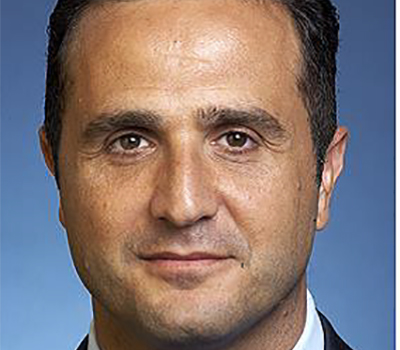
Fabio Madar, NatWest Markets
These firms have been forced to consider how much of their forecasted exposure is likely to materialize over the next six or 12 months.
“The number-one principle of risk management is identifying what could bring a business down,” says Madar. “Having a large hedging programme that becomes disconnected from the reality of the exposure could wipe out all the equity in a business. An added challenge is the gap between the company’s actual exposure and what its accounting system is telling them.”
He suggests that as many as 90% of accounting systems are not producing accurate or timely results and says the bank asks clients whether they have modelled revenues falling to zero for a period of time or falling by 75% when costs have only gone down by 50%. In many cases its recommended solution is a combination of long options.
Last October, NatWest Markets recruited Andy Kaufmann as head of foreign exchange structuring.
“Our FX structuring business has grown significantly – we now have names that are recognized across the structuring sector,” says Madar. “It is important to have a strong structuring capacity as together with strategy/research it is the ‘brains’ behind the products. It serves every part of our business internally and externally, but, more specifically, it helps us excel in our mid-cap business.”
Another important part of NatWest Markets’ growth strategy is the insourcing of FX trading thanks to the prime brokerage infrastructure.
“We offer operations, valuation, margin management and multi-bank execution to financial institutions that are too small to install and maintain infrastructure around trading,” adds Madar. “As the very large trading banks become even bigger, small banks still need innovative and cost-saving solutions such as ours to find a way to execute FX for their end clients.”
Newcomers
Outsourced FX trading providers have reported increased interest in their services from a wider variety of clients over the past 12 months as fee pressures and coronavirus restrictions impact fund managers’ operating models.
One of the most interesting newcomers in this year’s survey is Moscow Exchange (MOEX), which was ranked sixth overall in the multi-dealer platform category with a market share of 4.9%, despite having not featured in last year’s survey.
According to Dmitry Piskulov, the exchange’s director of international projects FX market, this was a real-time demonstration of how technology improves markets, as multi-dealer platforms not only enable trades between various counterparties but also offer pricing from multiple liquidity sources at once.
“FX traders want maximized access, flexible options for better execution and the ability to see a trade all the way through to clearing in a single place,” he says. “They are also seeking increased liquidity.”
Some FX venues have responded to demands for better execution by reducing minimum ticket sizes. In contrast, MOEX opted to offer separate order books and has also expanded and enhanced its over-the-counter clearing service.
“Over the past year, changing market dynamics have continued the momentum behind international FX venues providing matching services 24 hours a day, a trend that was arguably driven further and faster by the acceleration of many firms’ digital transformations in response to the emergence of Covid-19 and the resulting shift to remote work,” says Piskulov.
“Our decision to extend trading hours helps mitigate regional disparities, which in turn meets growing demand for rouble instruments among investors from southeast Asia, primarily China, India, Singapore and Hong Kong,” he concludes.
The short-dated decision
Euromoney has been tracking the evolution of FX trading in its annual survey for the last 43 years. A lot has changed over that time – including the methodology.
Since 2018, the overall ranking has been calculated on market volume excluding short-dated swaps. We do, however, also publish separate results with short-dated swaps volume included. This ranking has Deutsche Bank just ahead of JPMorgan with UBS filling third position.
The decision to exclude swaps with a tenor of less than one week from the calculation of the headline ranking was taken following a major engagement process with stakeholders and independent experts.
The consensus view was that – to take ‘tom-next’ as an example, where a currency is simultaneously bought and sold over two separate business days – it is commonplace for certain clients to continue to roll their position every day over a specific period of time. In this scenario every roll equates to twice the original trade and thus artificially inflates volume.
Some disagree with this methodology, arguing that basing the rankings on total market volume is a cleaner and more consistent approach. They say that there is an issue with all swaps transactions since they represent risk positions of clients that need to roll those positions for whatever reason from one value date to another.
However, the view of the majority of the liquidity providers we spoke to when this decision was made (including some that have sizeable short-dated swaps books) was that these swaps should not be included when determining the overall market share rankings.