More bank mergers and digital lenders are the order of the day in Saudi Arabia, as the Kingdom seeks to transform itself into a developed financial economy by 2030.
In October, a $15 billion merger brought together National Commercial Bank (NCB), the country’s largest lender by assets, with local rival Samba Financial Group.
The new organization, renamed Saudi National Bank (SNB) on April 1 and headed by chief executive Saeed Al-Ghamdi, is the Kingdom’s largest bank by assets and market capitalization.
It posted a net profit of SR2.07 billion ($552 million) in 2020, down 32% on an annualized basis in a Covid-impaired year.
Analysts and bankers tip the move to usher in a long-awaited cycle of consolidation in a big, but for too long, sleepy and overbanked market.
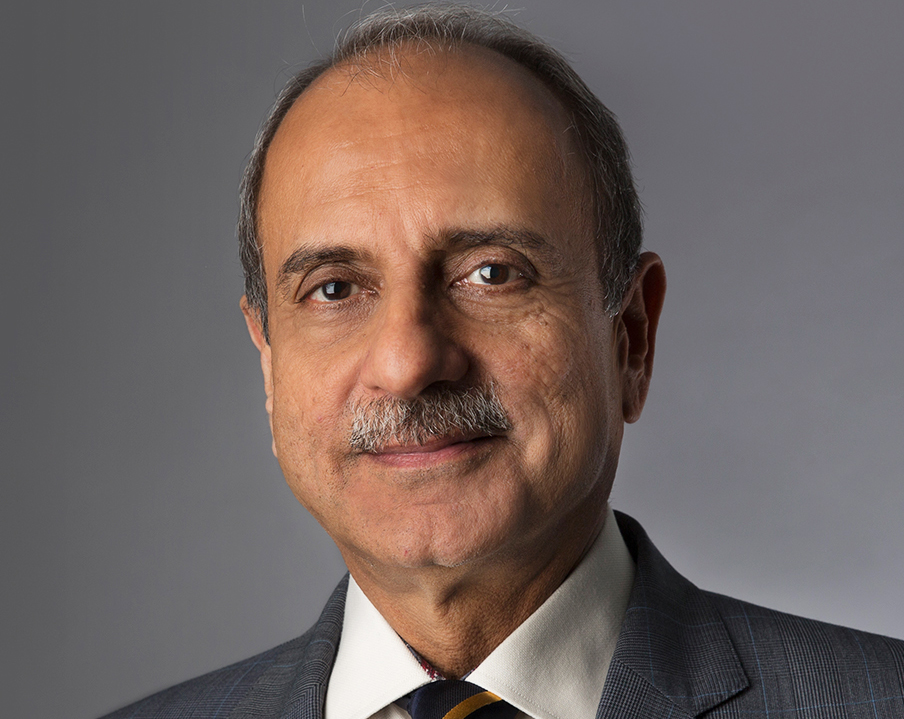
“My feeling is this is not the end of the process,” says Asad Ahmed, head of Middle East financial services at global professional services firm Alvarez & Marsal (A&M). “We are likely to see more mergers.”
That would seem to be inevitable and even desirable, rather than just likely.
For one thing, Saudi Arabia is overbanked. Not egregiously so, but 30 formal lending institutions – including local and foreign-licensed institutions – serving a population of around 35 million, is probably rather too many.
The biggest banks, including SNB and the second and third largest by assets, Al Rajhi Bank and Riyad Bank respectively, are well-run outfits.
Last year, Al Rajhi – the world’s largest Islamic bank by assets and a leader in real-estate financing – won Euromoney’s award for best bank in the Middle East, with Riyad Bank being recognized as best for SMEs.
Vision 2030
While worthy winners, both will be wary of SNB’s additional heft, and conscious of the desire of Crown Prince Mohammed bin Salman, architect of Vision 2030, to diversify away from oil and create a dynamic and innovative financial sector.
At the time the merger was announced, it created the region’s third-largest lender by assets, behind Qatar National Bank and First Abu Dhabi Bank.
However, this is likely to be just the start of a race for scale. In March, analysts at S&P said the deal would “sharply change the landscape in corporate lending” in the Kingdom, given SNB’s strength in that key area.
The banking sector is essential to making Vision 2030 a reality. Regulators know the plan hinges on massively boosting pan-national lending to small business, expanding home lending and project finance, and fostering onshore digital innovation.
On Wednesday, the Saudi Central Bank issued digital banking licences to two firms, as it pushes ahead with plans to expand the use of financial technology.
Saudi Telecom’s digital wallet division, STC Pay, will be converted into a digital bank with paid-up capital of SR2.5 billion, and renamed STC Bank. The other, owned by local conglomerate Abdul Rahman bin Saad Al-Rashed & Sons, will be called Saudi Digital Bank, with capital of SR1.5 billion.
Bankers believe the next big domestic merger is imminent
However, the country also needs banks with bulkier balance sheets that can help issuers to tap capital markets.
Foreign institutions – such as HSBC, which owns 51% of HSBC Saudi Arabia and 31% of Riyadh-based Saudi British Bank (SABB) – can help, but regulators know financial expertise must also be fostered at home.
Bankers believe the next big domestic merger is imminent. SABB and Alawwal are probably content sleeping off their $6.16 billion merger, announced in 2018 and completed in March 2021, but others are likely in play.
“I’d point to Riyad Bank and Banque Saudi Fransi,” reckons a Dubai-based investment banker.
Saudi Fransi is a well-run outfit whose shareholders include The Vanguard Group and BlackRock. Crédit Agricole sold its remaining 4% stake in it to two government-related institutional investors in September 2020, for SR1.45 billion.
However, the banker adds: “With the [SNB] merger, any potential new entity will have to try much harder, particularly in the corporate lending space.”
Riyad Bank was widely expected to join forces with NCB, before both sides called off a planned merger in late 2019.
Two factors
Consolidation will be propelled by two factors, reckons A&M’s Ahmed.
“The first is common ownership where the owners want to align, and the second is economic,” he says.
In SNB’s case, both factors were in play. The Public Investment Fund, the Kingdom’s sovereign wealth fund, was a leading shareholder in Samba and NCB. Post-merger, it owns 37.23% of Saudi National Bank.
As to the second point, Ahmed says a confluence of dynamics will continue to drive deal activity.
“Low oil prices and Covid mean economic activity hasn’t been strong in recent years, so it won’t be easy [for banks] to grow organically,” he says. “That would suggest a push toward M&A-led expansion.
“It’s fair to say that in five years’ time, there will be fewer larger banks than there are today.”