It is the second week of January and Café Bateel, located in the heart of Dubai’s financial district, is quietly buzzing.
Dressed-down bankers and investors, favouring a Miami Vice look heavy on pastel-coloured suit jackets and Jack Wills T-shirts, recline in wicker chairs, enjoying a coffee and occasional cigarette.
It is hot and sunny – the midday mercury hovers around 25°C – and while Europe navigates a second lockdown, Asia a bumpy return to growth and the US a (hopefully peaceful) transition of presidential power, the Middle East’s main financial hub is most definitely open for business.
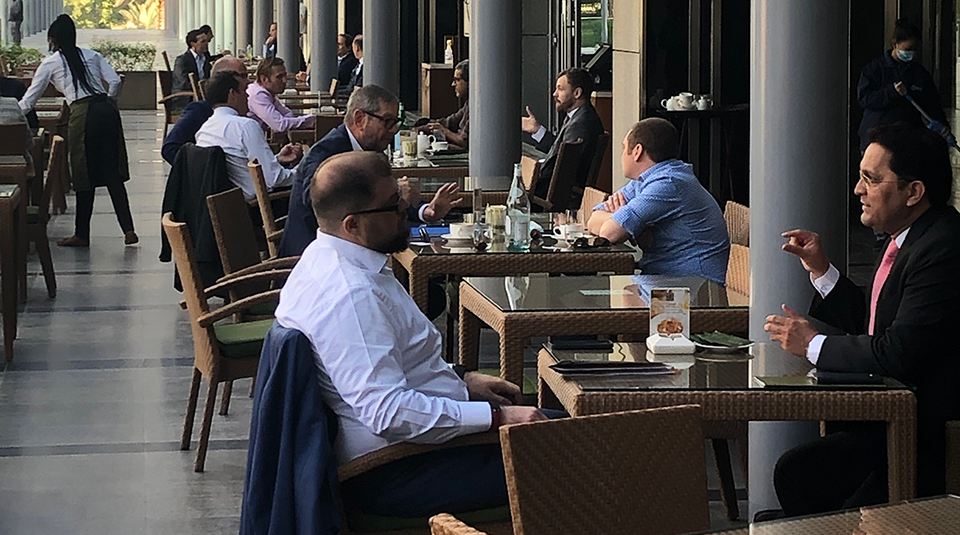
“Yesterday, I had three meetings with clients who are not Dubai-based,” says a regional head of investment banking over a morning coffee at Bateel. Two flew in from London, the other from Lagos.
There were other meetings, he adds: internal ones with colleagues who jetted in from various parts of Europe to soak up some winter rays.
Normality is a way off yet. On a scale of one to 10, the buzz in Bateel is about a six. Half the tables are empty, rising to two-thirds in the adjoining branches of Caffè Nero and Costa Coffee.
A year ago, the long terrace facing the grand Gate Building and a short walk from the soaring Burj Khalifa would have thrummed with gossip about upcoming deals. Later in the evening, talk would reconvene over sashimi at Zuma or pasta at Cipriani.
There is a sense of ease and hope you do not find elsewhere
Then Covid struck, lockdowns hit, and income from business and leisure travel plunged. The Central Bank of the United Arab Emirates reckons GDP probably shrank 6% in 2020. Saudi Arabia’s economy contracted for a fifth straight quarter in the three months to the end of September, hit by the pandemic and low oil prices.
Even so, there is a sense of ease and hope you do not find elsewhere.
In the final week of December, the arrivals board at Dubai International Airport was filled with flights from London, Paris and Moscow. Hotel occupancy rates soared.
It was surely no coincidence they arrived just as local travel restrictions were eased. Temperature checks at the doors of malls, hotels and office buildings – ever-present since March – were removed.
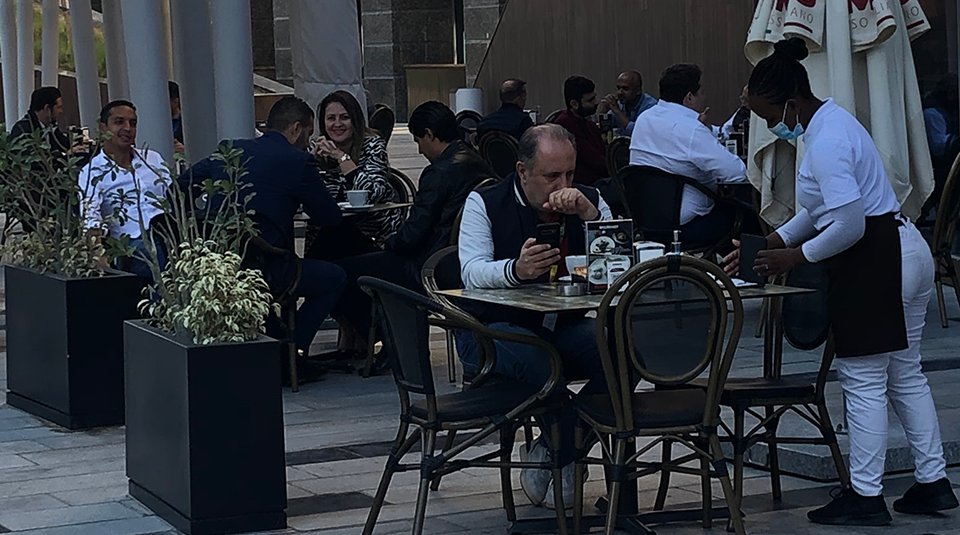
Suddenly, face-to-face meetings – without masks – were possible.
“It’s the first meeting I’ve had with a real person since March,” a banker effused over coffee in Emaar Square.
Another mulls the decision to lift restrictions almost overnight.
He notes: “It’s almost like the authorities had a well-designed plan to benefit from the end-of-year break to attract a lot of business. The government message about vaccines is clear and precise, and designed to instil confidence.”
Relocation
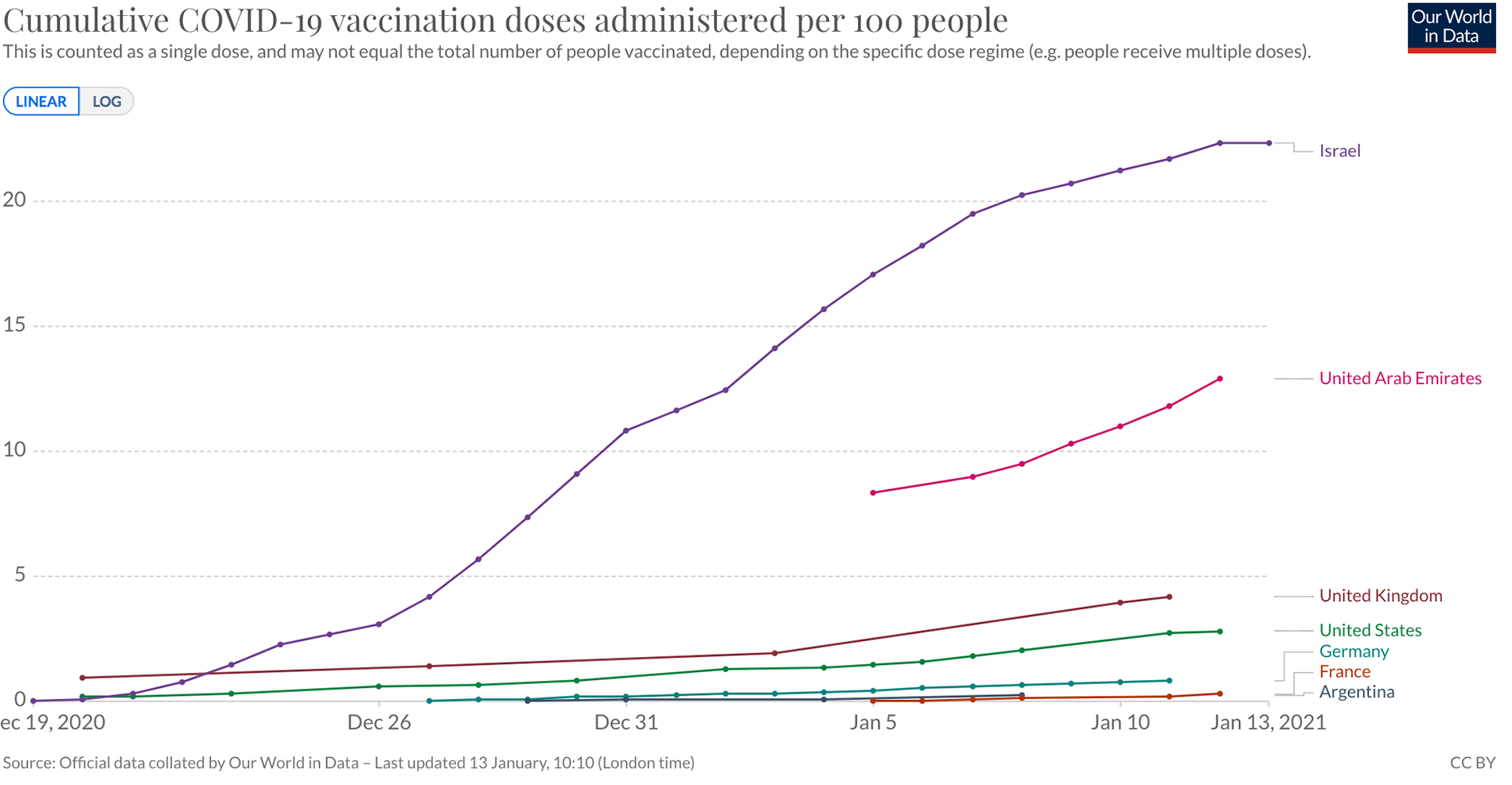
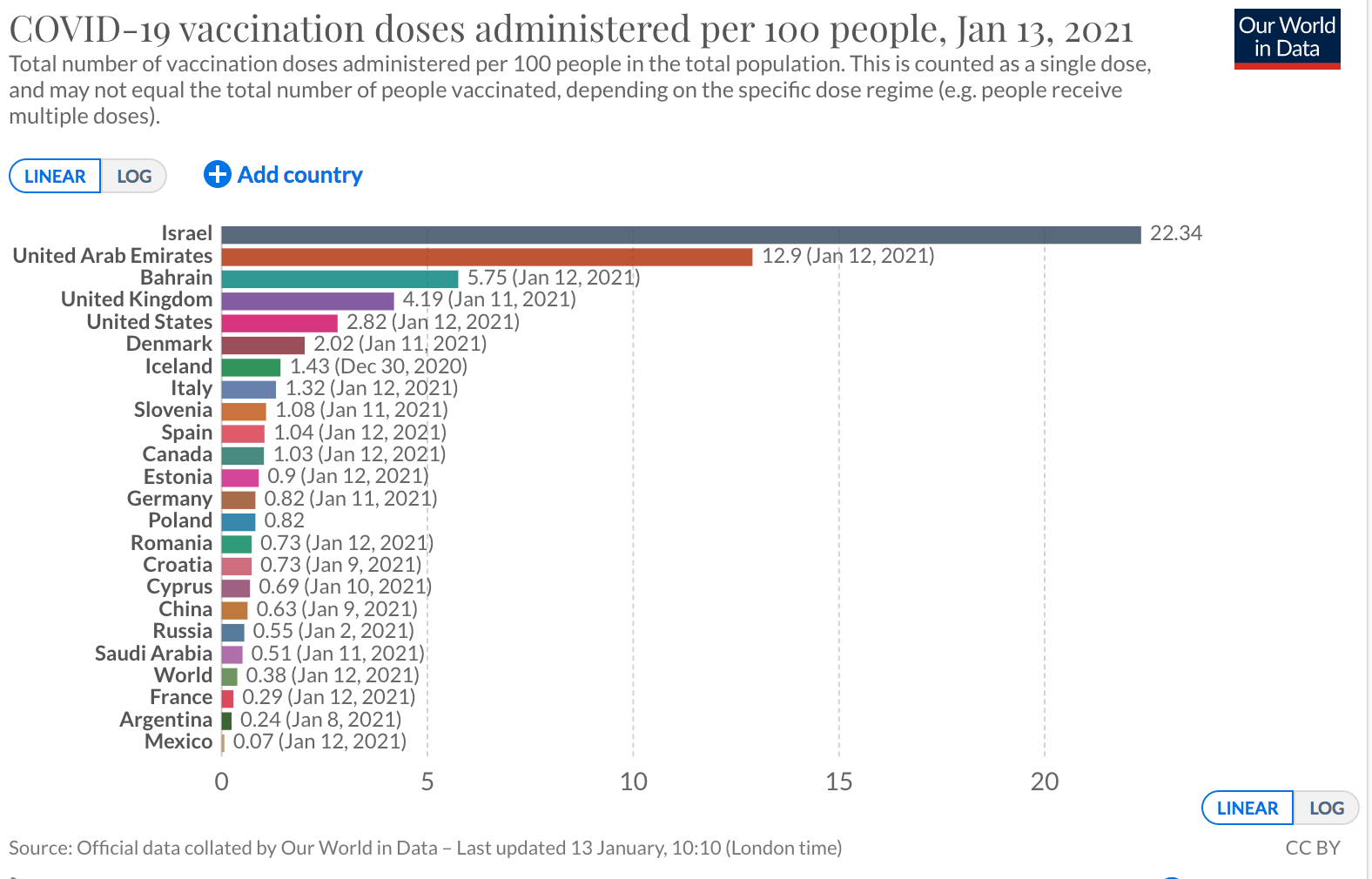
According to Our World in Data, 12.9% of the UAE’s citizens were vaccinated as of Tuesday, ahead of Bahrain and the UK, and second only to Israel.
“The place is moving again,” he adds. “The reality is a lot of people who came for two weeks at the end of December stayed for three. Some will be tempted to move here. Opening Dubai up now was a smart move with positive long-term implications.”
The regional head of a European private bank points to the number of family offices now looking to relocate to Dubai.
“There’s a new one each day,” he says. “They’re coming from Africa, Egypt, the Indian subcontinent,” he says. “The key factor is infrastructure, along with safety and security, connectivity, food, lifestyle and the weather – at least until the heat gets unbearable.
“These are families who would have been based at home – in Mumbai or Cairo – and now want one leg based outside. They find Dubai more attractive.”
There is no guarantee its new openness will not blow up in Dubai’s face. The emirate recorded 3,243 new cases of Covid on Tuesday, a daily record high. The UK, a key source of leisure and business travellers, reacted by taking the UAE off its list of safe travel corridors, forcing returnees to Britain to self-isolate for 10 days.
However, that must be offset by a number of positive factors. While Europe continues to stumble over its vaccination rollout, in the UAE and across much of the Gulf, doses are being administered at a record rate.
And there is more to look forward to. Bankers point – for once more in expectation than in hope – to a strong regional IPO pipeline in 2021, driven by activity in a number of sectors, including chemicals, energy and financial technology.
Beyond that, there is the belated Dubai Expo, slated to start in October 2021, followed by next year’s football World Cup in Qatar.
It may not feel like it, to anyone once again stuck working from home, but there is reason for hope in 2021, and it starts in Dubai.