Several years ago, two investment professionals were working in different family offices in Asia and each found himself facing the same challenge.
One, a Swiss Bain & Co alumnus called Mathias Imbach, was general manager at RNT Associates, the personal investment platform of Indian industrialist and philanthropist Ratan Tata.
The other, Gerald Goh, a Singaporean former investment consultant at Cambridge Associates with a focus on private investments, was the head of alternative assets for CrimsoNox Capital, a family office representing the interests of Thailand’s Yoovidhya family, which co-founded Red Bull.
Each of them had developed an interest in blockchain and cryptocurrencies, Imbach from something of a philosophical perspective and Goh from a more pragmatic one.
Both understood that to do their jobs properly for the family offices they represented they needed to look at investing in this space, either directly in cryptocurrencies or in using the blockchain as a more efficient method of conducting private investment.
It didn’t take either of them long to realize that the infrastructure required to invest with confidence simply didn’t exist in a way that one could trust family-office wealth to engage with.
The two had bumped into one another when Imbach was about two years into his study of the space and found common ground.
“He [Imbach] made a very impassioned plea for me to consider, on our family office side, finding a systemic, structured way to invest,” says Goh, “to support the growth of this emerging ecosystem.”
I got a bit scared about where things were going
Mathias Imbach
That was the genesis of Sygnum, whose website home page proudly calls it “the world’s first digital asset bank”, followed by the mission statement: ‘Founded on Swiss and Singapore heritage, Sygnum empowers its clients to invest in the digital asset economy with complete trust.’
It booked its first customers in Switzerland in September 2019, 20 days after being licensed as a bank and securities dealer there. It secured a capital markets services (CMS) licence – broadly a fund management licence – from the Monetary Authority of Singapore (MAS) the following month.
Ideas around crypto and blockchain come and go; Euromoney receives dozens of pitches every day, ranging from the visionary to the disreputable to the barking mad. But Sygnum stands out for three reasons.
The first is how much it looks like a mainstream bank: brokerage, custody and asset management. The second is the cast of characters who have invested in it and support it with the use of their names. These include former UBS group chief executive and Partners Group chairman Peter Wuffli, who is a director, along with a host of alumni of Government of Singapore Investment Corporation (GIC), the sovereign wealth fund.
And the third is that, in a space where most players run from the big regulators to more frontier-spirited jurisdictions, Sygnum insisted it would only get underway when regulated under existing financial codes by the Swiss Financial Market Supervisory Authority (Finma) and the MAS – two of the most highly regarded regulators in the world.
It was doing it the hard way. But that was the whole pitch.
Find the gap
“At the beginning nobody believed us – or 90% [didn’t],” says Imbach. “They said: ‘A, you will never get a banking licence, and B, why would you do this?’”
Imbach has a sharp mind, and his initial engagement with the world of crypto came out of worry.
Investing in technology companies around the world for Ratan Tata, he was early into Airbnb among others, and got an insight into the then-nascent field of data science and the monetization of personal data.
“My personal journey,” he says, “was that I got a bit scared about where things were going.”
But when the Ethereum whitepaper came out in 2013 (Ethereum itself launched in 2015), he began to see the more libertarian appeal of crypto’s possibilities.
“Not from an investment standpoint, but philosophically it was: ‘Oh, this is how we can take back control of our identity, of how we interact with each other.’” he says. “We can transfer originals from me to you without intermediaries. That was a powerful idea.”
He liked the idea of democratizing access to capital, not just for the family offices he was representing but also because of the sense it might lead to a better society – something that Tata, whose family has always put much of its wealth into a foundation, had always impressed upon him.
Folks that sit in the middle … extract a lot of the value for doing very little
Gerald Goh
Goh is the first to admit that Singaporeans are less given towards libertarian ideologies than the Swiss, but that didn’t stop him from seeing the practical applications of blockchain.
“Conceptually it resonated with me,” he says. “I thought about the application of the blockchain technology to disintermediate the financial intermediaries that existed between the issuer and investor.
“In private investment in particular, I saw the value that gets creamed off by people like placement agents, brokers, custodians, corporate secretaries, all the folks that sit in the middle of the issuer and investor. They could extract a lot of the value for doing very little, in my opinion.”
As a wave of initial coin offerings (ICOs) swept the world in 2017, Goh could see both the opportunity and the problem.
“It was fascinating to see that use case,” he says. “We can say what we want about the fact that the ICOs were completely unregulated in breach of securities laws, but the use case they gave us a glimpse into was quite fascinating. Private companies that could raise money without having to go through traditional intermediaries, without having to pay the piper in order to get access to investors.”
That was the positive. The negative followed shortly behind.
“There was a rude awakening when we saw [that] in a world without investor protection, you attract a lot of bad actors out of the woodwork to part people from their money.”
By now Imbach was frustrated by the gap between the potential and the reality.
“By 2017,” he says, “I realized this is all great, but it is detached from reality, in the sense that there are smart people, but they do not relate to anything that we have now: a financial infrastructure that works, regulatory frameworks, investor protection, anti-money laundering.”
So they decided to do it themselves but to embrace what everyone else in the space was shunning: regulation. Imbach developed a phrase for his thinking: “The future has heritage.”
What he meant by that was that in countries such as Singapore and Switzerland, with trusted regulators, a history of excellence in banking and established hubs of investors, there should be a real opportunity to build an institution so familiar to those norms that it could serve as a bridge between institutional clients and the world of digital assets the two men so admired – conceptually at least.
“Converting this mainstream awareness of blockchain and blockchain-based assets to mainstream adoption was impossible to achieve without working hand-in-glove with the regulators,” says Goh, “to give them comfort that it would not inadvertently, in the pursuit of innovation, destroy a lot of the financial regulation infrastructure that was put in place to protect investors.”
Goh continues: “The space was clearly lacking for regulated financial market infrastructure”, having experienced the frustrations first hand.
How could you find a regulated custodian bank for digital assets, for example? Or make sure proper anti-money laundering checks were conducted?
“These things that were lacking were preventing institutional participation.”
So they teamed up with two others. One was Luka Müller, who is now Sygnum’s chairman.
A founding partner of the Zurich and Zug-based law firm MME Legal Tax and Compliance, he is the legal brains of the operation, specializing in financial market regulation and technology with a focus on distributed-ledger protocols; he was involved in the setup of Ethereum.
The other was Manuel Krieger, the Switzerland chief executive from foundation until October 1, 2020, when he became a director. Another with a family-office background, he has also been head of multi-asset class portfolio management at Wegelin Asset Management.
Imbach will be group chief executive from January 1, 2021. Goh, now chief strategy officer, will become chief executive, Sygnum Singapore, on the same day.
“We could either wait for traditional financial institutions to come into the space,” says Goh, “or we could take a leap of faith and go and build it ourselves in some of the most trusted financial jurisdictions in the world.”
A regulatory dance
“Oh, man.”
Imbach has just been asked what it was like to try to seek regulation under existing banking codes in two of the world’s more exacting jurisdictions, in a field where the regulators themselves were still trying to form a position on crypto assets.
“I will be very honest,” he says. “Oftentimes I feel that, if you knew every morning when you woke up what you knew two years later, you may not have started.”
“There’s a distinction between the application process and living every day with the regulatory oversight,” adds Goh. “That, we didn’t comprehend. It is two things: persuading the regulators that we can be trusted with a licence; and then maintaining that confidence is a daily affair.”
It worked. Sygnum is not under some obscure licensing sideline but right under the same Finma jurisdiction as any bank in Switzerland.
“The strategy was that we didn’t need to bet on new laws to be passed,” says Goh. “It wouldn’t have been wise to do that. It was more about convincing the regulator that we would operate a banking and security dealer platform for digital assets under existing frameworks.”
The worst thing you can do to a regulator is surprise him
Peter Wuffli
This is clearly a differentiator. Many institutions exist that have tried to bring institutional standards to the crypto space. Euromoney profiled one, Bitmex in Hong Kong, last year. But to take that example, Bitmex is not regulated in Hong Kong but in the Seychelles, and our interview with founder Arthur Hayes was granted on the condition that regulation was off limits as a topic for discussion.
Others have gravitated to places such as Malta, Cyprus, Gibraltar and Estonia.
Getting the Swiss onside took some doing.
It helped that Sygnum’s founders had a disparate range of experience, particularly Müller’s legal background, and they built a core team with the right knowledge of regulation.
“We didn’t outsource the regulatory process to a ‘big four’ firm,” Imbach says. “We took some support on individual topics, but it was us facing the regulator. They always saw us, never some adviser. We wanted to be at the centre of credibility and knowhow, so the regulators could see that the people who are running this know what they’re talking about.”
But they needed partners too. One of the biggest challenges – or opportunities, depending on how you look at it – with digital assets is custody.
Much of the bad press around crypto revolves around fraud and theft. According to digital asset intelligence firm CipherTrace, $4.5 billion of cryptocurrency was stolen in 2019 and $1.4 billion in the first five months of 2020.
Exchanges including Mt Gox, Bitfinex and Japan’s Coincheck have all suffered theft.
Early on Sygnum partnered with majority state-owned telco Swisscom on the custody side. Clients’ private keys, without which they can’t access their digital assets, are held in secure banking infrastructure that Swisscom, which has its own cybersecurity division, helped them to develop.
“It is a state-controlled company and the largest banking infrastructure provider. That helps,” says Imbach. “Nobody knew us at that point, so it gave us the necessary credibility to go and talk to the regulator.”
Powerful friends
The other source of great assistance was the range of people Sygnum managed to persuade to invest in the bank and to serve either as advisers or directors.
In Switzerland, the most important of these is Wuffli, one of the biggest names in Swiss – and global – banking and finance. Wuffli is not only an adviser but a director, and his name has been essential in building both institutional and regulatory confidence in the whole idea.
Wuffli, speaking to Euromoney from Zurich, freely admits that he is a “low-tech person” who had never invested in bitcoin until he opened an account with Sygnum in March.
His involvement stemmed from an acquaintance with Imbach, who had approached Wuffli while working on his PhD and then later took a sabbatical and volunteered to work for a project for Wuffli’s foundation in India without pay for three months.
Impressed, Wuffli stayed in touch and knew Ratan Tata too.
“I had an informal mentoring relationship with Mathias,” Wuffli says. “I was impressed by him from the professional side but also his well-rounded personality, values and ethics.”
Around 2017 Imbach started to share with Wuffli his views on digital assets and his ideas about a bank.
“For me, the hook was that if we do it, we have to do it right, and that means going all the way through regulation,” says Wuffli. “That is a big hurdle. It means commitment and a substantially higher level of exposure compared to many small finance companies that come and go. I must say it intrigued me.”
Wuffli became an investor and adviser in 2018, then joined the board the following year.
His presence clearly helped the arduous process of getting licensed in Switzerland.
“It was absolutely not easy, but it was very much a two-way street,” says Wuffli.
Finma’s chief executive, Mark Branson, was well known to him; Branson had worked for Wuffli at UBS. Wuffli found Finma extremely willing to engage, hosting several full-day workshops, and he was so impressed that one day he called Branson and asked why he was being so helpful.
“He said: ‘We would rather be at the forefront and have a real edge in this whole field. We want to have a few serious players who we know and who are not cowboys.’”
Slightly removed from the day-to-day operations of the fledgling bank, Wuffli could see the challenges: that Sygnum had a tricky combination of techies, bitcoin nerds and traditional bankers, and Finma was pretty much the same, with old-school regulators and newer figures who wanted to innovate.
We don’t have to throw the baby out with the bathwater
Leslie Teo
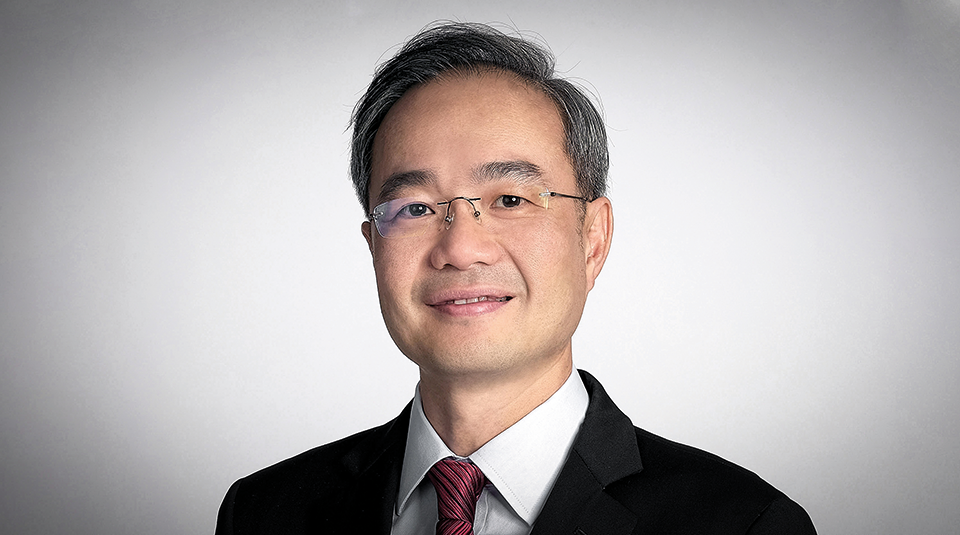
It was a long and involved process, but essential.
“I have always learned that the worst thing you can do to a regulator is surprise him,” says Wuffli, who worked that out the hard way during a serious fraud case at Swiss Bank Corporation in the 1990s, which the regulator learned about from a news report.
Wuffli remembers being told by the regulator back then: never ever do this again, it is the most embarrassing thing that can happen to me.
“A message I constantly convey to my colleagues is that you can lose a client, but you cannot lose the confidence of a regulator,” he says. “The way to keep it is to have continuous formal and informal dialogue.”
In Singapore, several important local names appear on a well-connected advisory council, almost all of them also investors (the only exception being US nationals, in order to stay well clear of the SEC, one assumes).
Five of them have, or had, links to GIC, the sovereign wealth fund: Ang Kong Hua, a GIC director and chair of its investment board and the chairman of Sembcorp Industries and Global Logistic Properties; Hsieh Fu Hua, a board member of both GIC and Grab, chairman of ACR Capital Holdings and a former chief executive of the Singapore Exchange; Teh Kok Peng, former deputy managing director of GIC and former president of its special investments division; Leslie Teo, former chief economist and director of economics and investment strategy for GIC and now head of data science at Grab; and Jennifer Lewis, who is a member of the Singapore executive board rather than the advisory council, who was GIC’s communications head for more than a decade and now works with the foundation for Singapore’s other sovereign wealth vehicle, Temasek.
Another familiar name on the advisory council is David Gledhill, who was DBS’s group chief information officer and head of technology and operations for 11 years, and was instrumental in that bank’s celebrated digital transformation. (Gledhill’s presence on the board has cemented a rumour that DBS and Sygnum are linked financially; Goh and Imbach say they’re just friends, you might say, with open conversations but no commercial link at this stage.)
It is hard to convey to non-Singaporeans what GIC looks like on a résumé. GIC and Temasek are at once the nation’s safety net and its crown jewels, sophisticated operations that attract the brightest minds in the business. Each of the advisers is keen to stress that their participation in Sygnum has nothing to do with GIC, but still, it serves as a badge of honour to have that connection on the advisory board. And they do offer advice.
“It is not just lip service and money,” says Imbach.
Teo explains what attracted him. Firstly, he was intrigued by what he describes as “the inherent contradiction in this business model,” in that crypto partly exists as a solution to a problem with trust at the sovereign level, but the whole point of Sygnum is to connect crypto’s ideas with traditional banking and regulation that are the source of that distrust in the first place.
“There will always be a use case for people who do not trust central banks or conventional sources of authority,” Teo says. “But the majority of the market is not that extreme and we don’t have to throw the baby out with the bathwater. We want a better technology, but we don’t have to distrust the systems that have been built over many years and are quite valuable.”
This, fundamentally, is the difference between the individuals who will always be the heartbeat of crypto’s libertarian and suspicious ideals and the institutions that Sygnum is targeting, who don’t much care about that so much but do care about an opportunity to invest in a new space with confidence.
Then, having accepted the case for regulation, Teo liked the ones they chose.
“If you think that one of your competitive advantages is being regulated, you might as well get the best regulators,” he says.
He also met and liked Imbach and Goh, and was convinced they had a workable plan. As for his role as an investor and adviser, it is clear that there was a sort of a feedback loop happening: the presence of each of the GIC alumni or directors was reassuring to each of the others.
For all of them, however, they were putting reputations on the line in order to be a part of it.
“I did my homework,” Wuffli says. “I did my due diligence particularly on reputation risk and the integrity of people.”
And it was the people who convinced him to go ahead: he had learned from his time at Partners Group that if you find several partners who get along with each other and have excellent and complementary skills, you can trust them to achieve what they set out to.
In this respect, he sees some similarities with other fields.
“There are many people with great ideas, but for me the inflexion point is when these ideas attract really good people,” Wuffli says. “I started to take the hedge fund industry seriously 25 years ago when I saw the best people were going there.”
Regulation in Singapore is not at the same point that it is in Switzerland. A CMS licence is a big step, but it allows fund management not banking.
“Our regulatory strategy in Singapore is still being developed,” Goh says.
Finma has been rather more engaged with digital assets than the MAS, which has tended to be cautious.
“The end goal aspirational vision for us,” says Goh, “will be to have the same offerings we have out of Switzerland coming to Singapore and from there the rest of Asia. That’s the target.”
One senses they are waiting for an evolution in the MAS’s position before going further.
Euromoney asked the MAS for its position on cryptocurrency regulation. The short version: the MAS considers security tokens – a digital representation of securities – and payment tokens to fall within its remit as a regulator but not utility tokens that can only be used to access goods and services offered by the issuer.
“MAS’ regulatory approach is agnostic as to whether the products, activities or entities take a traditional or digital form,” it says in written responses. “Instead our focus is risk-based.”
In other words, the issue is not whether a bank, fund or other product is digital or not, but what it is doing.
Confidence
Sygnum has 90 staff now, most of them in Switzerland, which leaves one big question: will they make any money?
There will always be some who find this whole idea counterintuitive, going against the grain of what digital assets were supposed to achieve in the first place. However, the idealists are not the ones Sygnum is going after but pragmatic and wealthy institutions.
Teo smiles when this question is put to him.
“As an investor, I know that they say, in a fintech startup, the probability of success is not high,” he says. “We know it is not easy.”
But his advisory role, seeing first hand what is being built, gives him confidence. Sygnum is, in some sense, proof of concept, he says, and that is valuable.
“For me, I am most confident about this institutional thinking: that the tech helps, but at the end of the day you need to trust mechanisms that go beyond a technical solution.”
Sygnum says it does not report detailed revenue and assets under management (AuM) figures publicly, but it does say that it crossed the nine-digit AuM mark four months after going live “and we have grown strongly since.”
“Over the next couple of years, we will continue to invest in further building out our digital asset banking platform and extend our geographic footprint – and make significant progress on our path towards profitability,” Sygnum said in a written response to a question on profits.
As they work towards that, they feel like they have an edge at just the right time.
“The old argument of: bitcoin is bad, blockchain is good, is starting to go away,” says Imbach. “In Switzerland, you have cantonal banks announcing they are adopting cryptocurrencies. Three years ago, that would never have been even close.”
A lot like a bank
Sygnum is a bank: its licence in Switzerland says so. It is subject to the same capital requirement rules as any other Swiss bank and additionally has a minimum core equity capital requirement of SFr20 million ($22 million) at any point.
“We offer traditional banking services for digital assets,” declares co-founder Mathias Imbach. “When you look at the revenue streams, it is not very different from what other banks have.”
Sygnum defines digital assets along three lines. One is cryptocurrencies, of which Sygnum handles five: bitcoin, bitcoin cash, Ethereum, Ripple (XRP) and Tezos, a yield-generating product.
Then there is a stable coin, a digital Swiss franc (known as DCHF) backed by collateral with the Swiss National Bank, and asset tokens, which are digital representations of securities.
For those assets, Sygnum then offers custody; brokerage, allowing a gateway between the digital assets and fiat currencies; a Lombard loan facility, through which, for example, one can collateralize Ethereum or bitcoin in order to secure a fiat line; and then asset management, including a multimanager fund (this is also offered in Singapore) and an exchange-traded product listed on the Swiss Stock Exchange.
Tokenization
Another service is tokenization, allowing issuers and investors to turn shares into a digital token that can be traded.
“This has always been lacking,” Imbach says. “If you have digital representations of shares, that means you can pay out dividends with a digital Swiss franc. It is one line of code and in theory 1,000 shareholders can get the right allocation in DCHF into their wallet. It takes out significant inefficiencies in the process. What today takes four agencies and involves three to four days, takes 30 seconds.”
Shares can be transferred between wallets.
“It makes accessible a new asset class, which has been very illiquid.”
One year into operations, the key revenue streams so far are custody and brokerage, with the largest clients being big crypto foundations with hundreds of millions of bitcoin that need, under their fiduciary responsibilities, a trusted bank to keep the assets safe.
Also – and this must be satisfying, given the founders’ origins – family offices are becoming clients. There are also signs of banks seeking to use Sygnum as the back end to their own efforts to offer digital assets to clients.
So how do fees work? Similar to banking: custody fees, fund management and performance fees, interest on the Lombard loans.
One difference is in the yield-generating Tezos product, where Sygnum takes part of the return rather than a fee, but by and large it looks the same as a bank. The distinction, instead, is the underlying.
“We thought long and hard: should we do it completely differently on the pricing side?” says Imbach. “And there will be a path to that. But we are talking about a new market and asset class, with institutional adoption. If you’re also changing the way you charge it, it is just one level too much for the institutional players to understand what’s going on.”
And…
The MAS on cryptocurrencies
Euromoney put three questions to the Monetary Authority of Singapore on its attitude towards cryptocurrencies:
1) Does the MAS have a clear view on when digital assets such as cryptocurrencies and ICOs should fall under its supervisory jurisdictions and when they do not?
2) Do you feel you have an appropriate regulatory environment for digital assets today or does it require some evolution?
3) Is it possible to regulate digital banks and fund managers under existing mainstream banking and fund management regulations in Singapore?
Here are its written responses:
Regulatory scope and approach
Broadly, there are three main categories of digital tokens – securities tokens, payment tokens and utility tokens.
• Security tokens, which are a digital representation of securities, and payment tokens, which are digital tokens that serve a payment function, fall within the scope of MAS’ regulation.
• Utility tokens, being limited in their scope of use as they can only be used to access the goods and services offered by the token issuer, are not regulated by MAS.
MAS’ regulatory approach is agnostic as to whether the products, activities or entities take a traditional or digital form. Instead, our focus is risk based, that is, our regulations seek to address the main risks posed by the different types of products, activities and entities, physical and digital medium alike. For example:
• Products: The main risks posed by traditional securities and digital securities tokens are related to investor protection, and hence both are regulated under the Securities and Futures Act (SFA). The main risk associated with payment tokens are related to money laundering and terrorism financing. Hence, the Payment Services Act (PS Act), which is the main legislation regulating these products, require anti-money laundering and countering the financing of terrorism controls to be in place.
• Activities: Fund management of traditional and digital capital market products are subject to the same investor protection requirements under the SFA.
• Entities: Digital banks, which are the digital parallel of traditional brick-and-mortar banks offering similar banking services, are regulated under the Banking Act.
Evolution of digital assets industry
As the industry evolves and develops new products, MAS has provided guidance to help the industry assess and understand the applicable regulations. For instance, MAS issued ‘A guide to digital token offerings’ to help the industry assess if the characteristics of a digital token fall within capital markets products regulated under the SFA. If it does, offerings of such digital tokens will be treated as offers of securities and be subject to the same rules on investor safeguards that are applicable to traditional capital markets products under the SFA.
In addition to issuing guidance, MAS continues to review if our regulations remain appropriate and will adapt where necessary. One recent change is to allow payment token derivatives to be traded on Approved Exchanges in Singapore and to regulate the activity under the SFA. This move addresses market demand from institutional investors looking for a regulated option to gain or hedge their exposures to the underlying payment tokens. However, MAS does not view payment token derivatives to be suitable for most retail investors. As such, MAS has required financial institutions to put in place additional measures to discourage retail participation.
MAS will continue to monitor closely the risks and scale of digital tokens as they continue to evolve in design. Our approach will remain consistent, focusing on addressing the risks associated with such products, while remaining facilitative of innovation.”