Stop all the clocks: Singapore has finally logged a corporate IPO. When Nanofilm Technologies International starts trading this Friday, it will be the first such listing of any consequence in three and a half years.
Singapore Exchange has had a long-standing and worsening problem in its equity markets.
On the primary side, most of the big blue-chip candidates have already listed; the next generation of companies, particularly those on the tech side, either head straight to Nasdaq or don’t bother listing at all because of the widespread availability of private capital.
Real estate investment and other trusts are an exception, but when it comes to actual corporates, they are rarely sighted. And that’s before you get to the challenges with liquidity.
Scarcity value
So, what was different about Nanofilm?
A few things. Firstly, it is a spin-off from Nanyang Technological University, and therefore a homegrown story of some pride (Singapore might not do IPOs any more but it sure does technology universities).
Secondly, the sheer novelty of it – along with its tech credentials (it makes coating materials for smartphones and other gizmos) – attracted some of the region’s biggest investors as cornerstones, among them Temasek, Malaysia’s Employees Provident Fund, Aberdeen Standard Investments (Asia) and Lion Global Investors.
It has the scarcity value of being the first tech unicorn on Singapore Exchange; the raising, of about S$510 million ($375 million), will give it a market capitalization of about S$1.7 billion.
Singapore’s famously dull political environment is becoming quite an asset
There’s another angle too, though.
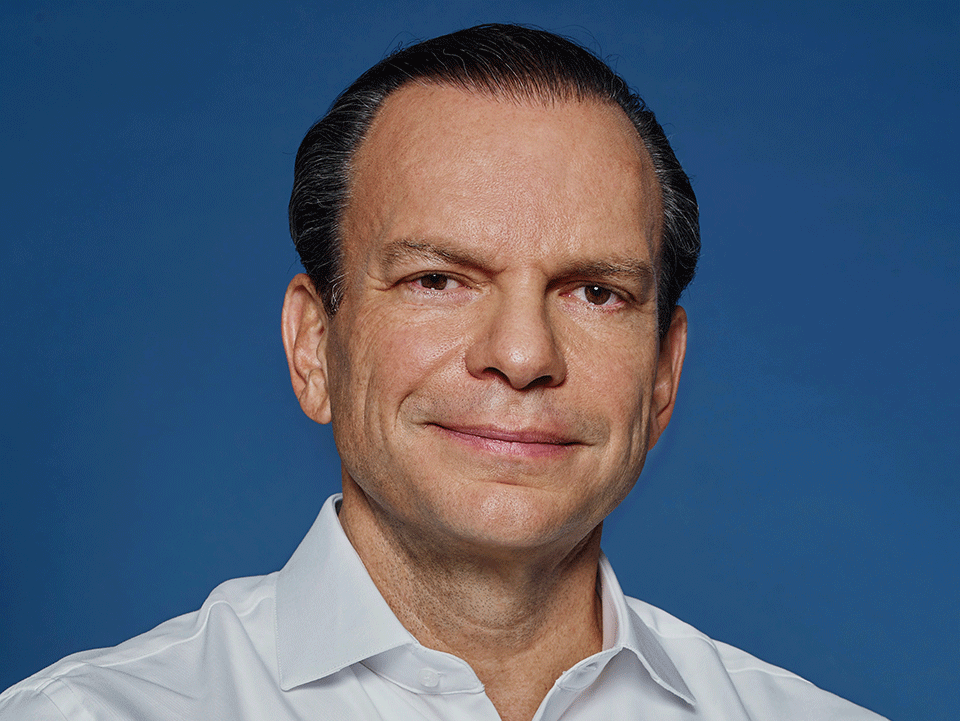
During the cornerstone meetings the management, led by founder, executive chairman and controlling shareholder Dr Shi Xu, was asked why they weren’t considering Nasdaq.
Management answered that, in a time of geopolitical tension and a trade war, Singapore was doing a good job of staying onside with both China and the US.
With the national security law making people increasingly nervous of Hong Kong, Singapore’s famously dull political environment is becoming quite an asset.
Credit Suisse, Citi and OCBC are joint global coordinators, with CLSA also a joint bookrunner and underwriter.
Someone close to the deal told Euromoney the offer was oversubscribed 19 times, with more than S$4.4 billion of demand.
One hopes they savour the moment, because who knows how long it will be until the next corporate listing comes along.