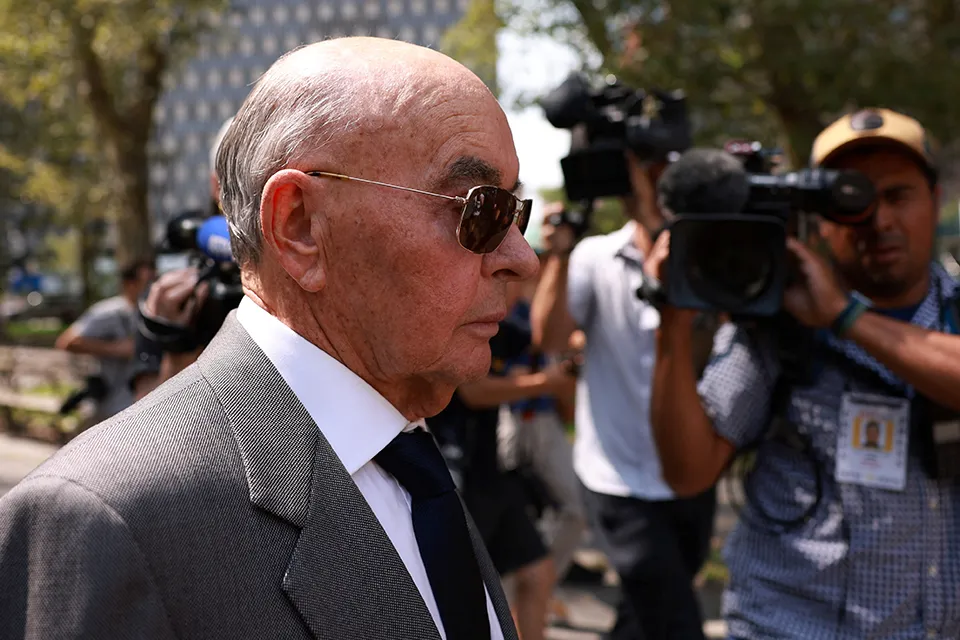
Billionaire investor Joe Lewis was charged by US authorities in late July with insider trading for passing on tips about companies in which he had ownership stakes to friends and employees, including his private jet co-pilots.
The indictment came in a week that ended with a bout of yen volatility that might have suited the aggressive currency trading for which Lewis is best known.
When the Bank of Japan made a surprise shift in its monetary policy on Friday July 28, the yen saw hours of price convulsions against the dollar and euro.
Lewis built a fortune estimated at more than $6 billion on the back of big FX trades, such as shorting sterling ahead of the ejection of the pound from the European exchange rate mechanism on Black Wednesday in 1992, and selling the Mexican peso short before its devaluation in 1994.
Investments away from currency trading have had mixed results. A poorly timed purchase of a stake in Bear Stearns cost Lewis around $1 billion when the bank failed in 2008.
The purchase of Tottenham Hotspur football club, which is now owned by a Lewis family trust, proved a better bet.
It has not yielded a return in the form of league titles or major cups for Spurs, but the current appetite for clubs in the English premier league from Middle Eastern sovereign wealth buyers and US investors would almost certainly mean that Lewis could realize a profit of multiple billions of dollars for his trust if the club was sold.
Insider trading
His focus in the near term will be an attempt to beat the insider trading charges levied by US authorities, which resulted in Lewis pledging $300 million of bail backed by his yacht and plane. Lewis also had to surrender his passport and agree to stay in the US until his trial.
The charges against Lewis allege insider trading in bioscience companies, including abuse of information about a special purpose acquisition company (Spac) announcement that was made in 2021.
That indicates that Lewis, now 86, was keeping admirably up to date with equity market trends, such as the chance to exploit the Spac frenzy that would run its course by the start of 2022.
The charges also highlight the perils of switching from your core competency and becoming complacent about the risks posed by regulatory authorities, particularly in the US.
The foreign exchange markets have not been immune from regulatory scandals, but they have mainly focused on abuses by dealers rather than investors.
The main FX currency pairs offer global liquidity and a challenge in identifying exactly why price movements take place.
The charges highlight the perils of switching from your core competency and becoming complacent about the risks posed by regulatory authorities, particularly in the US
When the yen was gyrating in value on July 28 it was because investors were divided on whether the Bank of Japan’s interest rate policy change would arrest or accelerate a trend of strengthening against the dollar, for example.
Anyone with advance knowledge of the policy shift would have needed to be an adroit dealer, ideally with a background in trading FX option volatility, to make a profit.
Proving insider trading linked to the news would be tricky for supervisors.
When a thinly traded bioscience company’s stock makes a big move, by contrast, regulators have both a reason to be suspicious about potential insider trading and a relatively easy task in finding evidence.
Misplaced faith in technology is one common mistake in both the equity and currency markets, however. One of the pilots allegedly helped by stock tips from Lewis, for example, is quoted in the charges as stating that conversations on an app were encrypted “so all good. No one can ever see.”
And bank FX traders at one point exchanged information in chatrooms with names including “The Bandits Club” and “The Cartel”, which gave investigators leverage in developing charges and reforming market practices.



