Awards for Excellence 2019
|
|
| View full 2019 results |

You don’t need to be a tech banker to do FIG, but you need to understand the disruption that is taking place.”
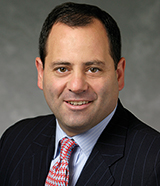
John Esposito, global head of FIG at Morgan Stanley in New York does not mince his words when he talks to Euromoney about fintech and the future of financial institutions.
“People are being forced to re-evaluate old business models. In bank client meetings, all they want to talk about is the effect of disruption on their branches, so you had better understand what is going on.”
What is going on is the wholesale disruption of the financial institutions sector. “FIG bankers are raised to cover large caps,” Esposito points out. “Now there are hundreds and hundreds of firms attacking every part of the value chain. We all have to learn new skills.”
|
|
|
John Esposito |
Morgan Stanley has devoted time and energy to learning those skills and has continued to lead the pack in FIG this year. It has 150 people in the team globally – half in the US and the rest in Europe and Asia.
Key hires to cover fintech have included Vipin Chhajer, who was previously head of European financial technology investment banking at Deutsche Bank. “FIG was a laggard in tech disruption, but fintech is now a growth area for the sector,” says Esposito. “We have a real focus globally on fintech, and have tried to educate bankers on where tech is disrupting financial services.”
This focus has paid off in both the public and private markets.
“A lot of these firms are holding off accessing the public markets, so we have built up our private placement practice,” says Esposito.
Morgan Stanley was financial adviser to Ant Financial in its $14 billion preferred share issue last June – the largest-ever private placement for a financial technology company. It also worked on IPOs for Adyen and Tradeweb in 2018 and was sole financial adviser to eFront on its $1.3 billion sale to BlackRock Aladdin.
“We have spent a lot of time positioning ourselves in fintech,” Esposito emphasises. “On Ant, based on our sourcing and intelligence, we worked closely with the client to identify many of the key investors, which ultimately resulted in significant demand for the transaction. We have been focused on fintech clients with joint coverage from traditional financial services bankers and technology bankers.”
The FIG franchise has had a stellar year, despite churn in the team. In February, Lloyds Bank unexpectedly hired co-global head William Chalmers to be its next chief financial officer, replacing George Culmer. Chalmers had been at Morgan Stanley for almost 20 years.
On the inbound side, the bank has re-hired Eric Bischof, who left the firm two years ago to run the FIG team at Bank of America. He will become chairman of the FI group. Bischof had previously been at Morgan Stanley for 20 years, and was a lead adviser to the Federal Reserve Bank of New York on the restructuring of AIG after the 2008 financial crisis.
Doing deals in continental Europe was very difficult until recently and the Generali Germany deal was a key breakthrough – Guillaume Gabaix
The bank has moved quickly to take advantage of the growing potential for asset disposals at home this year. Paul Burke, co-head of loan solutions, moved to New York in September in anticipation of this.
“Asset disposals are a key part of the business,” says Gavin McFarland, head of North America FIG. “We have transferred two people from Europe to the US to take advantage of the opportunity to capture market share with clients such as banks that have lending businesses that they would like to reduce or exit and insurance companies with blocks of business that are not performing.”
He says that the experience the bank has built up in Europe will pay dividends as US firms look to divest: “Analysing and negotiating these deals is a highly specialized skill-set that we have a lot of experience with and which skills are transferable to other geographies.”
The bank continues to lead the pack in this business in Europe, and was adviser to CaixaBank last June on the €7 billion sale of real estate assets to Lone Star Funds. It also advised Generali Germany on its €1.9 billion sale of assets to Viridium in July.
“Non-performing loan sales are key to the franchise,” agrees Guillaume Gabaix, head of Europe, Middle East and Africa FIG at Morgan Stanley. “When we started, some sellers were worried about vulture funds buying assets on the cheap. In this very low-rate environment, the ability for private equity funds to make money means that the cost of selling loans is economical for the seller. So, you can now match buyers and sellers – something we have been waiting for for a long time. More deals are being done, which means that you can do more sophisticated layers of financing and tap both public and private markets. The more we can tap the public markets, the cheaper the financing is.”
As the prospect of rate rises recedes, these deals make even more sense.
“In a lower-for-ever environment, what do you do with your life business?” asks Gabaix. “It is a drag on return on capital. Selling those old books increases the velocity of balance sheets. As soon as you can do those things around the book value, it makes sense to get rid of them. The proceeds can be put into asset management, or P&C (property and casualty) businesses. There are probably another dozen of these deals to come. We are by far the leader in insurance sale processes. Doing deals in continental Europe was very difficult until recently and the Generali Germany deal was a key breakthrough.”
The franchise looks well set to tackle the serious challenges that traditional financial institutions face and those that the disruptors face too.