Over the course of a few weeks in late March and early April, Nigerians watched spellbound as a series of unprecedented events unfolded.
The former inspector general of the police force, Tafa Balogun, was handcuffed in public and charged on 70 counts of corruption. Two residing cabinet ministers were fired: the housing minister, for the irregular selling of government property in Ikoyi, Lagos; and the education minister, for paying bribes to get his budget through the National Assembly. The latter incident was also part of a scandal that forced the Senate president – the third most important figure in the political hierarchy – to resign.
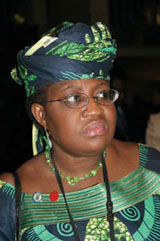
“In terms of structural reform, the last few weeks have been nothing short of revolutionary, and the repercussions are still reverberating,” says Ngozi Okonjo-Iweala, the finance minister and head of the economic team that is leading the reform programme of president Olusegun Obasanjo’s government.
| Nigeria: Annual economic forecast | ||||||
| 2003 | 2004 | 2005 | 2006 | 2007 | 2008 | |
| Real GDP % | 5.0 | 5.5 | 7.0 | 4.9 | 5.2 | 6.0 |
| Inflation | 13.9 | 15.3 | 9.5 | 12.0 | 11.0 | 8.0 |
| Average interest rate (MRR) | 15.5 | 15.0 | 12.0 | 11.0 | 11.0 | 11.0 |
| Average exchange rate | 132 | 134 | 131.5 | 133 | 134 | 135 |
| Source: Standard Chartered Bank, March 2005 | ||||||
“We have put together this programme to focus on a strong anti-corruption drive, increased transparency, as well as fiscal discipline, the trimming of the public sector – including privatization – and encouragement of the business sector by reforms in areas such as customs and taxation,” explains Okonjo-Iweala. Decades of mismanagement of the economy under mainly military rulers have left a legacy of institutional and infrastructural decay in all areas of Nigerian society. Changing that has not been easy. But Obasanjo’s election in 1999 was the first step back to democratic rule; and his re-election in 2003 was the signal that the government could move forward with a more aggressive reform platform.
Recruiting Okonjo-Iweala that year – from a career at the World Bank in Washington – was the first move of this second phase; the president has followed that by handpicking 12 or 13 so-called ‘apostles’ – usually highly educated technocrats – to form the economic team that was inevitably dubbed ‘the dream team’ by the media.
Take the anti-corruption drive first: ‘witch hunt’-style arrests of previous government officials have occurred before in Nigeria. But never before have members of an existing government been so publicly embarrassed – especially not a former police chief who might have thought himself protected because of his high position.
To the reformers, it is a sign that they are making real progress in a wide-reaching programme that has anti-corruption and transparency at its core. “Corruption and other economic crimes are the bane of our development efforts,” says Alhaji Nuhu Ribadu, chairman of the Economic and Financial Crimes Commission (EFCC), which was set up in 2003 and is now making headlines. Ribadu – an ex-policeman and the man who arrested his former boss – does not believe that the fight against all-pervasive corruption is hopeless, but that zero tolerance can enable the “little monster to be crushed with ease”.
The anti-corruption NGO Transparency International rates Nigeria the third most corrupt country after Bangladesh and Haiti, but Ribadu says that Nigerians do not need to be told that. “Their judgement – wrongly or rightly – is a reflection of what we have given to the world: 419 [international advance fee fraud], money laundering, inflated contracts, scam emails, illegal oil bunkering, disappearance of ships, etc,” he says.
Okonjo-Iweala concurs: “On the anti-corruption and transparency front, everyone knows that we have a huge problem and an incredible challenge, but our development partners openly acknowledge that we have been developing more willingness and resolve to be more transparent and to deal with corruption,” she says.
Playing a long game
 |
|
Ngozi Okonjo-Iweala, minister of finance |
If the EFCC’s work is the most immediate and visible plank in the anti-corruption programme, reforming the police and judiciary is a second but longer-term policy. Simply paying the police more immediately might contribute to further crimminality rather than institutionalized improvement. The third element is the push towards transparency and accountability in the procurement of government revenues, especially in the oil and gas sectors. The centrality of oil and increasingly gas to the Nigerian economy cannot be over-emphasized. Oil revenues account for over 70% of revenue at all levels of government, over 85% of foreign exchange earnings and some 40% of GDP.
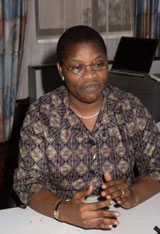
The reformers believe that this third tripod of structural and institutional reform is one that has brought profound yet uncelebrated successes. “I am on my own more inclined to the efficacy of this component for checking corruption for the simple reason that I agree with the maxim that ‘prevention is better than cure’,” says Obi Ezekwesili, senior special assistant to the president and head of budget monitoring and due process. “The mechanism of budgetary and fiscal reforms that traverse public expenditure management, procurement, tax administration and policy changes, privatization of government-owned, corruption-based enterprises, deregulation and liberalisation of economic sectors has done wonders yet untold for Nigeria.”
Popularly known as Madame Due Process, Ezekwesili is believed to have saved Nigeria $1 billion by scrutinising the procurement process in the last 30 months.
Lessening the opportunities and incentives for corruption are the key – initiatives such as the finance ministry’s monthly publication of revenue allocation figures for all tiers of government, the transparency of the budgetary process and the clean up of public procurement procedures through due process.
The Due Process Mechanism began with the deregulation of the downstream sector and oil prices, but there is a lot more that needs to be done to improve the transparency of sub-sector operators, admits Ezekwesili. Policy-makers in Nigeria need good information on public finances to devise the right policies, and the public needs high-quality information to trust the policy-makers in their handling of the country’s wealth.
Fat of the land
“One aspect of the petroleum sector that attracts the ire of Nigerians even more than the issue of revenue is the opaque nature of cost of earning the oil revenue,” Ezekwesili says. “The real fat is in the cost of the oil sector.” Hence the process audit should critically verify the gaps or otherwise that exist in the procurement procedure through which the joint venture is managed and the contract is implemented. “After all, the more unnecessary cost is dumped on the nation, the less the revenue earned by the people. And that, for most Nigerians, is sub-optimising the potentials of the sector to meet the investment needs of government,” Ezekwesili says.
In late March, the department mandated Hart Group, a UK-based development consultancy, to provide a summary of the financial flows from the government to the oil and gas sectors in the last five years. “We are looking to verify what the sector said it was paid, in terms of royalties, taxes, licensing fees and bonuses,” says Chris Nurse, managing director of the Hart Group in Aylesbury.
It is part of the process that has put Nigeria at the vanguard of implementing the Extractive Industries Transparency Initiative (EITI), Nurse says. EITI was started by the UK in 2002 to correct the public perception mismatch between mineral wealth and poverty among the population.
Nigeria was the first country to sign up to EITI to better expose and make transparent oil industry accounts and understand the structure of expenditure and revenue.
“The EITI still has a long way to go, but it is one of the most effective vehicles available for achieving a global standard of disclosure and accountability,” said George Soros in a speech in March. Nigeria’s reorganisation of its state oil company, introduction of transparency legislation and sweeping oil and gas audits are encouraging, he said, and compare favourably with the way the sector is being treated in Iraq.
Privatization programme
After a good start at the beginning of the millennium, the administration has struggled with its privatization programme. “But this year we have a new person in charge, and we are now proceeding much faster,” says Okonjo-Iweala.
Irene Chigbue, the incoming director-general at the Bureau of Public Enterprises (BPE) has been charged with implementing a blueprint for a radical overhaul of the country’s notorious electric power system that will lead to its restructuring and eventual privatization. Chigbue will also oversee the liberalization of the telecommunications sector and the privatization of Nigeria’s inefficient state-owned ports.
Extraordinarily, in 1999, there had been no new power stations built for over a decade, and only 19 of the 79 generating units were operational. NEPA, the electricity utility widely known as ‘Never Ever Power Always’, has debts of $1.8 billion, while the national fixed-line telecoms operator, NITEL, has racked up half that figure. Both are due to be privatised by the end of the year in a move designed to impart some momentum to a divestment process that had become bogged down in controversy.
Private dissent
 |
|
Obi Ezekwesili, “Madame due process” |
Another area of reform attracting dissent – but this time not from the public sector but the private sector – is the banking reform of governor Professor Charles Soludo of the Central Bank of Nigeria (CBN). Soludo proclaimed his arrival in office in July last year with a plan to shake up the banking system, insisting that all banks reach a minimum capitalization of N25 billion (£192 million) by the end of 2005. The idea of the first phase of the plan is to create a diversified and reliable banking sector, which will be able to play an active role in developing the Nigerian economy and make it a competent and competitive player in both the African and global financial systems. The second phase will involve encouraging the emergence of regional and specialized banks.
From the 89 commercial and investment banks that exist today, Soludo hopes to reduce them to 30 by the end of the year. Most bankers agree with the need for an overhaul of the banking and financial system, but many object to the timeframe and degree of the capitalization required.
“Accelerated change in the banking sector, not allowing for adequate controls and safeguards, may be detrimental to the Nigerian economy in the long term,” warns Razia Khan, chief Africa economist at Standard Chartered, the only 100% internationally owned operator in Nigeria and, consequently, the only bank able to raise the money from its parent.
So far many banks have been able to raise the funds through private placements or public offerings via the stock market, but the CBN has waived the debt of some weaker banks in an attempt to make them more attractive to buyers.
Political perseverance
Soludo is one of the government-appointed reformers whose post will carry on beyond the 2007 presidential election. But it will take more than technocratic individuals to keep the reform momentum going. However Okonjo-Iweala says, “sustainability is not just about individuals – even in the developed world, for example, Tony Blair is not there forever – but it is about what laws and institutional processes you have put in place”. “The next big push,” she says, “is to provide legislation to lock in reforms.”
Crucial to this is the Fiscal Responsibility Bill. “It is an antidote to the current decentralization of corruption that we have seen happen, where the centre – that is the federal government – is getting increasingly cleaner” says Ezekwesili.
How much has been done and how far has it reached out from the centre and into the states and villages? How deep has the establishment of a private sector job-creating mentality been rooted?
Roots of corruption
“The institutional reforms have encountered the highest form of resistance,” says Bismark Rewane, managing director and CEO at Financial Derivatives, an economic consultancy in Lagos. “But progress is beginning to see it manifest itself in a change of mindset in both the public and private sector.”
People can see the effective changes achieved by downstream oil companies such as Conoil and Oando that have been deregulated. Yes, deregulation of petrol prices has made it more expensive, but it has also obviated the need for hours of queuing and the need to always carry a full jerry can, he says. Similarly, the introduction of mobile phone providers has improved communication and lessened people’s resistance to privatization.
But some newspapers are now calling the dream team of reformers the nightmare team, alleging that their high-brow, western-style economic theory is not really connecting with Nigerians at a grass-roots level.
It is not all about business, says Amina Ibrahim, senior special assistant to the president on millennium development goals. She has been made the 13th member of the economic team with a brief to integrate the public expenditure reforms with anti-poverty goals in three main areas of infrastructure. “We are trying to integrate them into NEEDS [National Economic Empowerment and Development strategy], which means we are looking at how that translates from the federal government to the states.”
Nigeria faces huge challenges. “The whole mindset must change,” says Ibrahim. The very difficult question for the government is how to bridge the gap, especially in severely damaged areas such as education, health and infrastructure.
Convincing the people that the reforms translate into concrete benefits could determine the result of the 2007 election, as well as the long-term chances of institutionalizing the structural improvements.
Supported by: The Federal Ministry of Finance, Nigeria


